
Want to save on your grocery bill? B.C. shoppers need to be savvy as food prices continue to rise
Statistics Canada data shows a precipitous rise in food prices over the past five years, with the cost of beef, olive oil, coffee, infant formula and lettuce increasing by at least 50 per cent.
Last updated 1 day ago
You can save this article by registering for free here. Or sign-in if you have an account.
It’s a good time to have a green thumb.

Subscribe now to read the latest news in your city and across Canada.
- Unlimited online access to articles from across Canada with one account.
- Get exclusive access to the Vancouver Sun ePaper, an electronic replica of the print edition that you can share, download and comment on.
- Enjoy insights and behind-the-scenes analysis from our award-winning journalists.
- Support local journalists and the next generation of journalists.
- Daily puzzles including the New York Times Crossword.
Subscribe now to read the latest news in your city and across Canada.
- Unlimited online access to articles from across Canada with one account.
- Get exclusive access to the Vancouver Sun ePaper, an electronic replica of the print edition that you can share, download and comment on.
- Enjoy insights and behind-the-scenes analysis from our award-winning journalists.
- Support local journalists and the next generation of journalists.
- Daily puzzles including the New York Times Crossword.
Create an account or sign in to continue with your reading experience.
- Access articles from across Canada with one account.
- Share your thoughts and join the conversation in the comments.
- Enjoy additional articles per month.
- Get email updates from your favourite authors.
Create an account or sign in to continue with your reading experience.
- Access articles from across Canada with one account
- Share your thoughts and join the conversation in the comments
- Enjoy additional articles per month
- Get email updates from your favourite authors
Sign In or Create an Account
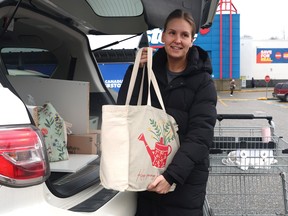
As food prices have risen, Morgan Creyke has been getting garlic, onions and a few potatoes from her brother’s garden. Every little bit helps, she said as she loaded groceries into her vehicle at the Superstore in Mission earlier this week.

tap here to see other videos from our team.
Want to save on your grocery bill? B.C. shoppers need to be savvy as food prices continue to rise Back to video
tap here to see other videos from our team.
Despite the free produce, Creyke’s grocery bill has almost doubled in recent years and now rivals her rent payments. A cart of groceries to feed her family of four for one week used to cost $300. Lately, it’s been more than $400.
“It seems like everything goes up, and then a few months later, it all goes up again,” she said. “It keeps climbing and climbing and climbing.”
Creyke, whose family has a steady income, has cut some of her kids’ activities, from swimming, dance and gymnastics, down to just swimming, a skill she feels they need to learn. Christmas will be tighter, too.
She bakes more, stays away from pricier grocery stores, and sometimes makes three or four stops in search of deals. She doesn’t have space for a garden, but this summer she grew tomatoes and herbs in plastic containers.
Recent data from Statistics Canada shows a precipitous rise in food prices in the past five years, with beef, olive oil, coffee, infant formula and lettuce increasing by at least 50 per cent.
In September 2020, the average price of beef ribs in Canada was $19.31 a kilogram. This September, it was $42.52. Ground beef, a cheaper option, went to $15.99 from $9.60. Meatless burgers went to $6.92 from $5.54.
Foods produced in B.C. like chicken and dairy have become more expensive, as have foods from outside the province, including olive oil, which leapt to $12.70 a litre from $7.75 in 2020. Coffee went to $9.31 for 340 grams from $5.63, while orange juice went to $6.42 for two litres from $3.83.
-
Advertisement 1Story continues belowThis advertisement has not loaded yet, but your article continues below.
The factors driving the increases are varied and complicated, according to experts, but you don’t have to understand the causes to see the effects on B.C. families.
In a report published this summer, Living Wage B.C. found food costs are 28 per cent higher than four years ago, with the average family of four spending an extra $3,220 a year on the same basket of food. One in five people face food insecurity, while the number of people using a food bank has risen 81 per cent since 2019.
Persistent food inflation is changing the way people feel about food, including their trust in retailers and their shopping habits.
“This really puts food and food choices under a microscope,” said Stacey Taylor, co-author of a report published this month by the agri-food analytics lab at Dalhousie University. “People are making tradeoffs every single day — switching brands, reducing variety, cooking more at home, or delaying purchases altogether. The data shows a clear shift. Affordability is now the lens through which most food decisions are being made.”
When asked if she’s noticed rising food costs, grandmother Christel Keller said, “Everything has gone up.”
Her supermarket cart this week contained two boxes of diapers for her twin grandchildren and food. Her total was $268 for items that would have once cost about $120, she said. But she doesn’t have a choice.
“It’s not frivolous,” she said. “These are necessities.”
Keller said meat has become almost unaffordable, and she’s started to make her own granola and other snacks to save money. She tries not to waste anything.
“Between housing and heating and gas, it all adds up,” she said.

‘A perfect storm’
So why are food prices rising? And when will they stop?
Kelleen Wiseman, academic director of the food and resource economics program at the University of B.C., said changes to the price of food used to track closely with changes to the price of other goods and services. But in recent years, the gap between the consumer price index for food and other goods has grown.
Food inflation in Canada stands at about 3.4 per cent, while general inflation is about 2.2 per cent.
“We feel that difference a lot,” she said.
Each percentage increase comes on top of a price that has already risen by several percentage points from about 2020 on, she said. In the same way, increases are added at each stop on the supply chain, from field to plate. It all contributes to the large leap in what we pay for food.
Kelleen divided the cause of price increases into two broad categories: climate change and geopolitics.
When the professor looks at the list of foods that have increased in price the most, she sees a common thread: “The impact of climate change.”
That includes extreme weather, like the polar vortex that wiped out B.C.’s peach crop two winters ago, or the atmospheric river that flooded farmland in Abbotsford, Merritt and Princeton in 2021, killing chickens, and blueberry bushes and many other crops.
B.C.’s recent history isn’t unique. A persistent drought across North America has led to water restriction and feed shortages. Because many agriculture products run on a biological cycle, crop losses affect food supply for months, or even years, as farmers must replant. In the case of beef, where drought led to a rapid sell-off of cattle because farmers couldn’t absorb the cost of feeding them, the cycle is even longer, as cows need to have more calves to replace those sent to early slaughter.
Across the globe, extreme weather has affected crops like coffee, tea and chocolate.
“You can’t simply make more,” said Wiseman. “It takes time.”

Climate change is affecting food prices in other ways as well. The L.A. wildfires closed transportation routes and made many foods more expensive to move. Extreme temperatures — or the anticipation of extreme temperatures — leads to higher prices as food processors look a year ahead to secure their ingredients and have to pay more based on greater uncertainty.
Wiseman feels the increases related to climate change are “here to stay,” while shocks due to global geopolitics, including war, are more likely to come and go. The past five years have seen several major events that have influenced food prices, including the COVID-19 pandemic, the war in Ukraine, and changes to American trade and immigration policy.
Buying local food can help cushion the blow, but it’s not an insurance policy against the impacts of global events, such as rising oil prices or fertilizer shortages, said Chris Bodnar, a vegetable farmer and agriculture professor at the University of the Fraser Valley. As a result, even local products are priced according to international markets.
That’s because to grow a carrot or raise a dairy cow requires inputs like seed, fertilizer and feed. In the case of livestock feed, prices are determined by the global commodity market, even though much of the grain is produced in Canada.
Bodnar said the price of pork is, in part, determined by traders at the Chicago Mercantile Exchange, many of whom know nothing about pig farming, although they trade in hog futures. The supply chain has become “abstract,” and pricing along with it.
In the past, a storm or a war might have affected one or two ingredients in the products we find at the grocery store. But the volatility has become so dramatic and so prolonged that middle-class shoppers are feeling the pain, said Bodnar.
“It’s a perfect storm.”
The beef case
If there’s an upside to record-high beef prices, it might be found in the B.C. Interior. And it’s about time, said Andrea van Iterson, owner of Westwold View Farms and a small feedlot near Falkland.
“Ranchers need it so badly,” she said. “Prices are not just about the cow — it’s everything else that goes into raising it. We’re doing alright at the moment, but it’s catch-up on a period where we weren’t.”
Kevin Boon, general manager of the B.C. Cattlemen’s Association, said beef prices run in cycles of seven to nine years. After two cycles where prices were “in the gutter,” it is expected high prices will persist a few more years as the supply of cows takes time to match demand.
“But my crystal ball got a crack in it a long time ago,” he said.
While shoppers are paying more for beef at the grocery store, profit margins for ranchers have shrunk over the past five years as the cost of inputs has risen. There’s a saying that ranchers are “price takers, not price makers.”
“We get a price and we have to make it work,” said van Iterson. “We are at the mercy of the stock market and it is 100 per cent out of our control. We can’t say, oh, here in Canada we have a drought, could we get a little more money this year?”
Instead, farmers eat the cost of equipment that has gone up hundreds of thousands of dollars since the pandemic, in addition to the rising cost of labour, insurance increases after fires and floods, and feed, fuel and fertilizer. In 2024, B.C. farmers posted a $457 million loss, according to Statistics Canada.

Van Iterson said she is concerned current prices may not be sustainable for consumers. “I worry about reaching a tipping point.”
But she has confidence in the high quality of B.C. beef, which offers a nutrient profile that is in demand.
“It tastes good and it offers the protein, iron and vitamins that people need,” she said. “We’re not limited to one product. There’s a lot of versatility and different price points that keep us able to compete.”
Grocery shopping is a ‘research project’
Pamela Chan’s mind buzzes when she pushes her shopping cart through a grocery store. She looks at the price of items per 100 grams, constantly comparing quality and quantity. It’s a skill the author of the B.C. Family blog has taught her twin teenagers as well.
“You really have to know your prices,” she said.
The effect of persistent inflation has started to influence the way we shop, said Taylor, the co-author of the Dalhousie report on food sentiment.
For many, shopping takes more effort and involves more strategy. People are looking for sales and discounts, price comparing online, and signing up for loyalty programs. They’re switching to cheaper brands or discount grocery stores, and buying in bulk. And they’re doing this largely without an understanding of what is causing price increases.
“What we’re seeing in this report is not just frustration with prices, but a deeper concern about fairness, transparency, and the future of our food economy,” said Sylvain Charlebois, co-author of the report and senior director of Dalhousie’s agri-food analytics lab. “Trust is becoming just as important as affordability — and right now, both are under strain.”
Retailers are the easiest to blame, he said, but some of that anger is misplaced, stoked by politicians looking for a scapegoat. He wants government to demand more transparency about costs and prices along the supply chain. Using the example of beef, he said two large foreign-owned companies dominate Canada’s beef processing sector, creating a “void” of information about what happens in the critical steps between field and fork.
“Canadians are adapting, but they’re tired,” he said.
Chan said she uses several shopping strategies in addition to watching prices. She visits farm stands when local produce is in season. She tries to do batch cooking, buying ingredients in bulk, cooking them and freezing meals to eat later. She’s learned about cheaper protein sources like chickpeas and lentils, adding them to meat dishes.
But she recognizes the way she’s adapted isn’t an option for everyone.
“If your income is really tight, you might not be able to buy five of a certain item when it’s on sale,” she said. “Having a freezer is a luxury.”

The Living Wage B.C. food report also highlights how expensive food can increase inequality, citing research that shows food insecurity is associated with reduced consumption of fruits and vegetables.
“A lot of the people we spoke with wanted to eat healthier, but couldn’t because it was too expensive. At its most stark, food insecurity increases the risk of premature mortality,” said the report.
In addition to changing consumer habits, there is also evidence rising food prices are changing B.C.’s food system. The movement toward buying more local and made-in-Canada products has not abated, even as more people appear to be flocking to budget-friendly grocery stores like Walmart.
“There was this perception that local food equals higher prices,” said UBC food economics expert Wiseman. “But this is actually a real opportunity for local food companies.”
The increase in sales has allowed some local food producers and companies to ramp up, gaining efficiency and economy of scale. As shoppers turn every trip to the grocery store into a “research project,” the system has slowly changed to favour more local products.
“In some cases, we’re seeing Canadian produce at the same price as California produce,” said Wiseman. “Why didn’t we have that before? My guess is that steady demand has allowed them to produce more and that brings prices down. Once the demand is there, they can compete.”
Retailers have helped with better product labelling, particularly independent grocery stores, said Amy Robinson, founder of LOCO, an organization that promotes buy-local campaigns. It’s also possible to find Canadian-made packaged goods in discount stores, including dollar stores, which have recently increased their food offerings. But it takes some work, she said.
“The biggest tip is to do your research.”