
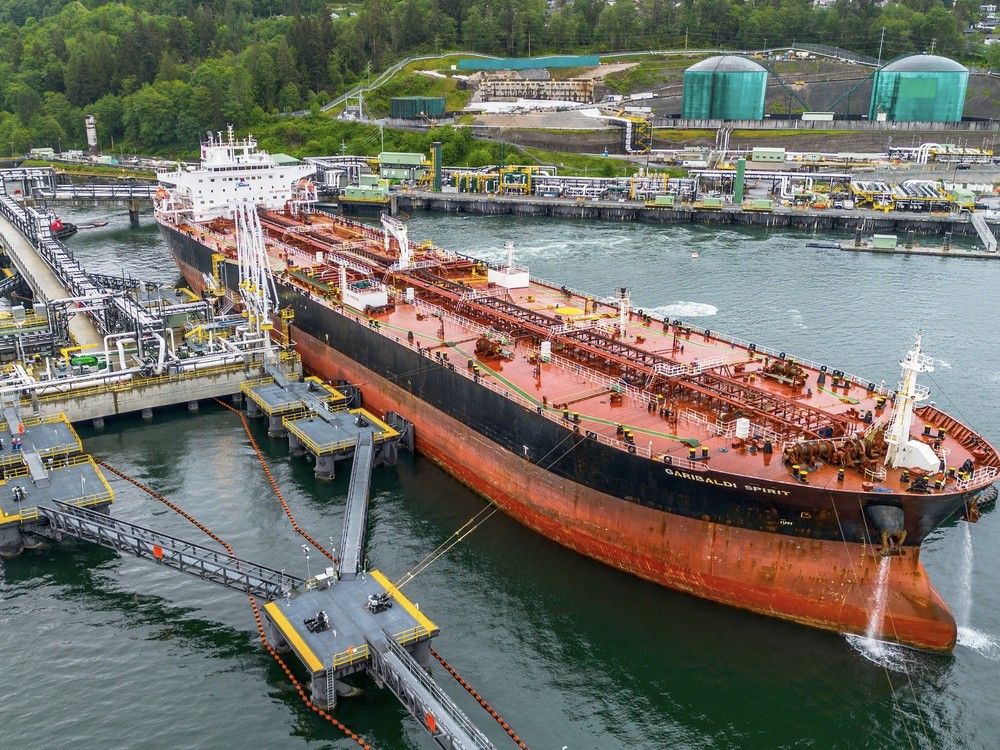
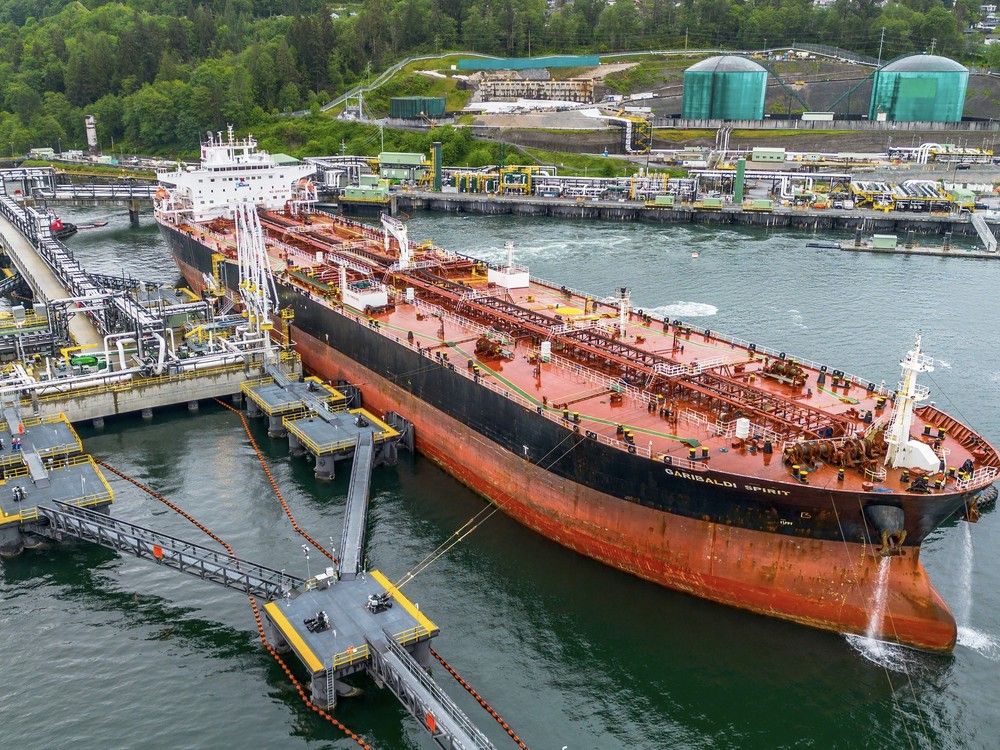
Premier David Eby would be less hostile to the prospect of a new pipeline from Alberta to the B.C. coast if it were to a port that didn’t require lifting Canada’s moratorium on oil tanker traffic off the North Coast, he said Sunday.
Shifting destinations to the South Coast, however, wouldn’t overcome questions about long-term demand for a new oil pipeline or how well it would fit in the already busy Port of Vancouver, according to resource industry expert Tom Gunton.
“That’s a question that would require a fairly detailed feasibility assessment, whether (the port) could handle it or not,” said Gunton, director of the resource and environmental management planning program at Simon Fraser University.
Gunton said Canada’s oil industry has expansion options on existing infrastructure, including the recently completed Trans Mountain pipeline expansion, that it would likely want to exhaust before contemplating an expensive new pipeline.
An opening for a new one-million-barrel-a-day pipeline with “export access to Asian markets” was central to the energy agreement signed last week by Prime Minister Mark Carney and Alberta Premier Danielle Smith though.
Smith characterized new infrastructure as key to diversifying Canada’s exports on the way to becoming an “energy superpower.”
The deal didn’t specify a B.C. destination for a new pipeline — Smith has suggested Prince Rupert — but it does indicate Ottawa’s willingness to consider “an appropriate adjustment to the Oil Tanker Moratorium Act,” if necessary.
In an interview on CTV News’ Question Period, Eby said taking the North Coast tanker moratorium off the table would “take down the temperature” of opposition triggered by the Ottawa-Alberta agreement.
On host Vassy Kapelos’ question about whether he was outright opposed to expansion, Eby said: “No, I think we can have those conversations.”
“My anxiety is about this oil tanker ban, which is the foundational social licence piece for tens of billion of dollars of investment in B.C. that is nearing final investment decision,” Eby added.
B.C. Premier David Eby – who has vehemently opposed Alberta’s pursuit for a new bitumen pipeline to the West Coast – says he is open to a pipeline project in his province if the tanker ban remains in place. pic.twitter.com/0obRHrdXY9
— CTV Question Period (@ctvqp) November 30, 2025
B.C. Conservative finance critic Peter Milobar accused Eby of “flip-flopping” by opposing a Northern pipeline while appearing open to another southern pipeline.
In a news release, Milobar said he called on Eby in the legislature two weeks ago to admit to the need for a new pipeline, and here “we are, 10 days later, and all of a sudden he’s starting to support the idea of a new pipeline. He needs to make up his mind.”
Gunton, however, said “there’s a huge price to diversifying away from the U.S. market” with new pipeline capacity.
Gunton said shipping to China costs $9 a barrel more than shipping to the U.S. Gulf Coast, partly because of high tolls being paid by oil producers on the recently finished Trans Mountain pipeline expansion.
The Port of Vancouver did not respond to Postmedia questions about the port’s ability to accommodate such a big increase in tanker traffic.
Pipeline company Enbridge recently approved a $1.4 billion expansion of its pipeline network into the U.S., the first phase of what could be a capacity increase of 500,000 to 600,000 barrel a day by 2030.
Trans Mountain’s plans include projects over the next five years that would boost its capacity to 1.25 million barrels a day from its 890,000 barrels now.
Gunton said “on the demand side, things are slowing down,” with the International Energy Agency estimating oil demand will peak in the 2030s.
“You have a million barrels (a day) of expansion capacity on the Enbridge system and the Trans Mountain system, so why would you build any more,” Gunton said. “No one’s going to come along and build another million barrels of pipeline space you don’t need, so I just don’t see that being a viable option.”