
‘Punch in the gut’: Island community calculating ripple effects of Crofton mill closure
‘We had the mill so long, we just couldn’t picture that day when it was no longer going to be operating. So, to get that news yesterday was a real punch in the gut’ — North Cowichan Mayor Rob Douglas
You can save this article by registering for free here. Or sign-in if you have an account.
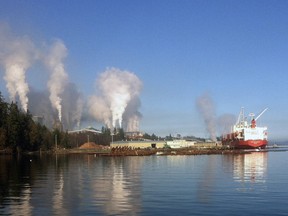
North Cowichan Mayor Rob Douglas knew about the challenges Domtar’s Crofton pulp mill faced getting hold of raw materials, but the news this week that the company will permanently close the facility as of Dec. 15, eliminating 350 jobs, still came as a shock.

Subscribe now to read the latest news in your city and across Canada.
- Unlimited online access to articles from across Canada with one account.
- Get exclusive access to the Vancouver Sun ePaper, an electronic replica of the print edition that you can share, download and comment on.
- Enjoy insights and behind-the-scenes analysis from our award-winning journalists.
- Support local journalists and the next generation of journalists.
- Daily puzzles including the New York Times Crossword.
Subscribe now to read the latest news in your city and across Canada.
- Unlimited online access to articles from across Canada with one account.
- Get exclusive access to the Vancouver Sun ePaper, an electronic replica of the print edition that you can share, download and comment on.
- Enjoy insights and behind-the-scenes analysis from our award-winning journalists.
- Support local journalists and the next generation of journalists.
- Daily puzzles including the New York Times Crossword.
Create an account or sign in to continue with your reading experience.
- Access articles from across Canada with one account.
- Share your thoughts and join the conversation in the comments.
- Enjoy additional articles per month.
- Get email updates from your favourite authors.
Create an account or sign in to continue with your reading experience.
- Access articles from across Canada with one account
- Share your thoughts and join the conversation in the comments
- Enjoy additional articles per month
- Get email updates from your favourite authors
Sign In or Create an Account
“Over the years, there’s always been talk about maybe the mill potentially shutting down one day,” Douglas said. “I think a lot of us who had heard that sort of took it with a grain of salt.
“We’ve had the mill so long, we just couldn’t picture a day when it was no longer going to be operating. So, to get that news (on Tuesday) was a real punch in the gut.”
The Crofton mill, which Douglas’ grandfather helped build, was first opened by B.C. Forest Products in 1957 and has been the bedrock of the Cowichan Valley’s economy for almost six decades.
On Tuesday, however, Domtar, the last in a succession of owners, said poor market prices and a “lack of access to affordable fibre in B.C. necessitates the closure,” according to a statement by Steve Henry, president of the company’s paper and packaging division.
The mill indefinitely halted paper manufacturing at the site almost two years ago, at the cost of 75 jobs then. This week’s decision to close comes less than a month after West Fraser Timber announced it would shutter its 100 Mile House sawmill, putting 165 employees out of work.
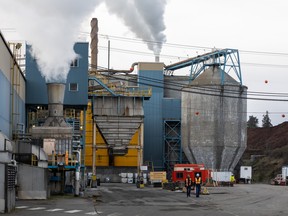
Douglas said his first concern is for the workers and the direct jobs being lost, which industry experts estimate could stretch to between 700 to 1,000 jobs, when the indirect employment of Domtar’s contractors and suppliers are factored in.
-
Advertisement 1Story continues belowThis advertisement has not loaded yet, but your article continues below.
“We’re talking about 350 real people here, with mortgages and families to support and bills to pay,” Douglas said. “To lose a high-paying union job like that is always going to be difficult, especially this time of year with Christmas just around the corner.”
Public and Private Workers of Canada national president Geoff Dawe said that Domtar has talked about its challenges securing raw materials for the last 18 months, but up until the announcement, workers thought things were business as usual.
“We were in there this morning, walking around, talking to our members,” Dawe said. “This is a devastating blow.”
Domtar was also North Cowichan’s biggest single taxpayer, contributing almost $5 million to the municipality’s $53 million operating budget, Douglas said.
Amelia Breckenridge, owner of Third Wave Coffee in Crofton, said news of the closure came as a “shock” to the community.
“It’s the No. 1 topic of conversation,” she said Wednesday.
Comments she has heard in her store and read on local Facebook groups over the last 24 hours run the spectrum, she said.
There is plenty of empathy for the workers, but also questions about how the mill’s closure might affect municipal services given that the mill is a big contributor to the overall tax base.
Some have also expressed relief, from an environmental perspective, because of continuing concerns about the mill’s emissions and waste.
And while Tuesday’s announcement came as a surprise, Douglas said he, along with Nanaimo Mayor Leonard Krog, have been among those lobbying the province to speed up processing times for the harvesting permits that would improve the flow of raw materials.
Pulp mills feed off of the wood chips and waste from sawmills, which have been hit by delays and high costs, on top of U.S. softwood lumber tariffs.
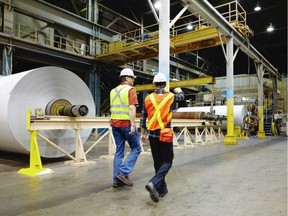
Sawmills have seen closures and production cuts, including Western Forest Products’ mill in Chemainus, 11 km south of the Crofton pulp mill, which was temporarily curtailed in June.
“For the logging contractors the (Truck Loggers Association) represents, this is just devastating,” said Peter Lister, executive director of the association. “The whole fibre supply chain, it starts right back in the woods and increasingly will impact First Nations as well that are more and more often relying on the sale of timber.”
Lister, who is also spokesperson for a coalition of companies and industry groups under the name Coast Forest Policy Coalition, said they have been warning “for months” about the risk to Crofton’s operations.
“The companies have been very, very clear to government that the lack of economic fibre accessibility is going to have crippling impacts to the industry,” Lister said. “And that’s happening, we’re seeing that.”
In a news release, Lister said forestry companies in B.C.’s coastal region are projected to log less than half the 15 million cubic metres of timber allocated in the province’s annual allowable harvest. That is down 43 per cent since 2018, a period during which nine mills have permanently closed.
Crofton’s closure will bring that number to 10, which prompted Council of Forest Industries CEO Kim Haakstad to repeat her group’s call for “an urgent response from our government” to improve the efficiency of permitting, reduce costs, and give additional assistance to First Nations for referrals on land-use plans.
Forests Minister Ravi Parmar, who was set to meet with Douglas, Dawe and other union leaders Wednesday afternoon, said he is working to address some of those issues.
However, some of the increased costs that the industry faces, such as a 40 per cent rise in transportation rates since the pandemic, are outside of the province’s control.
“The closure is absolutely devastating, gut wrenching for the community,” Parmar said. “My message to workers that are impacted, I’m truly sorry that they’re receiving this news just weeks away from Christmas, and that their lives are being disrupted through no fault of their own.”
Karli Ann Fortin, a realtor who has lived in Crofton on and off for most of her life, said she posted a message on a local Facebook group sending prayers to those impacted by the closure.
“Many of the people who work at the mill are highly specialized in roles that may not easily transfer to other local opportunities,” she said. “The possibility that some may face premature retirement, or the need to relocate for work, may be forced to leave Crofton due to affordability and opportunity pressures — this is heartbreaking.”
Many retirees have already relocated to Alberta or other parts of the country where cost of living is lower and this closure may accelerate that trend, she added.
That said, Fortin believes in Crofton’s long-term desirability.
“Crofton is truly unique — a bowl-shaped community facing the ocean, where the entire town seems to look out toward Salt Spring Island. We wake to sunrises that light up Mount Baker and the mainland ski hills across the water. It’s unlike anywhere else,” she said.
“Many long believed and spoke about, that if the mill were ever to close, Crofton would eventually transform into something extraordinary. I never expected to witness that shift in my lifetime, yet here we are.”
With files from Douglas Quan, Postmedia