
B.C. Court of Appeal rules First Nations must be consulted on mineral claims
Two of three judges ruled B.C. courts must honour province’s Declaration on the Rights of Indigenous Peoples Act it passed in 2019 and UN equivalent when granting mineral rights on Indigenous land. One judge dissented
Last updated 7 hours ago
You can save this article by registering for free here. Or sign-in if you have an account.
The B.C. Court of Appeal has overturned a lower court ruling on Indigenous mineral rights on their land, handing First Nations a big win, according to the chief of one nation that appealed.

Subscribe now to read the latest news in your city and across Canada.
- Unlimited online access to articles from across Canada with one account.
- Get exclusive access to the Vancouver Sun ePaper, an electronic replica of the print edition that you can share, download and comment on.
- Enjoy insights and behind-the-scenes analysis from our award-winning journalists.
- Support local journalists and the next generation of journalists.
- Daily puzzles including the New York Times Crossword.
Subscribe now to read the latest news in your city and across Canada.
- Unlimited online access to articles from across Canada with one account.
- Get exclusive access to the Vancouver Sun ePaper, an electronic replica of the print edition that you can share, download and comment on.
- Enjoy insights and behind-the-scenes analysis from our award-winning journalists.
- Support local journalists and the next generation of journalists.
- Daily puzzles including the New York Times Crossword.
Create an account or sign in to continue with your reading experience.
- Access articles from across Canada with one account.
- Share your thoughts and join the conversation in the comments.
- Enjoy additional articles per month.
- Get email updates from your favourite authors.
Create an account or sign in to continue with your reading experience.
- Access articles from across Canada with one account
- Share your thoughts and join the conversation in the comments
- Enjoy additional articles per month
- Get email updates from your favourite authors
Sign In or Create an Account
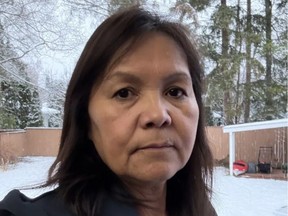
“It’s an exciting victory not only for Gitxaała but for all nations,” said Gitxaala Chief Councillor Linda Innes after the court ruled that the province must consult with First Nations before it automatically grants mineral rights to prospectors through an online system.
“B.C.’s out-of-date, colonial, mineral-tenure regime violates Canada’s own laws, the UN Declaration on the Rights of Indigenous Peoples and our Gitxaała laws,” she said in a statement.
In an interview, she said her nation’s lawyers were reviewing the decision but she was happy that the courts have sided with the rights the Gitxaała have been exerting for years, that First Nations have to be consulted before mineral claims are offered on provincial land in their unceded territories.
She called on the B.C. government to co-operate with Gitxaała and other nations to overhaul the B.C. Mineral Tenure Act.
Two of the three judges in the province’s highest court allowed the appeal by the Gitxaała and the Ehattesaht First Nations in a court battle that began almost five years ago.
The judgment was written by Justice Gail Dickson, with Justice Nitya Iyer agreeing. Justice W. Paul Riley wrote a dissenting judgment.
“Nowhere in the Declaration Act is the judicial branch invited or called upon to adjudicate claims of inconsistency between UNDRIP and British Columbia’s laws, and doing so would take the court outside of its proper role in our constitutional democracy,” Riley wrote.
-
Advertisement 1Story continues belowThis advertisement has not loaded yet, but your article continues below.
But Dickson ruled that the province’s automated online mineral claims registry was “inconsistent” with B.C.’s Declaration on the Rights of Indigenous Peoples Act and with the United Nations’ Declaration on the Rights of Indigenous Peoples.
UNDRIP is an international declaration of the rights of the world’s Indigenous peoples, including the right to self-determination, and is supported by Canada.
Dickson wrote that the lower court had “adopted an unduly narrow approach” to the legal effect of B.C.’s UNDRIP declaration, in a 2023 decision.
In that case, a Supreme Court judge ruled that UNDRIP was an international declaration and that B.C. wasn’t legally bound by it, and he said the question of whether the online mineral claims process was inconsistent with the law couldn’t be decided by the B.C. courts.
But Dickson set aside the Supreme Court judge’s ruling, which had thrown out the First Nations’ applications challenge of the province’s use of the online mineral claims system.
Premier David Eby said his government was reviewing the Appeal Court ruling and could appeal it, if necessary, to the Supreme Court of Canada.
But he said it would more likely amend the law because there appears to be “confusion” by the courts over it. Amendments to the law could “provide clarity around what was clearly intended when we introduced this legislation, and the court appears to have some confusion about that.”
The ruling “potentially puts courts in the driver’s seat,” Eby said at an unrelated event. “It is absolutely crucial that it is British Columbians through their elected representatives that remain in control of the process.
“Too much rides on it in terms of our province’s prosperity and certainty,” he said.
MLA Scott McInnis, the Conservative critic for Indigenous relations and reconciliation, called for the B.C. government to repeal its law adopting UNDRIP.
The law, he said in a statement, “is creating confusion about who decides what (laws are passed), when and by what standard. … British Columbians deserve laws that are clear, democratic, and workable and reconciliation must be built through real engagement and practical outcomes, not legal ambiguity.”
“This ruling highlights exactly what happens when government tries to legislate reconciliation through vague and undefined promises,” he said.
Representatives from the Mining Association of B.C. and the Association of Mining Exploration of B.C. said they were reviewing the judgment.