
Opinion: Do we need another billion-dollar flood before B.C. acts?
Lina Azeez: Province’s flood strategy to help communities prepare for climate disasters sits on a shelf with no funding while municipalities don’t have the tax base to pay for necessary upgrades.
By Lina Azeez
Last updated 3 hours ago
You can save this article by registering for free here. Or sign-in if you have an account.
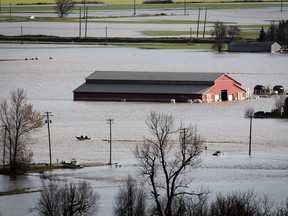
In November 2021, a series of atmospheric rivers devastated communities across the Lower Mainland. Uninsured damages reached into the billions and insured losses exceeded $675 million. Families were forced from their homes. Farmers lost thousands of animals. Salmon were stranded in flooded fields in the middle of spawning season. The transportation corridor connecting the Port of Vancouver to the rest of Canada was cut off for weeks.

Subscribe now to read the latest news in your city and across Canada.
- Unlimited online access to articles from across Canada with one account.
- Get exclusive access to the Vancouver Sun ePaper, an electronic replica of the print edition that you can share, download and comment on.
- Enjoy insights and behind-the-scenes analysis from our award-winning journalists.
- Support local journalists and the next generation of journalists.
- Daily puzzles including the New York Times Crossword.
Subscribe now to read the latest news in your city and across Canada.
- Unlimited online access to articles from across Canada with one account.
- Get exclusive access to the Vancouver Sun ePaper, an electronic replica of the print edition that you can share, download and comment on.
- Enjoy insights and behind-the-scenes analysis from our award-winning journalists.
- Support local journalists and the next generation of journalists.
- Daily puzzles including the New York Times Crossword.
Create an account or sign in to continue with your reading experience.
- Access articles from across Canada with one account.
- Share your thoughts and join the conversation in the comments.
- Enjoy additional articles per month.
- Get email updates from your favourite authors.
Create an account or sign in to continue with your reading experience.
- Access articles from across Canada with one account
- Share your thoughts and join the conversation in the comments
- Enjoy additional articles per month
- Get email updates from your favourite authors
Sign In or Create an Account
Three years later, in October 2024, another atmospheric river hit. In Coquitlam, landslides and raging floodwaters claimed two lives. Rivers topped their dikes, flooding homes and roads. Salmon were spotted swimming through city streets.

tap here to see other videos from our team.
Opinion: Do we need another billion-dollar flood before B.C. acts? Back to video
tap here to see other videos from our team.
The writing is on the wall: The Lower Mainland is one of the most flood-prone regions in the country, and the risks are only increasing. We’re going to have bigger floods, and more of them, due to accelerating climate change and loss of forest cover in our watersheds from excessive clearcut logging, wildfires and bug kills.
Flooding in the Lower Mainland doesn’t just affect local communities. The Port of Vancouver moves as much cargo as the next five largest Canadian ports combined. When highways and rail lines are impacted by floods, it’s not just B.C. that grinds to a halt — it’s our entire national economy, as billions of dollars in goods are stranded. Add to that the billions in damage to homes, farmland and public infrastructure, and it’s clear: We can’t afford another disaster like 2021.
The same obsolete flood control structures that are failing to keep our communities safe are also blocking over 1,700 kilometres of prime salmon habitat in the Lower Fraser region alone.
-
Advertisement 1Story continues belowThis advertisement has not loaded yet, but your article continues below.
After the 2021 floods, the province developed the B.C. Flood Strategy to help communities prepare for future climate disasters. It lays out clear, achievable actions: modernizes outdated flood infrastructure, updates policies and floodplain mapping, supports local and First Nations-led flood plans, and invests in nature-based solutions that reduce flood risk while restoring our floodplain ecosystem.
But one year after it was released, the strategy sits on a shelf with no funding or implementation plan.
Flood protection in B.C. is a patchwork.
In 2003, the province transferred responsibility for most dikes and flood infrastructure to local governments. Municipalities like Delta and Pitt Meadows now face price tags in the billions for necessary upgrades, but have nowhere near the tax base to cover them.
By leaving the flood strategy unfunded, the province is forcing local governments to compete for scraps through a broken system.
Ottawa is also leaving us in the lurch, with the 2025 federal budget including no new funding for flood prevention.
Where local communities are able to find resources, they’re getting things done.
In the Nicomen Slough near Mission, the Leqamel Nation, local farmers, the North Nicomen Diking District and Resilient Waters are exploring nature-based flood protections that would improve drainage while restoring salmon habitat.
In the Cowichan Valley, the Cowichan Tribes are leading work to restore side channels and wetlands that buffer floods and provide critical rearing habitat for young salmon.
In the Nicola River watershed, the Scw’exmx Tribal Council is advancing floodplain restoration projects that reduce erosion and improve community resilience.
These are practical, made-in-B.C. examples of how healthy wetlands and reconnected side channels can absorb floodwaters, reduce peak flows and protect nearby communities, all while giving salmon the healthy rivers they need to thrive.
We know prevention works, and it saves money. Every dollar invested in pre-flood mitigation saves between $7 and $13 in recovery costs.
The 2021 floods showed us the cost of delay, but, four years later, we are still unprepared. We have the plan, we have the expertise and we know what works.
It shouldn’t take another billion-dollar flood, more lives lost or another national supply chain shutdown before B.C. acts. Unless the province changes course, that’s exactly the gamble we’re all being forced to take.
Lina Azeez is the floodplain resilience manager with the Watershed Watch Salmon Society, where she leads advocacy for fish-friendly flood management and resilient communities across the Lower Fraser region.