
B.C. says parents of youth admitted involuntarily under Mental Health Act must be informed
Critics have warned that involuntary care runs the risk of traumatizing youth and breaking their faith in the system
By Alec Lazenby
You can save this article by registering for free here. Or sign-in if you have an account.
The province’s newly released guidelines for placing youth with substance use and mental health challenges in involuntary care could lead to traumatic experiences that leave them less likely to seek help in the future, advocates are warning.

Subscribe now to read the latest news in your city and across Canada.
- Unlimited online access to articles from across Canada with one account.
- Get exclusive access to the Vancouver Sun ePaper, an electronic replica of the print edition that you can share, download and comment on.
- Enjoy insights and behind-the-scenes analysis from our award-winning journalists.
- Support local journalists and the next generation of journalists.
- Daily puzzles including the New York Times Crossword.
Subscribe now to read the latest news in your city and across Canada.
- Unlimited online access to articles from across Canada with one account.
- Get exclusive access to the Vancouver Sun ePaper, an electronic replica of the print edition that you can share, download and comment on.
- Enjoy insights and behind-the-scenes analysis from our award-winning journalists.
- Support local journalists and the next generation of journalists.
- Daily puzzles including the New York Times Crossword.
Create an account or sign in to continue with your reading experience.
- Access articles from across Canada with one account.
- Share your thoughts and join the conversation in the comments.
- Enjoy additional articles per month.
- Get email updates from your favourite authors.
Create an account or sign in to continue with your reading experience.
- Access articles from across Canada with one account
- Share your thoughts and join the conversation in the comments
- Enjoy additional articles per month
- Get email updates from your favourite authors
Sign In or Create an Account
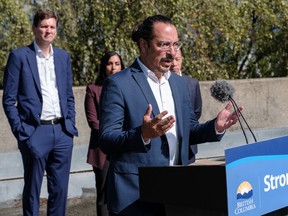
On Friday, Premier David Eby and adviser Dr. Daniel Vigo released new guidance to physicians clarifying that struggling youth can be detained under the Mental Health Act if they are deemed a risk to themselves or others.
It also includes a stipulation that parents must be notified if this occurs, and mentions that all people involuntarily detained have the right to speak to an independent rights adviser if they wish to challenge their admission.
“This is not an issue where everyone is going to agree. But I hope that we can all agree that we need to do our absolute best to provide front-line treatment and supports to kids if it means that they are not going to have a brain injury and it means they’re not going to die of an overdose,” said Eby.
The family of Elliot Eurchuk, who died at the age of 16 from an overdose in 2018, appeared alongside Eby and Vigo in support of the changes.
Eurchuk’s mother, Dr. Rachel Staples, said her son had been in and out of hospital due to opioid use disorder, but she and her husband weren’t kept in the loop.
“This is why we’re all here today, is to ensure that parents get that crucial information from the physicians to assist in a proper diagnosis and proper treatment plan in the long term to save other children’s lives,” she said.
While the new policy doesn’t amend the Mental Health Act, some advocates warn that it could cause harm to youth by shattering their trust in the system and making them less likely to seek help in the future.
-
Advertisement 1Story continues belowThis advertisement has not loaded yet, but your article continues below.
Leslie McBain, founder of Moms Stop The Harm, said she believes the province is conflating mental health issues with substance use challenges and that each individual may need different supports depending on what they are struggling with.
She also argued that research has shown that involuntary care often doesn’t work and the province needs to focus on expanding its counselling and voluntary treatment options instead.
“I think the most serious concern that we would have about that is if a person, youth or adult, is involuntarily treated for substance use disorder, what happens when they are released? What treatment are they getting within those walls?” said McBain.
“Is their trauma — or their reason for taking drugs in the first place — being addressed? If it is not, those individuals come out of that facility and, if they have no support, no place to live, no family that wants to have them back in the house, they will go back to the street.”
Trevor Goodyear, an assistant professor at the UBC School of Nursing who works in the area of youth mental health and addictions, said he has watched the province shift away from harm-reduction policies, like decriminalization, toward treatment with concern. He believes the government needs an all-of-the-above approach.
He said data from the Office of the Representative for Children and Youth has shown a major increase in detentions of youth under the Mental Health Act in recent years at the same time as voluntary treatment options fall behind.
“This announcement, to me, really sends a concerning message that youth autonomy and decision making over their own care is being undermined,” said Goodyear.
“That the province is really prioritizing investment in involuntary treatment over evidence-based supports that we know are better suited to making a more positive impact, such as harm-reduction services, voluntary substance-use treatment and investment in housing and social determinants of good health.”
Claire Rattée, B.C. Conservative mental health and addictions critic, dismissed the announcement as performative — a way for the government to appear to show they are doing something to address the crisis without actually doing the hard work of building more treatment beds or creating new avenues for recovery.
“There’s only 806 treatment beds in this province as of March,” said Rattée. “I can’t even begin to wager a guess as to how many beds we actually need for youth specifically, but I can tell you that the City of Vancouver is quite confident that there is a minimum of 800 people living unhoused on the streets in Vancouver who are suffering from severe mental health challenges that would need involuntary psychiatric care.”
Independent MLA Elenore Sturko, a long-time critic of policies such as safe supply and decriminalization, said she is supportive of the new guidance to physicians, but pointed to the closure of the 10-bed Carlile Youth Concurrent Disorders Centre at Lions Gate Hospital in North Vancouver as an example of how treatment is still far behind where it needs to be.
Sturko said she wishes Vigo had been appointed by Eby earlier, and hopes to see the province develop a long-term plan for treatment and recovery.
“It has taken far too long to get to this place,” she said.
According to provincial statistics, 21 youth under the age of 19 have died as a result of toxic drugs between January and the end of October, already surpassing the 19 who died all of last year.
In the almost 10 years since the province declared toxic opioids a public health emergency, over 16,000 British Columbians have died. Although there has been a small decrease in the number of fatalities so far this year, the number of overdoses is believed to have gone up in recent weeks.
A 2020 bill introduced by the NDP under the late Premier John Horgan that would have amended the Mental Health Act to allow youth to be involuntarily detained for up to seven days after an overdose was pulled back after outcry from the Green Party and substance use advocates, partially leading to a subsequent early election call.
The bill was officially scrapped in 2022 following further consultation.