Four years after devastating B.C. floods, little has been done to protect homes, businesses, infrastructure
The B.C. government released a 10-year flood mitigation plan in 2024 but it had no price tag, no project priorities, and no timelines
Last updated 1 day ago
You can save this article by registering for free here. Or sign-in if you have an account.
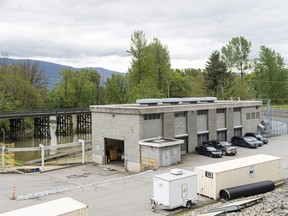
Atmospheric rivers are again threatening Abbotsford and other southern B.C. communities, yet there has been little progress on reducing flood risks.

Subscribe now to read the latest news in your city and across Canada.
- Unlimited online access to articles from across Canada with one account.
- Get exclusive access to the Vancouver Sun ePaper, an electronic replica of the print edition that you can share, download and comment on.
- Enjoy insights and behind-the-scenes analysis from our award-winning journalists.
- Support local journalists and the next generation of journalists.
- Daily puzzles including the New York Times Crossword.
Subscribe now to read the latest news in your city and across Canada.
- Unlimited online access to articles from across Canada with one account.
- Get exclusive access to the Vancouver Sun ePaper, an electronic replica of the print edition that you can share, download and comment on.
- Enjoy insights and behind-the-scenes analysis from our award-winning journalists.
- Support local journalists and the next generation of journalists.
- Daily puzzles including the New York Times Crossword.
Create an account or sign in to continue with your reading experience.
- Access articles from across Canada with one account.
- Share your thoughts and join the conversation in the comments.
- Enjoy additional articles per month.
- Get email updates from your favourite authors.
Create an account or sign in to continue with your reading experience.
- Access articles from across Canada with one account
- Share your thoughts and join the conversation in the comments
- Enjoy additional articles per month
- Get email updates from your favourite authors
Sign In or Create an Account
Following devastating flooding in 2021, the B.C. NDP government released a 10-year flood mitigation plan in the spring of 2024, but it had no price tag, no project priorities, and no timelines.

tap here to see other videos from our team.
Four years after devastating B.C. floods, little has been done to protect homes, businesses, infrastructure Back to video
tap here to see other videos from our team.
In September, when Metro Vancouver representatives met with Randene Neill, B.C.’s minister of water, land and resource stewardship, and Kelly Greene, the minister of emergency management and climate readiness, they were told there is no new funding for the flood strategy because of the province’s financial woes.
B.C. has a projected deficit this year of $11 billion.
Dylan Kruger, a City of Delta councillor and the former chair of a Metro Vancouver flood task force, said this recent atmospheric river is another reminder for the region and province that the cost of inaction could be in the billions.
“It continues to be extremely disappointing that despite calls from municipalities and from advocacy groups for action, we have a B.C. flood plan that is currently unfunded,” said Kruger, a member of Metro Vancouver’s board of directors who sits on several committees including regional planning and finance.
Atmospheric rivers — huge plumes of rain from tropical storms carried across the Pacific Ocean — are expected to increase in severity and frequency because of climate change.
“There’s an infrastructure deficit of billions of dollars in order to protect homes, businesses, critical infrastructure from severe flood impacts, like what we saw in 2021. We can’t afford to get this wrong,” said Kruger.
This is another opportunity for the province to make this a priority, he said, noting that Highway 1, which was cut off in 2021, is a critical transportation link that connects the Lower Mainland and its ports and airports to the rest of B.C. and the country.
-
Advertisement 1Story continues belowThis advertisement has not loaded yet, but your article continues below.
“Everything is fine until there’s a disaster,” noted Kruger.
Provincial officials told local government representatives at a Metro Vancouver climate committee meeting in September they are working on creating a public flood risk mapping portal and creating new design guidelines for nature-based flood mitigation solutions, but did not speak to funding.
Officials with the B.C. Ministry of Water, Land and Resource Stewardship did not respond Thursday to questions on funding the province’s flood strategy, and whether they had established project priorities or timelines.
In November 2021, atmospheric rivers caused billions of dollars in damages in B.C., destroying homes, roads, bridges, railways and pipelines. Five people were killed in the heavy rains on Highway 99 north of Pemberton. Abbotsford in the Fraser Valley and Merritt and Princeton in the B.C. Interior were the hardest hit, with thousands of people having to evacuate.
Late Wednesday night, Abbotsford declared a state of local emergency and hundreds of properties were put on evacuation order. There are also evacuation alerts in the Princeton area. And the B.C. government closed major highways between the Lower Mainland and the Interior because of flooding, falling rock and debris, and high avalanche hazards.
In 2021 in Abbotsford, flooding was triggered when the Nooksack River overtopped its east bank near Everson, about 10 kilometres south of the border, and travelled north through farmland to the Sumas River.
Provincial officials said Thursday that has now happened again.
Cross-border solutions have proved elusive.
And in a major blow in the summer of 2024, the federal government rejected Abbotsford, Merritt and Princeton’s applications for $1.7 billion from Ottawa’s disaster mitigation and adaptation fund.
The province has stepped up with some money for the three communities’ proposed projects, including $76.6 million to upgrade the critical Barrowtown pumping station in Abbotsford, announced in February 2024, and $60 million for Merritt, announced in March 2025, to upgrade its dikes.
Provincial grant funding is available for smaller projects as well.
But that funding is nowhere near what is needed to reduce risks with billions of dollars of needed projects, outlined in a 2022 Postmedia investigation.
Kruger has noted that Delta, which faces flood threats from the Fraser River and the ocean, has an estimated $3 billion in needed flood upgrades.
B.C. municipalities have consistently told the provincial and federal governments they don’t have the financial resources for the needed upgrades.
Abbotsford Mayor Ross Siemens has said previously that this type of infrastructure is way beyond what a municipality can afford.
In Abbotsford, a city website outlines progress on upgrades to the Barrowtown pump station. A flood wall, which will reduce the risk of the pump failing during a flood, has been completed. A backup generator has been installed.
And planning has begun for mechanical and electrical upgrades to the pump expected to be complete by the end of 2027.
But that does not address dike upgrades, the creation of bigger flood plains and moving homes out of floodplains, estimated at $1.6 billion.
First Nations in the Fraser Valley were also hit by the 2021 flooding and have asked to be part of mitigation plans, utilizing nature-based solutions such as restoring sloughs and marsh areas and protecting the environment.
Tyrone McNeil, president of the Stó:lō Tribal Council, said in order for First Nations to be effective participants they need the financial backing to build capacity to tackle these critical issues.