Metro Vancouver’s newest park will change the way you see our region
From Widgeon Marsh Regional Park, it is apparent that Metro Vancouver stands on the edge of a vast wilderness. But should it have been left undisturbed?
Last updated 10 hours ago
You can save this article by registering for free here. Or sign-in if you have an account.
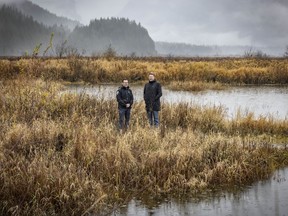
Metro Vancouver’s newest park is a mist-cloaked place where mountains meet marshland.

Subscribe now to read the latest news in your city and across Canada.
- Unlimited online access to articles from across Canada with one account.
- Get exclusive access to the Vancouver Sun ePaper, an electronic replica of the print edition that you can share, download and comment on.
- Enjoy insights and behind-the-scenes analysis from our award-winning journalists.
- Support local journalists and the next generation of journalists.
- Daily puzzles including the New York Times Crossword.
Subscribe now to read the latest news in your city and across Canada.
- Unlimited online access to articles from across Canada with one account.
- Get exclusive access to the Vancouver Sun ePaper, an electronic replica of the print edition that you can share, download and comment on.
- Enjoy insights and behind-the-scenes analysis from our award-winning journalists.
- Support local journalists and the next generation of journalists.
- Daily puzzles including the New York Times Crossword.
Create an account or sign in to continue with your reading experience.
- Access articles from across Canada with one account.
- Share your thoughts and join the conversation in the comments.
- Enjoy additional articles per month.
- Get email updates from your favourite authors.
Create an account or sign in to continue with your reading experience.
- Access articles from across Canada with one account
- Share your thoughts and join the conversation in the comments
- Enjoy additional articles per month
- Get email updates from your favourite authors
Sign In or Create an Account
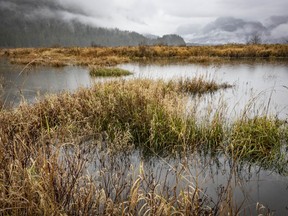
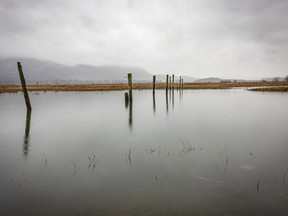
While not every day is as damp as this particular December morning, water is a constant at Wigeon Marsh Regional Park, where it continuously shapes the landscape. Waterfalls crash from forested cliffs above a freshwater wetland. In the distance, grey mountains fade softly into fog.
The park, wedged between the Pitt River and the base of Burke Mountain, opened to visitors in November. It was added to Metro Vancouver’s roster of 24 parks even as some question whether the regional district should be involved in creating parks. Concerned about rising taxes, some local politicians have warned of regional government “scope creep.”
But that isn’t the only tension park proponents must navigate. In the Instagram age, could opening the sensitive and important ecological area cause damage?
John McEwen, chair of Metro Vancouver’s regional parks committee, seemed to relish these questions on a recent tour. Impervious to the steady rain, he spoke enthusiastically about opening more wild space to the public, while watching eagles and hawks flying overhead.
“I think from a board perspective — and from a taxpayer perspective, as their money is being put toward this — it needs to be opened up so the public can see these places and understand the importance of protecting them,” he said. “If nobody came here, nobody would care about this place. It would be easy for this to be developed down the road.”
Metro Vancouver purchased the park land in 1992 through a partnership. The Nature Trust of B.C. and Ducks Unlimited paid for more than half of the lands — mostly wetland areas, which are under a 99-year lease to Metro Vancouver as a site of ecological interest for park purposes. Metro Vancouver purchased most of the upland areas and has continued adding to the park through subsequent land purchases.
-
Advertisement 1Story continues belowThis advertisement has not loaded yet, but your article continues below.
Access to the park is somewhat limited by a reservation system. While it is open seven days a week from 8 a.m. to 3:30 p.m., visitors must make a vehicle reservation. They can also walk or bike along a five-kilometre gravel road, or paddle in via Widgeon Slough. On Saturdays and Sundays, they can reserve seats on a free shuttle that will pick up and drop off near Coquitlam Centre. Dogs, with the exception of service animals, are not allowed in the park.
Once in the park, visitors can walk or bike along a paved four-kilometre path takes them from the parking lot to a picnic area that opens onto a spectacular view of forest, mountain and water. It is apparent that Metro Vancouver sits on the edge of a vast wilderness, with views of Pinecone Burke Provincial Park, a 380 square kilometre park stretching north toward Garibaldi, and watercourses that trace back to Pitt Lake and the remote area beyond.
Jeffrey Fitzpatrick, regional parks design and development division manager, said Metro Vancouver will continue to add features in the park, about six per cent of which is open to the public. The regional district is also working with Coquitlam to ensure the gravel road into the park, which must be shared with dump truck traffic, is in good condition.
The role — and cost — of Metro Vancouver services, including parks, have been under the microscope as regional tax hikes are expected in the coming year. Surrey Mayor Brenda Locke said that while she supports maintaining Metro Vancouver, it should stick to the basics, like water and sewer.
“Where I think Metro Vancouver has gone way over the top is … is scope creep,” she said in early November. “They have just continued to grow and grow and grow, and they have made it their job to do things like housing and parks and these … are all duplication.”
But McEwen said the regional district has a role to play in ensuring there is green space to match the needs of a growing population.
“It’s really important for people to realize that there’s municipalities like Vancouver, New Westminster, North Vancouver that are adding population, going vertical, and with each development, there’s supposed to be park space added,” he said. “But there is no place to add green space in these areas.”
Municipalities like Coquitlam or Pitt Meadows, where there is still open land, may not be willing, or able, to add large parks, so residents of more dense urban areas can get out into nature.
“So the region has to be able to provide that,” said McEwen.
Metro Vancouver uses taxpayer money to buy land that might otherwise be developed. Much of that land is on the outskirts of the region, including Widgeon Marsh. But as hundreds of housing units start to fill in the land west of the Pitt River, the area is no longer so remote.
With an emphasis on creating parks where people can connect with nature, not playgrounds and playing fields, which are a municipal responsibility, Metro Vancouver is looking at the big picture and filling a regional need for more green space, said McEwen. Parks are connected through greenways that allow people from across the region to enjoy them.
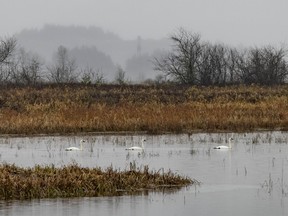
More than 100 bird species have been documented in the Widgeon Marsh area in the last 10 years, with daily counts reaching over 1,000 water birds during high-use winter months. At least 15 species recognized as being of “conservation concern” are known to exist in the park, including plant, amphibian, bird, and fish species. Among these are the coastal tailed frog, barn swallow, American bittern, western screech owl and coastal cutthroat trout.