
Vancouver man goes from homeless to housed and in love after Riverview
After hitting rock bottom in his late 20s, Ed Barnes discovered The Kettle Society and, eventually, the love of his life: ‘She gave me the inspiration to want to live, to keep going — and now she keeps me going’
Last updated 1 day ago
You can save this article by registering for free here. Or sign-in if you have an account.
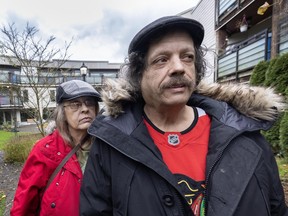
Ed Barnes once spent Christmas Eve walking the streets of Vancouver with nowhere to go, cycling through addiction, mental illness and unstable housing in the Downtown Eastside. Today, the 61-year-old works as a Salvation Army bell ringer and shares a home with his wife, Kim — a stability he once believed was impossible.

Subscribe now to read the latest news in your city and across Canada.
- Unlimited online access to articles from across Canada with one account.
- Get exclusive access to the Vancouver Sun ePaper, an electronic replica of the print edition that you can share, download and comment on.
- Enjoy insights and behind-the-scenes analysis from our award-winning journalists.
- Support local journalists and the next generation of journalists.
- Daily puzzles including the New York Times Crossword.
Subscribe now to read the latest news in your city and across Canada.
- Unlimited online access to articles from across Canada with one account.
- Get exclusive access to the Vancouver Sun ePaper, an electronic replica of the print edition that you can share, download and comment on.
- Enjoy insights and behind-the-scenes analysis from our award-winning journalists.
- Support local journalists and the next generation of journalists.
- Daily puzzles including the New York Times Crossword.
Create an account or sign in to continue with your reading experience.
- Access articles from across Canada with one account.
- Share your thoughts and join the conversation in the comments.
- Enjoy additional articles per month.
- Get email updates from your favourite authors.
Create an account or sign in to continue with your reading experience.
- Access articles from across Canada with one account
- Share your thoughts and join the conversation in the comments
- Enjoy additional articles per month
- Get email updates from your favourite authors
Sign In or Create an Account
“I thought there was nothing out there for me,” he told Postmedia News.
Born and raised in Vancouver, Barnes was diagnosed with a serious mental illness in his early 20s, spending stints in treatment at Fraser Health facilities and at Riverview Hospital. At 23, living on disability assistance, he returned to the city in search of housing.
“The only place I could afford was rooms in rundown single-room occupancy hotels,” he said. “By that time, I was ignoring everyone — I wasn’t stable. I kept moving from place to place.”
Barnes spent years in the Downtown Eastside, hopping from one dilapidated SRO to another. Isolation and chaos worsened his struggles with addiction and mental health, and he completely lost touch with his family.
By his late 20s, he had hit rock bottom. One Christmas Eve, after blowing all his money on drugs and alcohol, he wandered the streets for hours, looking for a warm place to take shelter.
“I went down to Granville Street and kept trying to knock on building doors to get inside, to sleep in a place like a garage or something. It was so scary, being that cold,” he recalled.
Amid the frigid night, Barnes remembered someone telling him about The Kettle Society, a non-profit with a drop-in centre, where he could get warm and have a meal and a cup of coffee.
-
Advertisement 1Story continues belowThis advertisement has not loaded yet, but your article continues below.
“Looking back, I just needed to trust somebody, which is hard to feel like you can do in the Downtown Eastside,” Barnes said.
After a first visit to the Kettle’s drop-in centre on Venables Street near Commercial Drive, he returned almost daily over several years, building connections with outreach workers and fellow visitors.
The non-profit started in the 1970s as a small storefront serving coffee, toast and peanut butter sandwiches, after Riverview Hospital was downsized and left many people with mental-health challenges without support. It has since grown into a hub offering showers, laundry, meals and referrals to supportive housing and mental-health services.
Damian Murphy, Kettle’s community services manager, remembers Barnes lining up for the low-cost meals, which were $1 or free if he completed a chore.
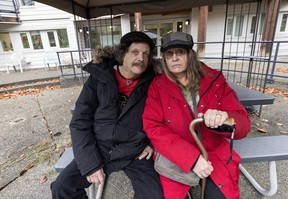
“Ed was always one of the first to sign up each day to complete a task,” Murphy said.
The Kettle Society operates seven supportive housing buildings in Vancouver, ranging from mental-health-focused units like those at Triumph Apartments in the Grandview-Woodland neighbourhood, which offer 24-hour staff support, to buildings where residents meet with support staff weekly.
“Some folks reach a level of stability and get married, moving into subsidized or market housing with our continued support,” explained Murphy.
“We operate like a family, aiming to always stay connected with those in our community.”
Eventually, Kettle staff placed Barnes at Triumph Apartments, where he began his recovery from addiction. He was also connected to a clinical mental-health team at Coast Mental Health and started medication to manage his condition.
He says the real turning point came in his 40s, when he met fellow community member Kim. Though they had crossed paths at Kettle’s drop-in centre, they truly connected on a four-day Camp Jubilee trip, where 50 or so community members escape the chaos of the DTES to do activities and socialize outdoors.
“You know when you’re younger, in school, and you’ve got a crush on someone to the point where you always want to be around them — that was Kim for me,” Barnes said. “Right away, we just clicked.”
Wanting a life with her pushed the man to try again: To stay sober and rebuild his future.
“I wanted to be with Kim so much and keep my life without being stoned on drugs,” he said. “She gave me the inspiration to want to live, to keep going — and now she keeps me going.”
The couple was wed a few years later in their first shared apartment.
“I remember one night, sitting in the apartment the night before New Year’s Eve, and I said to her, ‘What would you do if I asked you to marry me?’ And she said, ‘I don’t know,’” Barnes recalled.
“Well, the next night I asked again, and she said, ‘Yes.’”
Today, the pair live in Jericho and describe their daily life as ordinary — grocery runs and playing with their cat Mickey. Sobriety is now part of their routines, supported by ongoing access to community programs and mental-health care during tougher times.
“I want others who are struggling to know not to give up, because there are people out there who truly care,” Barnes said.
“Just see what can happen when you try, it’s amazing how things can turn out.”