
This made-in-B.C. preventive surgery lowers ovarian cancer risk
The province is expanding a program to provide innovative preventive surgery for those at risk of ovarian cancer
By Denise Ryan
Last updated 12 hours ago
You can save this article by registering for free here. Or sign-in if you have an account.
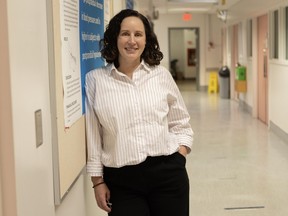
The province is expanding access to a life-saving made-in-B.C. procedure that dramatically reduces the risk of occurrence of ovarian cancer.

Subscribe now to read the latest news in your city and across Canada.
- Unlimited online access to articles from across Canada with one account.
- Get exclusive access to the Vancouver Sun ePaper, an electronic replica of the print edition that you can share, download and comment on.
- Enjoy insights and behind-the-scenes analysis from our award-winning journalists.
- Support local journalists and the next generation of journalists.
- Daily puzzles including the New York Times Crossword.
Subscribe now to read the latest news in your city and across Canada.
- Unlimited online access to articles from across Canada with one account.
- Get exclusive access to the Vancouver Sun ePaper, an electronic replica of the print edition that you can share, download and comment on.
- Enjoy insights and behind-the-scenes analysis from our award-winning journalists.
- Support local journalists and the next generation of journalists.
- Daily puzzles including the New York Times Crossword.
Create an account or sign in to continue with your reading experience.
- Access articles from across Canada with one account.
- Share your thoughts and join the conversation in the comments.
- Enjoy additional articles per month.
- Get email updates from your favourite authors.
Create an account or sign in to continue with your reading experience.
- Access articles from across Canada with one account
- Share your thoughts and join the conversation in the comments
- Enjoy additional articles per month
- Get email updates from your favourite authors
Sign In or Create an Account
Opportunistic salpingectomy, or the removal of fallopian tubes in women already undergoing another abdominal or gynecological surgery, has been shown to reduce the occurrence of high grade serous carcinoma, one of the deadliest form of ovarian cancer, by a staggering 80 per cent.
“It was a no-brainer for me,” said Lorena Munro, 41. The Revelstoke mother of three had the procedure done in 2023 during a caesarean section when she had her last child. “We all know someone who has gone through cancer, and ovarian cancer is one of the scariest.”
Dr. Gillian Hanley, an assistant professor in the department of obstetrics and gynecology at the University of B.C. is part of a research team, first led by Dr. Diane Miller, that showed pre-emptive removal of fallopian tubes, without removal of the ovaries, is a game-changing prevention strategy.
“Evidence shows that most of these ovarian cancers do not originate in the ovaries as was previously believed,” said Hanley. “We found the pre-lesions for this kind of cancer were in the fallopian tubes, not the ovaries.”
In 2010, B.C. became the first region in the world to recommend removal of fallopian tubes during hysterectomies and tubal ligations for women of average risk who were sure they did not want more children. Now, this recommendation for access to salpingectomy has been expanded to include routine surgeries performed by general and urologic surgeons, in order to reach more women and prevent more ovarian cancers.
Opportunistic salpingectomies for patients undergoing hysterectomies and other gynecological surgeries was so promising, it was offered in B.C. even before long-term clinical trial data was available.
-
Advertisement 1Story continues belowThis advertisement has not loaded yet, but your article continues below.
“We were working on a premise that by removing the tissue of origin of this very deadly cancer, we would remove the risk,” said Hanley.
They were right.
In 2022, a study led by Hanley between 2008 and 2017 found clear evidence that opportunistic salpingectomy significantly reduced the risk of high-grade ovarian cancer by 80 per cent in women who had the procedure.
Hanley said women who were offered the opportunity to participate in the study were allowed to self-select whether they wanted to be in the salpingectomy group, or the control group that wouldn’t receive the surgery. Every woman wanted the opportunity.
“No one wanted to be in the control group, so we had to pivot and use retrospective historical data,” said Hanley.
“It is very safe to do, and it does not increase risk for any operative post-operative complications,” said Hanley. Fallopian tubes primarily serve as sites for fertilization of the egg, and conduits for the fertilized eggs to travel to the uterus during reproduction.
Studies have shown fallopian tube removal causes no hormonal disruption or impact on menopause.
“This is opportunistic, which means it is tied to only if you’re getting another surgery done. It’s completely taking advantage of the fact that there’s another surgical opportunity where we can provide this risk reduction without undergoing the risk that comes just inherently from having surgery.”
The average lifetime risk of ovarian cancer is about 1.4 per cent, but its impact is devastating. In Canada, an estimated 3,100 women will be diagnosed with ovarian cancer annually, and 2,000 will die from it, according to the Canadian Cancer Society. It is the fifth-leading cause of cancer death among Canadian women.

“Ovarian cancer is one of the cancers with the most devastating consequences,” said surgical oncologist Dr. Heather Stuart. “We’ve never been able to screen or detect it early. It almost always presents at late-stage disease.”
Those that have a BRCA1 or BRCA2 genetic mutation or family history may chose a prophylactic intervention, such as removal of ovaries and fallopian tubes, but those represent only five to 15 per cent of all ovarian cancer diagnoses.
Opportunistic salpingectomies are much less invasive. Most are performed laparoscopically.
For the past few years, Stuart has been brainstorming ways to reach surgeons in different specialties across the province whose procedures might bring them close enough to the fallopian tubes to make removal quick, safe and efficient, even making a YouTube video for urologists and general surgeons.
“The ease with which it is accomplished is the highest when operating on something within the same vicinity,” said Stuart. That means gall bladder, appendix (except in an emergency, when a patient might not be able to make an informed decision), hernia surgeries, fibroid removal, endometriosis surgery, and caesarean sections.
It was Lorena Munro’s family doctor, Dr. Victoria Vogt Haines, a family physician with enhanced surgical skills, who brought up the conversation, and performed the procedure.
“I have three kids. Right away, I knew if it reduces your risk by that much, is low-risk and has no side effects, it was the right thing for me to do,” said Munro.
Historically, surgical training has been “siloed,” said Stuart. “It’s that stay-in-your lane phenomenon. Now we are able to provide surgeons enough high-level data to show they can make a difference in a space they didn’t previously work in, and see more collaboration between general surgery, gynecology and urology.”
When researchers presented data that they could surgically prevent ovarian cancer, it was exciting for everyone, said Stuart, and specialists began to do the procedure with interested patients who were having colorectal or gynecological surgeries.
Now they are expanding with an awareness campaign, hoping to reach more family doctors and patients.
“It’s very exciting,” said Stuart.
For more health news and content around diseases, conditions, wellness, healthy living, drugs, treatments and more, head to Healthing.ca – a member of the Postmedia Network.