
Kindergarten prep 101: What experts say B.C. kids need before the first day
Starting kindergarten in B.C. and not sure your child is ready? We spoke to education experts on what skills your kid needs. Find out more.
By Cheryl Chan
You can save this article by registering for free here. Or sign-in if you have an account.
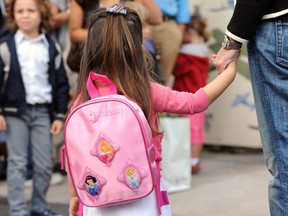
So your kid is turning five this year? That means they, along with more than 38,000 kids in B.C., will be starting kindergarten in September.

Subscribe now to read the latest news in your city and across Canada.
- Unlimited online access to articles from across Canada with one account.
- Get exclusive access to the Vancouver Sun ePaper, an electronic replica of the print edition that you can share, download and comment on.
- Enjoy insights and behind-the-scenes analysis from our award-winning journalists.
- Support local journalists and the next generation of journalists.
- Daily puzzles including the New York Times Crossword.
Subscribe now to read the latest news in your city and across Canada.
- Unlimited online access to articles from across Canada with one account.
- Get exclusive access to the Vancouver Sun ePaper, an electronic replica of the print edition that you can share, download and comment on.
- Enjoy insights and behind-the-scenes analysis from our award-winning journalists.
- Support local journalists and the next generation of journalists.
- Daily puzzles including the New York Times Crossword.
Create an account or sign in to continue with your reading experience.
- Access articles from across Canada with one account.
- Share your thoughts and join the conversation in the comments.
- Enjoy additional articles per month.
- Get email updates from your favourite authors.
Create an account or sign in to continue with your reading experience.
- Access articles from across Canada with one account
- Share your thoughts and join the conversation in the comments
- Enjoy additional articles per month
- Get email updates from your favourite authors
Sign In or Create an Account
For most families, a child entering kindergarten is their first leap into the school system. Between registration deadlines, school catchment boundaries and questions about whether your child is ready for kindergarten, the process can be stressful.
We’ve pulled together a guide on what parents in some of B.C.’s largest school districts need to know about getting their child enrolled into kindergarten this fall and share tips from early childhood education experts on what parents can do now to prepare for the transition.
What does being ready for kindergarten mean?
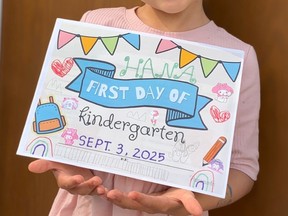
Adrienne Stewardson, district principal of early learning and child care for the Vancouver school board, said she doesn’t like using the phrase “ready for kindergarten” as it implies some kids aren’t ready to go to school, which she said is simply not true.
“Everybody’s ready for kindergarten no matter where your child is at.”
Laurie Ford, a child psychologist and director of early childhood education at the University of B.C., said school readiness isn’t so much about academics, but whether the child is ready to learn. Generally, that includes being able to follow routine, communicate needs, manage emotions, and engage with others.
“If families are doing the everyday things that naturally support a child’s development, in theory, that child will be ready for school,” she said.
Should kids know their ABCs or be able to write their name?
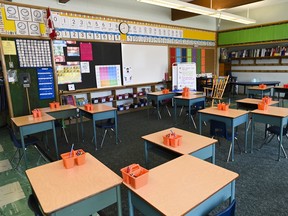
“There’s no expectation that they do,” said Stewardson. Some kids will know how to, and that’s great, but if they don’t, the kids and families shouldn’t feel that their kids are behind.
“We’ll be teaching those things through the course of the year at kindergarten.”
Ford says there can be too much focus on academics, but school readiness comes from language exposure, play, and emotional regulation, not worksheets or drills. When you read to your child, for example, you’re already introducing sounds and letters, comprehension and thinking — teaching them the foundations without it feeling like “teaching.”
The learning follows naturally, said Ford, and the academics “get checked off.” Kids have 12 years to focus on academics, she added. “When we talk about school readiness, I like to flip it and make sure the children are in a phase they’re ready to learn.”
What can parents do to help prepare for kindergarten?

Most parents have received the memo that it’s important to read to their kids, said Ford. But it shouldn’t be at the expense of other activities. Give them crayons and paper. Let them play in the dirt. Create towers with blocks.
“Get out there playing. Do lots of stuff. Give kids lots of different experiences. Good diverse experience with playing helps kids get ready for school,” she said.
In a recent VSB podcast After the Bell about kindergarten, Stewardson advised talking to your child as much as you can to develop their oral language, which would help them ready to read and write later on.
Narrate your day. Be descriptive. “Use as much language as you possibly can while you’re talking to your children,” she said. “Your child’s vocabulary between the ages of three and five will almost double to about 1,500 words, so they’re like little sponges right now.”
What practical daily skills would be handy for kindergarten?

Kindergarten classes have a max ratio of one teacher for every 20 kids, which means the more independent your child is, the easier the transition.
That includes independent dressing and toileting — recognizing when they have to go to the washroom, being able to indicate that to an adult, knowing how to lock and unlock stall doors, flush the toilet, wipe themselves, and wash their hands.
Sometimes loud flushing or hand dryers can frighten kids, so practice that with your child.
In the first few weeks of school, kindergartens usually would go in groups or pairs to the washroom, as teachers get them used to the new environment. By January, kids would be working on going on their own or with a partner. (And don’t worry: While it varies, usually kindergarten washrooms are near the classroom; some are even in the classroom.
Being able to eat snacks and lunch by themselves is also important.
Lunch time in kindergarten is limited, usually about 20 minutes, and there are many distractions, so it helps to get kids to focus on what they should eat first. Stewardson suggests practising opening and closing food containers with your child or labelling containers with numbers in the order of what they should eat first.
Children don’t need to have mastered these skills, but having them at least familiar with them would make the transition easier.
Ford said it’s not too early to start thinking about new routines and habits in preparation for the fall.
Ford suggested incorporating new routines ahead of time, not just in the summer. For example, parents can start setting a morning routine in the summer that could help kids get used to getting out the door for school by September.
A solid sleep schedule is also important. Kelty Mental Health said most kindergarten-aged kids need between nine and 11 hours of sleep. Also make sure kids have dropped their nap as there is no napping in kindergarten.
How important are socialization skills for kindergarten kids?

It’s key. In kindergarten, children learn how to play with other children (who are not siblings), how to share and take turns, how to line up and wait a turn, how to use quiet voices and loud voices, how to interact with peers, and many other important social skills.
“It’s a huge part of kindergarten and helps them move on in life with working with other people … to problem-solve calmly and effectively,” said Stewardson.
Ford said socialization can be the tricky part in kindergarten transition, not the academics.
“If you don’t have those skills to regulate, you’re not in a place to be ready to listen and learn,” she said. “If you can’t sit and focus and pay attention for 15 minutes, you’re not going to be able to capitalize on the instruction part.”
If your child goes to daycare or preschool, they might already be used to being around other children. For parents whose kids are usually with a caregiver, or parents who just wants more social time for their kids, experts advise going out to do more social things, whether it’s a reading group at the library, a neighbourhood play group, or a StrongStart centre.
REGISTRATION
Who can register for kindergarten?
Children can start kindergarten in September of the year they turn 5. (For example, if your child turns 5 in November 2026, they can start kindergarten in September 2026.)
What if they’re younger than five?
Unlike other provinces, B.C. does not have junior kindergarten. They are not eligible to be enrolled any younger than that. Some parents may put their child in daycare or preschool, which has half days, before that. The government also offers StrongStart programs, which are free drop-in programs for ages 0-5 with a caregiver.
When can they register for kindergarten?
Registration for public schools usually starts any time from November to February for the September school year.
How do I register?
Register in your local school district. To find your school district, click here.
Which school will my child go to?
A catchment school is assigned based on the parent or guardian’s primary home address.
Most school districts have a school locator tool that would identify your catchment school, including the Vancouver and the Surrey school districts.
In many cases, families can send their child to a choice program or out-of-catchment school, but it depends on space and district rules.
What documentation do I need?
Generally, you’d need proof of your child’s identify (birth certificate, immigration or citizenship documents), proof of address (property tax statement, rental agreement, bill that shows name and address), and parent/guardian photo ID (driver’s licence, passport, citizenship card), and the child’s immunization records.
What are they going to learn?
The B.C. curriculum website outlines what kindergarten students will be learning in class by subject, including English, math, science, social studies, arts and physical education.
Teachers will also explain what their class is learning throughout the course of the year, including report cards and parent-teacher conferences.
Vancouver
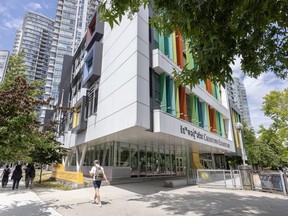
How do I register my child for kindergarten?
Parents can register their child online at the Vancouver school board here.
After completing the online application, parents are required to contact the catchment school office to set up an appointment to show their documentation.
When does registration start?
Vancouver’s kindergarten registration starts earlier than most school districts.
For the 2026-2027 school year, the priority registration period started Nov. 1, 2025 and goes until Jan. 31, 2026. Students who register during this period will be given enrolment priority over those who apply after January.
What happens if my child’s school is full?
For schools that have more kids than spaces/resources, an electronic draw will be held. Those who don’t get a spot will be added to a waiting list and placed in a neighbouring school.
While the VSB does not declare ahead of time which schools will be overcapacity, a look at previous enrolment numbers offers a clue whether parents need to brace themselves for a lottery.
In Vancouver, 15 out of 89 elementary schools were considered full for the 2025-2026 school year. The list includes Elsie Roy, Lord Roberts, and Crosstown elementary schools in the downtown core. Demand should ease somewhat for 2026-2027 as the new Coal Harbour school, Seaside, opens.
What if I want to place my child in a choice program?
You have to register your kids at their catchment school first even if you are interested for choice programs like French Immersion, Montessori, or early Mandarin bilingual. Registration for choice programs goes from Jan. 6 to Feb. 3.
What if I want my child to attend a different school, not the catchment school?
Like choice program registration, you have to register your kids at their catchment school first. Then, application for cross-boundary schools starts in February 2026 — later than regular registration because cross-boundary applicants are only considered after in-catchment students have been accommodated.
How does sibling priority work?
Most schools will offer priority to new kindergarten kids with siblings already attending that school.
In Vancouver, families who want to get sibling priority needs to apply by Jan. 31, during the priority registration period. The district will prioritize those kids first, and then the remaining spots will be filled with in-catchment students.
Siblings priority does not apply to cross-boundary siblings.
Surrey
How do I register my child for kindergarten?
Parents who want to register their child in the Surrey school district can register online here. Parents have the option to upload the required documentation on the website or bring them in person to the catchment school.
When does registration start?
Registration started Jan. 12.
What happens if my child’s school is full?
The Surrey school district said it may close registration at some schools due to high enrolment. Students will be placed on a waiting list. The school will work with the district and neighbouring schools to place the student in a nearby school.
As an indication which schools might be near or overcapacity, Surrey has already closed these 32 schools to out-of-catchment registration for 2026/2027.
What if I want to place my child in a choice program?
You have to register your child at their catchment school before they can apply to a choice program in Surrey.
Then, families can apply to a choice program, including early French immersion, intensive fine arts, Montessori, traditional, an outdoor learning program, and a land-based learning program.
Choice programs run as a lottery. Families have a three-week window to apply to up to three choice programs. The online lottery application for the 2026-27 school year opens Feb. 2 and runs until Feb. 20.
A random draw will be held starting March 2. Families should know whether they got a spot by spring break.
What if I want my child to attend a different school, not the catchment school?
You have to register your child at their catchment school first, then apply to enrol to an out-of-catchment school. Acceptance is not guaranteed, and is up to the school principal.
The school district has already closed out-of-catchment registrations for 32 schools, except for siblings.
Did we miss any other questions about preparing your child for kindergarten? Email us and we’ll find an answer for you. This guide may be regularly updated as needed.