
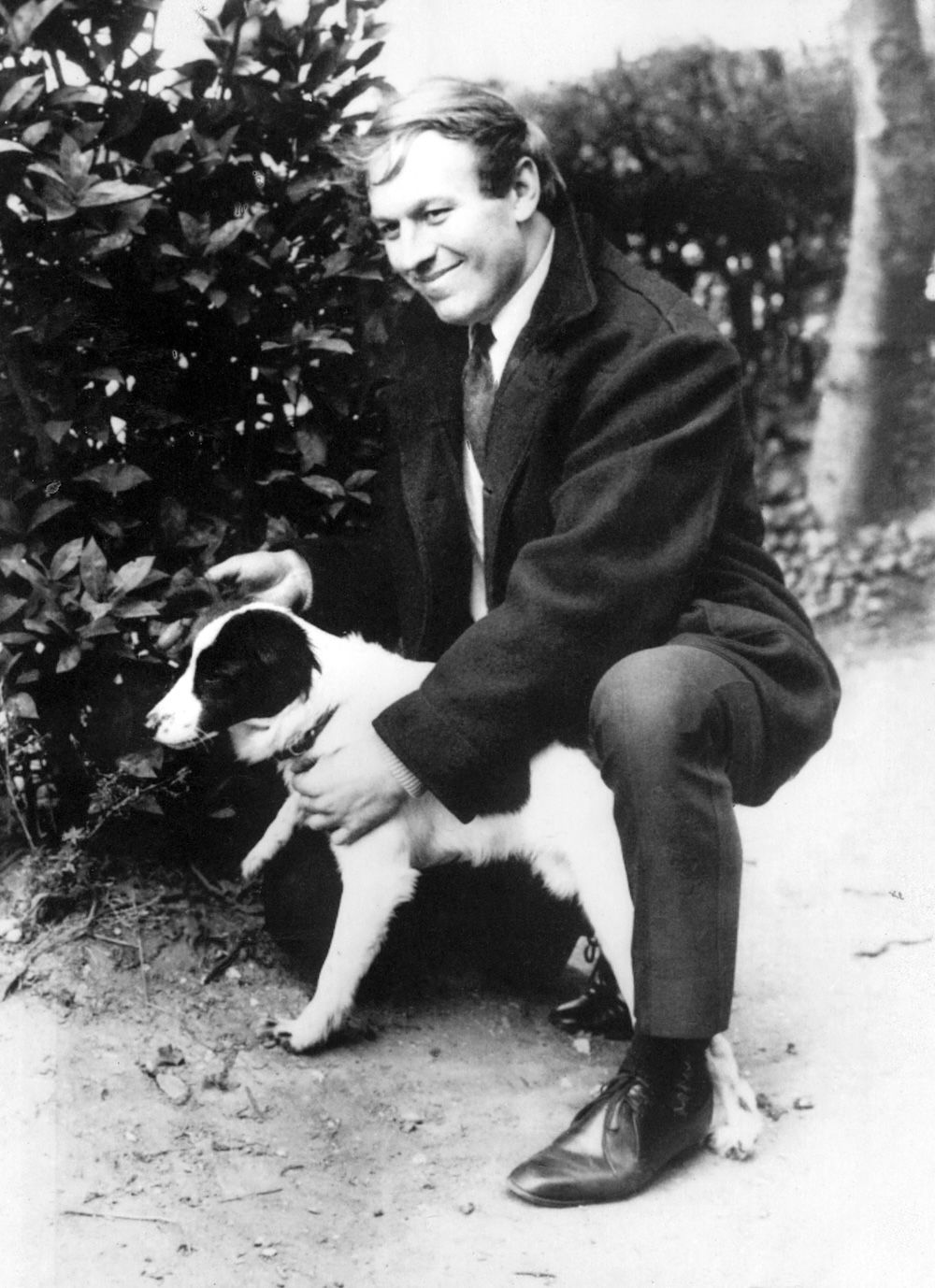
His name was Pickles. He was beloved by an entire nation until he accidentally hung himself from his choker collar chasing a cat up a tree.
The story of a furniture-chewing mongrel who helped solve — partly — a crime that gripped the world in 1966 is just one entry in the colourful history of the FIFA World Cup Trophy.
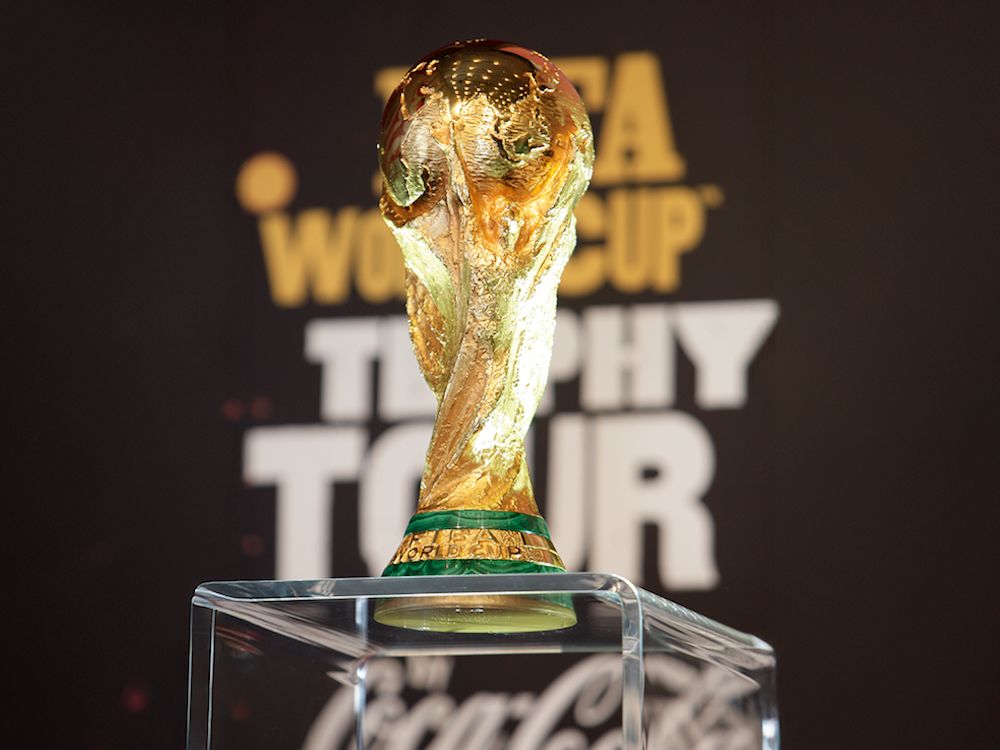
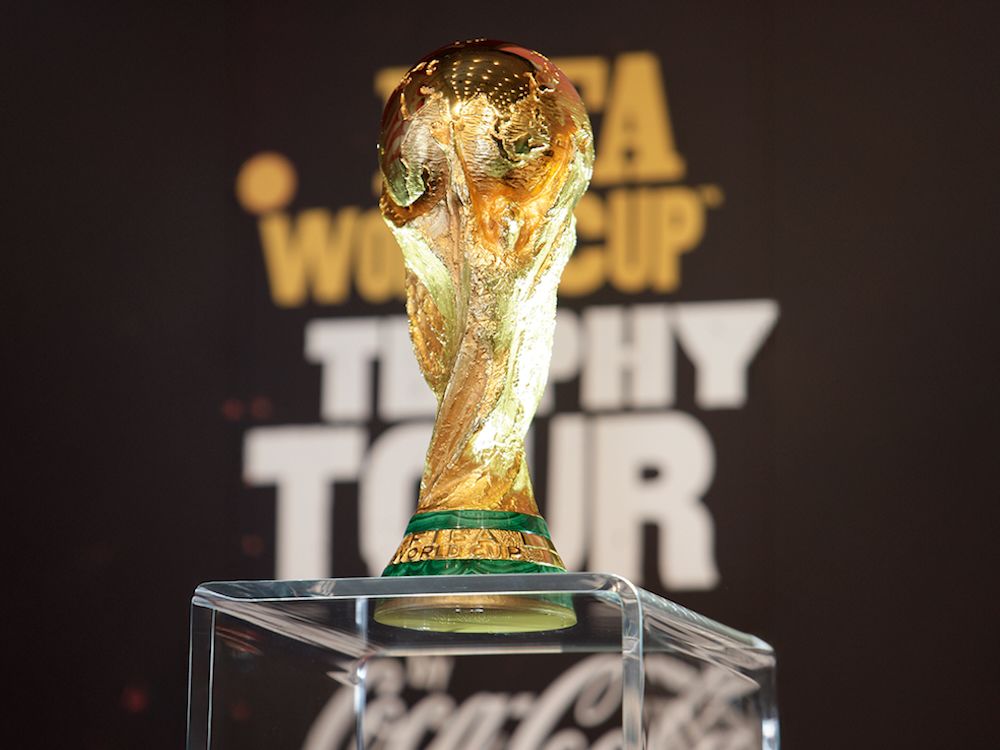
The 18-karat gold trophy is awarded to the winners of the prestigious soccer tournament, although these days, the victors are only allowed to hoist it post-game. They return home with a gold-plated replica, while the original remains with FIFA.
The World Cup trophy attracted hundreds of viewers who could snap pics of it from afar at Vancouver’s Italian Cultural Centre in August, and if you missed that event, you’ll get your chance to do it again from April 9-11 when it comes back to the city.
Details of the showing, the first Canadian stop of the FIFA World Cup trophy tour by Coca-Cola that will cross the country, will be announced soon. It will arrive on April 9 at a to-be-determined location, then move to the Vancouver Art Gallery on April 10-11.
Fans can register for tickets by visiting
cokeurl.com/trophy starting Thursday.
Security for the trophy’s August visit was tight, both in plainclothes and uniform, as FIFA has learned from history.
Which brings us back to Pickles.
Ahead of the 1966 World Cup in England, the trophy was on display at Stanley Gibbons’ stamp company exhibition at Westminster Central Hall in London.
It was watched closely when on display, but when the hall was shut, security consisted of two lax guards who made hourly checks, a wooden bar on the door, and a lock on the case.
So when the trophy — then called the Jules Rimet Trophy and cast from gold-plated sterling silver in the shape of Nike, the goddess of victory — was stolen, it was entirely unsurprising.
The wooden bar was simply unscrewed from the wall, having been held by two screws. The small lock on the display was easily broken. The display’s burlap backing, ruffled. The guards, baffled.
Ottawa resident John McLarens was one of those guards, having taken the gig to pay bills as he tried his hand at acting. Ahead of the 2022 World Cup,
he told CBC about that moment when he came across the empty case
.
“I started to have a bit of a nervous chuckle. I’m not a nervous person, but I just sort of went, ‘there’s something wrong here.’”
The next day, the chairman of the Football Association received a phone call from a man telling him to expect a package to be delivered. In it was part of the trophy, a ransom note for £15,000 for the rest, and directions on how to deliver the money in £1 and £5 bills. The rendezvous was set up by placing a coded classified ad in the personal section of The Evening News.
A detective with the fantastically named Flying Squad of Scotland Yard, Charles Buggy, showed up for the exchange carrying a suitcase of full of newsprint topped with £500 in bills. But the culprit spotted Buggy’s backup in a van and bolted, a brief chase ensuing before the footballing malefactor — a black market corned-beef dealer named Edward Betchley — was nabbed.
He didn’t have the trophy, however. And claimed to be a middleman, operating on orders from a mysterious mastermind he only knew as “The Pole” who’d paid him £500 for his role.
The FA was humiliated. FIFA was in a panic and secretly commissioned a silver maker to quickly make another.
A week after the failed exchange, a man named David Corbett took his dog Pickles for a walk, planning to make a call from the phone booth across street. But Pickles took a detour, sniffing out a package underneath a neighbour’s garden bush: a bundle wrapped in newsprint and tightly tied with string.
Corbett ripped the paper open and immediately knew what it was after seeing the gleaming Nike. He took the trophy to police — who promptly arrested him as their prime suspect. After lengthy questioning and his alibi being verified, Corbett was released. Eventually he got more than £5,000 in reward cash.
Pickles became an immediate sensation
. He landed a starring role in the movie The Spy with the Cold Nose, a comedy where a dog “has a covert listening device implanted before being presented as a gift to the Russian leader.” He had an appearance in TV on Magpie, Blue Peter and others. Pet food company Spillers named him “dog of the year” and gave him a year’s worth of free food, while the National Canine Defence League bestowed upon him a silver medal.
And when England won its first and only World Cup title that summer — beating West Germany 4-2 — Pickles and Corbett were invited to the victory party, where the dog was hoisted aloft by the team the same way they did with the trophy hours earlier.
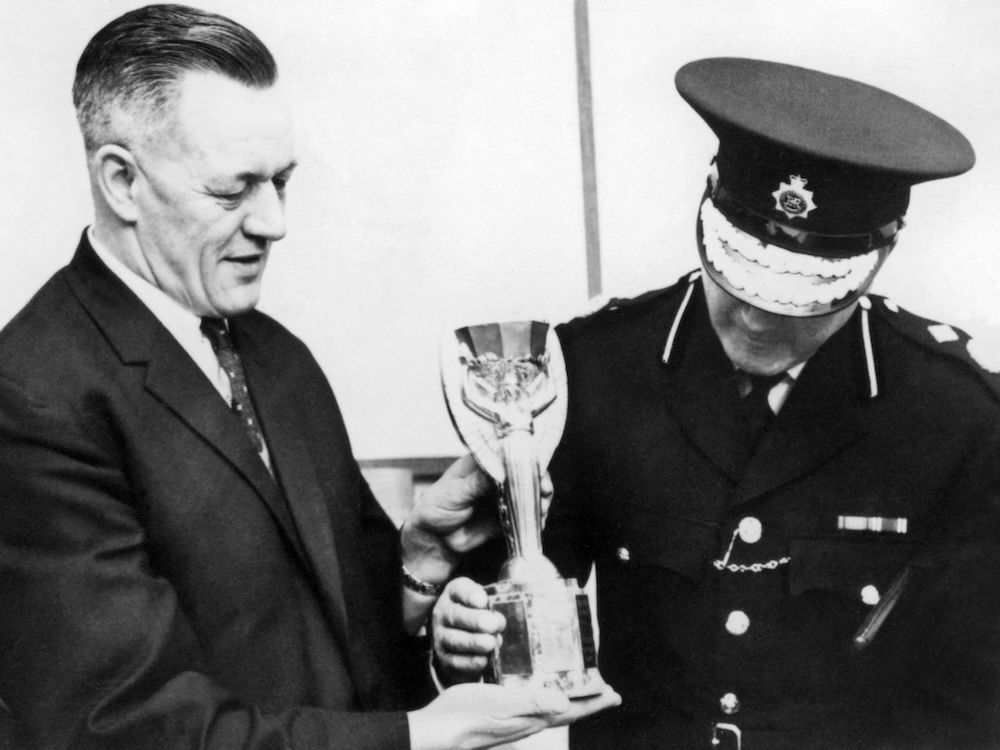
But at that point, most were unaware the trophy they had was a replica — the secret replacement FIFA had commissioned.
The association had a police officer covertly swap them out, exchanging the golden trophy for one made of base metals, while the team was in the locker-room celebrating.
The only witness to this moment: midfield legend Nobby Stiles, who would go on to coach the Vancouver Whitecaps.
Stiles’s post-game jig with the Jules Rimet trophy in one hand and his false teeth in the other during post-game is one of the enduring images from England’s one and only World Cup triumph.
“Luckily the (real) trophy was near the entrance where Nobby was sitting. I said to him, “I’ll have that, you have this,” police officer Peter Weston said, as he once recounted the story to the UK’s Channel Four.
“He looked bemused as I legged it, but never said a word. But that meant from when I took it off Nobby, the trophy was a replica. Over the next four years I saw it paraded, in newspapers, on TV, and always chuckled to myself.”
Betchley spent two years in jail for “demanding money with menaces” and died in 1969 of emphysema, never having ratted out “The Pole.”
after a 2018 investigation by The Mirror newspaper.
He’d done it “for the thrill” but reportedly ditched the trophy after realizing if his wife had discovered the theft, she’d have “flung him out.”
The replica was returned to silversmith George Bird in 1970, with the original given to Brazil — who would gain permanent ownership after winning the World Cup for the third time that year.
But as Brazil paraded about the stadium in Mexico after beating Italy, the top of the trophy disappeared, and Brazilian reserve Davio managed to intercept a young fan with it in his possession at the stadium exit.
Brazil kept it for the next 13 years before it was stolen again, this time from a bulletproof glass case in the Brazilian soccer federation headquarters. There was no happy ending for the 1983 heist, as it was never recovered, and is believed to have been melted down for scrap.
It’s why now the FIFA World Cup trophy is one piece, redesigned to its current configuration in 1974, and stays in the association’s possession. The winning countries only get replicas.