A panel of experts is warning that B.C.’s forestry sector needs “systemic change” or the province risks companies refusing to invest here.
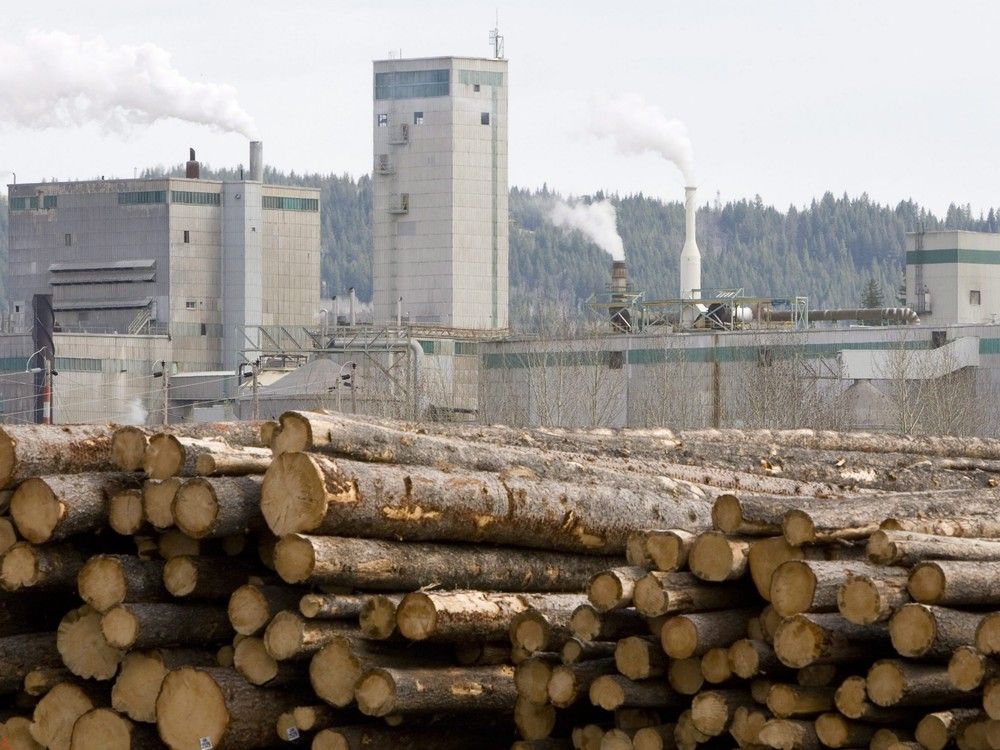
The Provincial Forestry Advisory Council released its final report on Monday after spending six months studying the industry, which has faced the closure of dozens of mills and the loss of thousands of jobs.
The report says the current system of land tenure and annual allowable cuts set by the province, which dates back to at least 1912, is no longer working for anybody and is creating a convoluted decision-making process where management and the setting of prices is mixed together.
Gary Merkel and Shannon Janzen, co-chairs of the advisory council, told reporters in Victoria that the province must shift to an area-based management approach, with the province divided into about 100 regions. Each region would take into account the specific circumstances of its land, forests and communities and come up with a long-term plan that works for those circumstances.
“The key here is management-defined areas based on territories, based on ecology, based on the characteristics of that area,” said Merkel, likening the regions to school districts. “We obviously need economies of scale, but at the same time, we need the people in that area who are going to ultimately be major decision makers to be small enough that they’re connected to it.”
The transition to a regional approach, similar to what is in place in Ontario and Alberta, would be overseen by a new independent body that would report to the legislature and ideally be out of the fray of partisan politics.
Janzen says the report’s other recommendations, including the development of a publicly accessible forest inventory, creation of specified management zones in fire-prone areas, and getting rid of programs like B.C. Timber Sales, all work together to create a more sustainable and predictable forest industry.
“There’s deep-seated issues within the sector and within the forest,” she said. “They’re diverse, and they include things like layered legislation, complicated processes, a lack of shared direction within government ministries, and a system that was built on an era of industrial expansion and volume-based tenures.”
Merkel said successive governments have tried to kick the can down the road by prioritizing short-term fixes, like the NDP’s work on encouraging value-added manufacturing, instead of doing the hard work of implementing the large-scale changes that are needed.
“When you’re looking after land, you need stable direction, and we just don’t get that in a four- to 12-year political cycles and continuously shifting mandates,” said Merkel.
UBC forestry professor Peter Wood said the report lays out a direction that the industry has been talking about for a long time.
Where he says it lacks is in some of the details about how the new area-based management approach would be managed.
“There’s some good points in here, particularly around transparency and independent oversight, which I think everybody knows, we need more of both of those. But the question is, how will that be enacted?” he said.
Forests Minister Ravi Parmar says the government will look at the recommendations, but did not commit to implementing any of the report’s nine recommendations.
He defended his government’s efforts to defend the forestry sector in the face of U.S. tariffs and said the premier has given him a mandate to make significant change, not “tinker around the edges.”
“It’s really important, given the challenges we’re facing in forestry, for us to continue our progress toward sustaining this industry, supporting jobs right now, while also looking at that transformational change,” he said.
Conservative forests critic Ward Stamer disagreed with the report’s findings. He said the government needs to simplify its permitting process, not relinquish control over the decision-making process. Still, he wants local decision makers to have more input.
“We should be gathering all the information and making a cohesive plan. But at the end of the day, we believe the government, the province of B.C., should ultimately have the last say,” said Stamer.
Green MLA Rob Botterell, whose party pushed the NDP to commission the review as part of their confidence deal with the government, said it took the province 100 years to get into the current mess and it will take some time to get out, with the report envisioning a five-year timeline to implement the recommendations.