
Grieving son, ex-director call for transparency on Lapu Lapu Day tragedy donations
“There needs to be more help for the victims before moving on to another festival,” said Alejandro Samper.
Last updated 1 day ago
You can save this article by registering for free here. Or sign-in if you have an account.
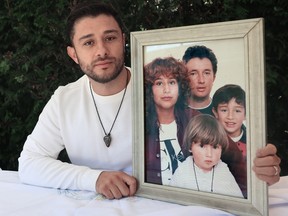
A former member of the Filipino B.C. board and a man who lost his family in the Lapu Lapu Day festival attack want greater transparency from the non-profit organization on how $1.5 million in donations were spent over the past year.

Subscribe now to read the latest news in your city and across Canada.
- Unlimited online access to articles from across Canada with one account.
- Get exclusive access to the Vancouver Sun ePaper, an electronic replica of the print edition that you can share, download and comment on.
- Enjoy insights and behind-the-scenes analysis from our award-winning journalists.
- Support local journalists and the next generation of journalists.
- Daily puzzles including the New York Times Crossword.
Subscribe now to read the latest news in your city and across Canada.
- Unlimited online access to articles from across Canada with one account.
- Get exclusive access to the Vancouver Sun ePaper, an electronic replica of the print edition that you can share, download and comment on.
- Enjoy insights and behind-the-scenes analysis from our award-winning journalists.
- Support local journalists and the next generation of journalists.
- Daily puzzles including the New York Times Crossword.
Create an account or sign in to continue with your reading experience.
- Access articles from across Canada with one account.
- Share your thoughts and join the conversation in the comments.
- Enjoy additional articles per month.
- Get email updates from your favourite authors.
Create an account or sign in to continue with your reading experience.
- Access articles from across Canada with one account
- Share your thoughts and join the conversation in the comments
- Enjoy additional articles per month
- Get email updates from your favourite authors
Sign In or Create an Account
Alejandro Samper, whose mother, father and sister died in the attack last April, also says it is too soon to hold the festival again, though it is planned in 2026.

tap here to see other videos from our team.
Grieving son, ex-director call for transparency on Lapu Lapu Day tragedy donations Back to video
tap here to see other videos from our team.
“There needs to be more help for the victims before moving on to another festival,” said Samper, 34, whose family were among the 11 people killed when an SUV drove into a crowd at the festival.
Lina Vargas, a leader in Vancouver’s Filipino community, is one of four volunteer board members who resigned from Filipino B.C. in September, citing concerns over transparency over the Kapwa Strong Fund, the long-term endowment that was first established as an emergency fund following the attack.
Temporarily managed by United Way B.C., $1.57 million was raised from public and private donors in the span of several months, with $1.5 million distributed as grants to 40 non-profit and charitable organizations as of December. About $451,570 of the Kapwa Strong Fund went directly to Filipino B.C., as specified by donors.
“After the tragedy, there were lots of donations coming in, and many community members were asking questions about where the Kapwa Strong Fund money was going,” said Vargas, founder of the Diversity and Inclusion Support Group of B.C. She said that the public expected their donations to go directly to the victims of the attack and their families.
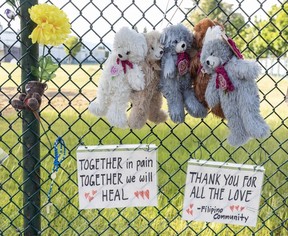
Vargas said she was shocked by the organization’s response to the questions.
-
Advertisement 1Story continues belowThis advertisement has not loaded yet, but your article continues below.
“They decided not to answer,” she said. “Every community member should have the ability to ask where money is going — it’s just a question.”
At the time the donations were first being made, Filipino B.C. said in a public Facebook post that the fund would “ensure 100 per cent of proceeds will go to victims, their families and the services and programs that will aid recovery.”
When Postmedia News requested a breakdown of how Filipino B.C. used donations from the Kapwa Strong Fund this week, the organization declined, saying “a detailed breakdown of expenditures and allocations will be provided in our annual report.”
It did not say when that will be ready.
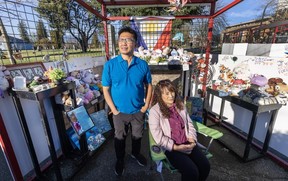
Filipino B.C. defended its use of funds, saying all grant decisions for the broader Kapwa Strong Fund were made independently by United Way B.C. Kapwa is a Tagalog word meaning kindred and conveys a core Filipino belief that all people are equal and connected.
“All funding decisions were made by United Way of B.C. through an independent granting committee. Two grant streams were offered: emergency grants of $25,000 and a subsequent stream of $50,000 grants intended to support longer-term recovery efforts over a six-month to one-year period,” the organization said. Approved groups received funds by e-transfer.
“As outlined by United Way B.C., eligible initiatives included immediate to midterm recovery and ongoing strategic support for those impacted by the emergency, healing supports and basic needs, mental health and counselling services, opportunities for community members to grieve and community-led events.”
United Way B.C. told Postmedia on Monday that it does not disclose grant amounts at the individual-organization level, citing Canada Revenue Agency guidance, privacy expectations and partnership agreements.
“It is at the discretion of the agency to disclose the funding amounts received. We report on the overall fund, the types of supports provided, and the communities reached.”
The agency referred Postmedia to its Kapwa Strong Fund web page, which does not list exact amounts granted to each organization but broadly outlines programs the fund supported, including mental health care, case management, legal support, therapy dog visits and programs for nurses, volunteers and others affected by the attack.
Fifteen grants from the Kapwa Strong Fund supported cultural activities such as music, dance, art, storytelling, therapeutic yoga and community gatherings. Some victims, including Samper, criticized these grants, saying they came at the expense of direct support for those most affected.
Samper pointed to a grant used for “community space dedicated to healing circles and mental health support” at Latincouver’s Carnaval del Sol in July, which he said provided no direct benefit to victims.
“That event was completely irrelevant.”

Jhosie Sico, whose son AJ suffered a traumatic brain injury in the attack, previously told Postmedia that she expected that the non-profit would first use funds to help victims and families. “But that didn’t happen,” she said.
Sico’s son remains unable to walk or work. The retiree spends most days next to his bed at a long-term care facility in South Vancouver.
In September, the Kapwa Strong Fund was moved to the Vancouver Foundation, as a long-term endowment fund managed by Filipino B.C. to directly fund its programs, services and operations.
Filipino B.C. said it continues to provide case management and support to 70 people affected by the attack, including victims and their loved ones, helping them navigate social systems and connect to external resources, including mental health support and food assistance.
Filipino B.C. board chair R.J. Aquino previously told Postmedia that emergency funds donated are expected to run out, and many families directly affected continue to face permanent loss of income and lifelong care needs.
“In many cases, the tragedy has left the family’s main breadwinner unable to work,” Aquino said in December.
Samper and the four former board directors continue to call on Filipino B.C. to disclose the exact grants made to programs and individuals from the Kapwa Strong Fund.
In an open letter in December, the former board members — including Vargas — asked for an independent audit of all fundraising and distribution records.
“Victims continue to suffer, and the public has placed significant trust in Filipino B.C. Full transparency is necessary to demonstrate that every dollar raised was used as intended,” their letter states.
One of the former board members, Antonio Ortega, has organized an indoor commemorative event on April 12, with funds going directly to victims and their families.
“We should have focused more on the victims and their families with the donated money … It has made me cry. How can you survive in this expensive city if you’re injured?” Vargas questioned.
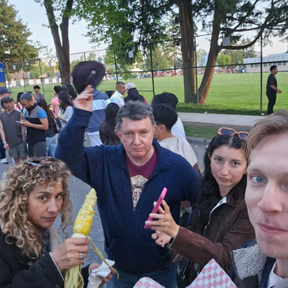
Filipino B.C. announced last month that its annual festival will be held from April 17 to 19, 2026.
“Continuing Lapu Lapu Day is not only about cultural celebration, but about creating space for care, unity and connection, while coming together in collective healing,” it said.
“We will also continue working closely with the City of Vancouver, the province of B.C. and first responders to ensure appropriate safety measures are in place,” the statement added.
But Samper described the toll of receiving notice of the new festival date in an email from organizers the day before Christmas. “Filipino B.C. sent an email to all the victims and families directly impacted, inviting us to the new date of the festival.”
“I was in the middle of clearing out my parents’ home. It was so traumatic,” he added.
Vargas says that the timing of the 2026 festival is “inappropriate.”
“As part of the organizing committee for last year’s Lapu Lapu Day festival, it was painful to hear about the plan,” Vargas said. “In our culture, in the first year after losing a loved one, you’re still in mourning. It’s a very solemn time.”