
Higher taxes, more debt: 5 ways the 2026 B.C. budget will affect you
British Columbians are in for tax increases, public sector job cuts and increased public debt as a result of this year’s budget
By Alec Lazenby
Last updated 9 hours ago
You can save this article by registering for free here. Or sign-in if you have an account.
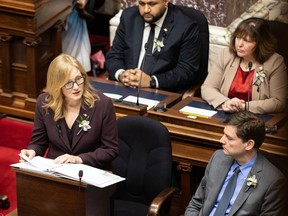
B.C.’s budget for 2026 offers billions in new funding for health care and education, but other key programs in areas such as child care are projected to take a hit in a period of a ballooning deficit and rising government debt.

Subscribe now to read the latest news in your city and across Canada.
- Unlimited online access to articles from across Canada with one account.
- Get exclusive access to the Vancouver Sun ePaper, an electronic replica of the print edition that you can share, download and comment on.
- Enjoy insights and behind-the-scenes analysis from our award-winning journalists.
- Support local journalists and the next generation of journalists.
- Daily puzzles including the New York Times Crossword.
Subscribe now to read the latest news in your city and across Canada.
- Unlimited online access to articles from across Canada with one account.
- Get exclusive access to the Vancouver Sun ePaper, an electronic replica of the print edition that you can share, download and comment on.
- Enjoy insights and behind-the-scenes analysis from our award-winning journalists.
- Support local journalists and the next generation of journalists.
- Daily puzzles including the New York Times Crossword.
Create an account or sign in to continue with your reading experience.
- Access articles from across Canada with one account.
- Share your thoughts and join the conversation in the comments.
- Enjoy additional articles per month.
- Get email updates from your favourite authors.
Create an account or sign in to continue with your reading experience.
- Access articles from across Canada with one account
- Share your thoughts and join the conversation in the comments
- Enjoy additional articles per month
- Get email updates from your favourite authors
Sign In or Create an Account
This comes after Finance Minister Brenda Bailey foreshadowed a potential austerity budget with her comments that she would be the least popular person in the province after it was released.

tap here to see other videos from our team.
Higher taxes, more debt: 5 ways the 2026 B.C. budget will affect you Back to video
tap here to see other videos from our team.
In an effort to make room for new spending, the government is preparing the Public Service Agency for some reductions in public service staffing and announced that most British Columbians are going to face a tax increase.
“B.C.’s economy has many strengths, but it also has big challenges,” Bailey said in her speech to the legislative assembly Tuesday, blaming the impact of U.S. tariffs and falling resource revenue.
“We must make strategic choices about where we will spend our resources. We are scrutinizing government spending and ensuring as many dollars as possible reach the front lines in classrooms and emergency rooms.”
Here are five things you need to know about how this year’s provincial budget will impact you:
1. Projected deficit drops but still expected to rise by almost $4 billion over next 12 months
Helped by stronger income and corporate tax revenue than projected by the 2025 budget, as well as some creative accounting around the much-touted multi-billion dollar settlement with tobacco companies, the projected deficit for the 2025-26 fiscal year has dropped to $9.6 billion, down from $11.2 billion at the last quarterly update in November.
Despite that, the books for the 2026-27 fiscal year released Tuesday project the deficit will rise by another $3.7 billion over the coming year, dragging the government further into the red to the tune of $13.3 billion.
-
Advertisement 1Story continues belowThis advertisement has not loaded yet, but your article continues below.
Modest reductions to the deficit are expected over the second two years of the fiscal plan, with a deficit of $12.1 billion expected in 2027-28 and $11.4 billion in 2028-29.
What this means for British Columbians is that provincial debt is expected to rise from $154 billion currently to $234.5 billion in 2028-29, and that the government will see the percentage of every dollar of revenue it has to spend just to service the debt rise from 4.9 cents to 8.2 cents in 2028-29.
Taxpayer-supported debt is also expected to rise from 26.1 per cent to 37.4 per cent over the next three years.
2. Spending increases as economic growth slows
Despite the record deficit, the province is set to increase spending by $9 billion over the next three years, with $4 billion of that coming over the next 12 months.
Among that is $2.8 billion over three years for health care, including $2.3 billion for caseload and primary care, although $1.6 billion of that is forecast for 2028-29.
Other new expenses include $634 million for K-12 education, $330 million for child care fee reduction and $139 million for community safety.
There is also $5 billion set aside for contingencies, such as wildfires and other emergencies that require the province to help out financially.
At the same time, government growth is expected to slow further, from 1.5 per cent in 2025 to 1.3 per cent in 2026, before rebounding to 1.8 per cent in 2027 and 1.9 per cent in 2029.
Government revenue is also expected to increase modestly by $500 million over the next year, with slightly rosier projections of $3 billion increases in both 2027-28 and 2028-29.
3. New taxes for higher tax brackets to drive up revenue
One tool the province is using to attempt to bring down the deficit is tax increases, with the lowest personal income tax rate increasing to 5.6 per cent from 5.06 per cent. This means that the average British Columbian will pay an average of $76 more this year.
B.C. is also getting rid of the northern and rural homeowner benefit, which provided an average of $200 to residents outside the Lower Mainland and the Capital Regional District on Vancouver Island to help offset the carbon tax — a tax that has been eliminated at a $2 billion revenue annual revenue loss to the government.
Personal income tax brackets and non-refundable tax credits will also be paused at 2026 income levels, meaning they will no longer be adjusted for inflation and those making the same amount year-over year will pay the same amount, even if inflation increases.
Provincial sales taxes are also extended to professional services, such as accounting, bookkeeping, engineering strata management, and security services, applying to 30 per cent of the purchase price of those services.
The speculation and vacancy tax is also being increased to four per cent from three per cent for foreign owners and certain worldwide earners.
To help offset some of these changes for lower-income earners, the B.C. tax reduction credit is being increased from $115 to $690, with individuals making $25,570 or less a year eligible for the full amount. Those earning $44,950 will receive a reduced amount.
The government says this means 40 per cent of British Columbians will be paying less taxes after the changes, rather than more.
Overall, the tax increases are expected to net the government $757 million over the coming year and increase to $1.9 billion in 2028-29.
4. Key programs like $10-a-day child care left stagnant
Despite the increase in spending in ministries such as education and health care, at least one NDP promise dating back to 2017 is being left without any funding increases.
The $10-a-day child care program, which the government promised to implement provincewide by 2028, has so far only reached 10 per cent of its target.
Its progress will be impacted further by the announcement in 2026 budget that the government is freezing the ability of providers to enrol in the old operating funding model and rolling out a new model that some providers have warned they would be forced to leave the program if required to make the switch.
5. Thousands of cuts coming to public service
Another way the government is attempting to balance the books is by reducing the size of the B.C. public service, which has nearly doubled since 2017.
Already, the government says it has reduced government employment by 1,500 positions, mainly through resignations, the elimination of job postings and retirements.
The new three-year fiscal plan sets a target of reducing core government jobs, those who work directly for ministries, by up to 2,500 positions, and the wider public sector, those who work for Crown corporations and other governmental agencies, by a further 12,500 jobs.
How many of those will be direct layoffs remains unclear, with the 2026 budget stating it will be accomplished primarily through attrition and “voluntary departures.”
Overall, the workforce reductions are expected to save the government $2.8 billion, while other expenditure management savings are expected to reduce government spending by a further $3.5 billion, for a total of $6.3 billion in savings.
An estimated $1.9 billion of that is planned to be pumped into core services such as health care and education.
Read more of coverage of the 2026 B.C. budget:
• Higher taxes, more debt: 5 ways the 2026 B.C. budget will affect you
• B.C. Budget: Finance minister delivers a sea of red ink and tax increases
• Vaughn Palmer: Fiscal credibility shredded by Page 1 of B.C.’s 2026 budget
• B.C. Budget: No extra fertility treatment dollars for popular program
• B.C. Budget: LNG a bright spot, but red ink dismays business groups