
B.C. man gets second chance to keep his citizenship after failing to disclose earlier deportation
A 41-year-old first sought to enter Canada as a refugee in 1999, using the name Reza Ahmed and a false date of birth. His bid failed and he was deported.
Last updated 12 hours ago
You can save this article by registering for free here. Or sign-in if you have an account.
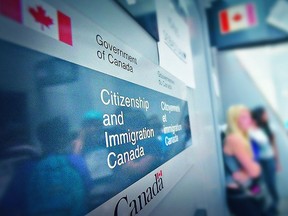
A B.C. man who could lose his Canadian citizenship for not disclosing he had previously been deported and had used an alias has been granted a chance to save his citizenship by a Federal Court judge.

Subscribe now to read the latest news in your city and across Canada.
- Unlimited online access to articles from across Canada with one account.
- Get exclusive access to the Vancouver Sun ePaper, an electronic replica of the print edition that you can share, download and comment on.
- Enjoy insights and behind-the-scenes analysis from our award-winning journalists.
- Support local journalists and the next generation of journalists.
- Daily puzzles including the New York Times Crossword.
Subscribe now to read the latest news in your city and across Canada.
- Unlimited online access to articles from across Canada with one account.
- Get exclusive access to the Vancouver Sun ePaper, an electronic replica of the print edition that you can share, download and comment on.
- Enjoy insights and behind-the-scenes analysis from our award-winning journalists.
- Support local journalists and the next generation of journalists.
- Daily puzzles including the New York Times Crossword.
Create an account or sign in to continue with your reading experience.
- Access articles from across Canada with one account.
- Share your thoughts and join the conversation in the comments.
- Enjoy additional articles per month.
- Get email updates from your favourite authors.
Create an account or sign in to continue with your reading experience.
- Access articles from across Canada with one account
- Share your thoughts and join the conversation in the comments
- Enjoy additional articles per month
- Get email updates from your favourite authors
Sign In or Create an Account
In 2024, a representative of the federal minister of immigration, refugees and citizenship issued a decision to revoke the citizenship of Saleem Bapari after concluding he had obtained it by “false representation or fraud or by knowingly concealing material circumstances,” contrary to the Immigration Act.

tap here to see other videos from our team.
B.C. man gets second chance to keep his citizenship after failing to disclose earlier deportation Back to video
tap here to see other videos from our team.
But Justice Yvan Roy recently ruled that decision was unreasonable because it inadequately showed how Bapari’s requests for special relief were assessed, which is especially important in a case where the stakes — citizenship — are high.
“I have concluded that more and better is expected of a decision-maker,” the judge wrote. “The power over vulnerable persons brings with it the high responsibility to ensure that the reasons have duly considered the consequences of the decision.”
Bapari, 41, first sought to enter Canada as a refugee in 1999 when he was 25. He arrived at Vancouver International Airport using the name Reza Ahmed and a false date of birth. His refugee bid failed and he was deported in April 2005, according to the judge’s decision.
In September 2005, Bapari married a Canadian permanent resident in Bangladesh and she sponsored him to Canada.
Bapari received permanent residence status when he arrived in Canada in 2007, and he took the oath of citizenship and became a Canadian in 2012, according to the decision.
However, it later came to light that when he was asked to disclose other names, dates of birth or aliases while filling out his citizenship application forms, he chose not to, the judge wrote.
-
Advertisement 1Story continues belowThis advertisement has not loaded yet, but your article continues below.
“He was not truthful when asked the question about having a removal order, by answering ‘no.’ ”
The misrepresentations had gone undetected until 2013 when ICBC, using “facial recognition to protect the integrity of B.C. driver’s licences,” discovered a possible match between the ID photographs taken of “Reza Ahmed” and Bapari. ICBC contacted the Canada Border Services Agency.
Bapari told border officials in 2014 that a broker had helped him come to Canada originally. That broker told him using his real name would get him in trouble in Bangladesh.
In late 2023, Immigration, Refugees and Citizenship Canada offered Bapari a chance to submit any personal circumstances that might grant him special relief, according to the judgment.
Bapari apologized for not disclosing his immigration history, saying he was afraid he would have been denied entry if he did, and asked to be allowed to stay in Canada with his wife on “humanitarian and compassionate grounds.” He said prospects for a future in Bangladesh were bleak, especially since he had no education.
He said he was worried about a risk to his health as he suffered chronic medical conditions and that he financially supported his family in Bangladesh. He also noted he has been gainfully employed in Canada, was involved in community and religious activities, and that he worried about returning to Bangladesh because of police corruption.
But the minister’s representative said his misrepresentations were neither “unintentional nor innocent” and none of the personal circumstances warranted special relief from starting citizenship revocation proceedings.
“Seeking a better life in Canada is no excuse to undermine the integrity and fairness of the immigration system,” the minister’s representative said, according to the judgment.
While the federal judge dismissed Bapari’s argument that he had been the victim of an abuse of process, he did find that the government’s reasons for seeking to revoke Bapari’s citizenship were not reasonable.
“Mr. Bapari recognized that he had misled the authorities by relying on false identity when he first came to Canada, and then by not disclosing the misdeed when he claimed permanent residence and citizenship. But he raised a number of issues that qualify as personal circumstances.”
The judge ordered the case be sent back and heard by a different adjudicator.