
Clearview AI loses bid in B.C. Appeal Court to use B.C. social media images in facial recognition software
U.S. company argued it was exempt from B.C. privacy laws and maintains it can’t remove B.C. images already in its databases
Last updated 11 hours ago
You can save this article by registering for free here. Or sign-in if you have an account.
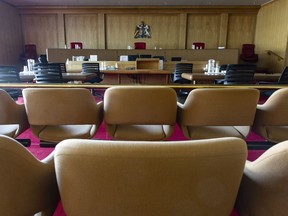
Clearview AI, the facial recognition software company popular with police and governments, has lost its bid to overturn a B.C. privacy commissioner decision that scraping images of B.C. residents from social media violated privacy laws.

Subscribe now to read the latest news in your city and across Canada.
- Unlimited online access to articles from across Canada with one account.
- Get exclusive access to the Vancouver Sun ePaper, an electronic replica of the print edition that you can share, download and comment on.
- Enjoy insights and behind-the-scenes analysis from our award-winning journalists.
- Support local journalists and the next generation of journalists.
- Daily puzzles including the New York Times Crossword.
Subscribe now to read the latest news in your city and across Canada.
- Unlimited online access to articles from across Canada with one account.
- Get exclusive access to the Vancouver Sun ePaper, an electronic replica of the print edition that you can share, download and comment on.
- Enjoy insights and behind-the-scenes analysis from our award-winning journalists.
- Support local journalists and the next generation of journalists.
- Daily puzzles including the New York Times Crossword.
Create an account or sign in to continue with your reading experience.
- Access articles from across Canada with one account.
- Share your thoughts and join the conversation in the comments.
- Enjoy additional articles per month.
- Get email updates from your favourite authors.
Create an account or sign in to continue with your reading experience.
- Access articles from across Canada with one account
- Share your thoughts and join the conversation in the comments
- Enjoy additional articles per month
- Get email updates from your favourite authors
Sign In or Create an Account
The B.C. Court of Appeal dismissed an appeal from the U.S. tech company to have a 2021 three-part order from the commissioner ruled unreasonable.

tap here to see other videos from our team.
Clearview AI loses bid in B.C. Appeal Court to use B.C. social media images in facial recognition software Back to video
tap here to see other videos from our team.
Justice Karen Horsman, writing on behalf of Justice Nitya Iyer and Justice Paul Riley, rejected the company’s arguments that B.C.’s Personal Information Protection Act (PIPA) doesn’t apply to it because it doesn’t have a connection to the province and the law doesn’t require it to obtain individual consent because the images were posted to social media and were therefore publicly available. The company called the orders “overbroad, unnecessary and unenforceable.”
In 2021, Clearview was prohibited from offering its facial recognition services, which collects, uses and discloses images from individuals, in B.C. It was also ordered to cease collecting, using and disclosing the images and to delete the data in its possession.
Clearview said it ceased operating in B.C. in 2020, when the RCMP stopped using its services, but that the second and third orders were unjustified and can’t be enforced, according to the judgment.
But Clearview had agreed during a lawsuit in Illinois to stop collecting images and to block client searches from examining the data of state residents in its database, Horsman wrote, and the company failed to explain why it could not take similar steps in B.C.
It was reasonable for the privacy commissioner to conclude that B.C. law does not exempt Clearview from obtaining individual consent, according to the judgment.
-
Advertisement 1Story continues belowThis advertisement has not loaded yet, but your article continues below.
Clearview argued it’s “entirely indifferent” to location and its collection of facial data in B.C. is merely incidental to its operation. It argued that its success as a business depends on its ability to acquire facial data on a global scale to build its databank and that it’s unable to exclude B.C. from its image crawler’s activities.
“In my view, this supports a conclusion that B.C.’s relationship to Clearview is substantial, not incidental,” Horsman wrote.
“Clearview’s position that PIPA is constitutionally inapplicable to it means that it, and any other company that acquires personal information on the internet using a global search engine, would be immune from domestic privacy laws,” she said. “This would significantly compromise the ability of jurisdictions such as B.C. to protect personal information on the internet.”
Clearview AI’s technology allowed police and commercial organizations to match photographs of unknown people against the company’s databank of more than 30 billion images, including of Canadians and children, for investigation purposes.
But the B.C. commissioner, in a joint investigation with the Office of the Privacy Commissioner of Canada, the Commission d’accès à l’information du Québec and the Office of the Information and Privacy Commissioner of Alberta, found its collection of facial images represented mass surveillance and was a clear violation of the privacy rights of Canadians.
The privacy officials found Clearview AI not only collected the images of Canadians but marketed its services to law-enforcement agencies in Canada.
The RCMP became a paying customer and a total of 48 accounts were created for law enforcement and other organizations across the country, the commissioners said.
The federal privacy commissioner announced in 2020 that Clearview AI would stop offering its facial recognition services in Canada in response to the privacy investigation. The move included the indefinite suspension of Clearview AI’s contract with the RCMP, its last remaining client in Canada.
In 2020, Vancouver police said that one of its detectives used Clearview AI for a single search, using a 30-day free trial account, during a child-exploitation investigation. The admission came a few months after the VPD told Postmedia News that its officers had never used Clearview AI software.
Officials with B.C.’s 10 other municipal police departments and the Metro Vancouver Transit Police all told Postmedia that their officers hadn’t used Clearview AI.
B.C.’s privacy commissioner in 2021 said the joint investigation revealed the vast amount of personal information was collected without people’s knowledge or consent.
He called it “unacceptable and deeply troubling” that a company would create a giant database of biometric data and sell it for profit without recognizing its invasive nature and he said privacy laws had to be strengthened to guard against the practice.