
Tumbler Ridge tragedy: How social media ‘becomes the story’ in major news events
It can foster connection and support, while also spreading disinformation, say experts. Read more.
Last updated 9 hours ago
You can save this article by registering for free here. Or sign-in if you have an account.
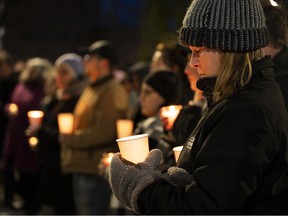
In the days since Maya Gebala was gravely wounded by a shooter at her Tumbler Ridge high school, her parents have been posting poignant and deeply personal updates and photos on their social media pages.

Subscribe now to read the latest news in your city and across Canada.
- Unlimited online access to articles from across Canada with one account.
- Get exclusive access to the Vancouver Sun ePaper, an electronic replica of the print edition that you can share, download and comment on.
- Enjoy insights and behind-the-scenes analysis from our award-winning journalists.
- Support local journalists and the next generation of journalists.
- Daily puzzles including the New York Times Crossword.
Subscribe now to read the latest news in your city and across Canada.
- Unlimited online access to articles from across Canada with one account.
- Get exclusive access to the Vancouver Sun ePaper, an electronic replica of the print edition that you can share, download and comment on.
- Enjoy insights and behind-the-scenes analysis from our award-winning journalists.
- Support local journalists and the next generation of journalists.
- Daily puzzles including the New York Times Crossword.
Create an account or sign in to continue with your reading experience.
- Access articles from across Canada with one account.
- Share your thoughts and join the conversation in the comments.
- Enjoy additional articles per month.
- Get email updates from your favourite authors.
Create an account or sign in to continue with your reading experience.
- Access articles from across Canada with one account
- Share your thoughts and join the conversation in the comments
- Enjoy additional articles per month
- Get email updates from your favourite authors
Sign In or Create an Account
Maya’s fight — and her parents’ hope for her recovery — have elicited an outpouring of support from people around the world, with thousands, many of them strangers, posting comments and donating money to a GoFundMe campaign.

tap here to see other videos from our team.
Tumbler Ridge tragedy: How social media ‘becomes the story’ in major news events Back to video
tap here to see other videos from our team.
“I should be more optimistic. We’ve moved into a new section (of the hospital) — one for recovery, instead of goodbyes,” Maya’s mother Cia Edmonds posted a week after a person entered Tumbler Ridge Secondary School with a gun, killing six people and critically injuring 12-year-old Maya and another student.
“This, to me, is acknowledgement that she is fighting and refuses to quit,” wrote Edmonds. “Still no movement on the right side. The doctors say it is similar to a stroke and will never come back. I would prefer to argue, of course. However, I don’t think I have that in me at this time.”
She closed the update, which included a picture of Maya in a hospital bed, with gratitude: “Just know that the stories, the love, the support and admiration for our powerhouse of a girl is not lost. I see you. We feel you.”

Social media has played a significant role in how British Columbians understand and have responded to the tragedy in Tumbler Ridge, say experts. This is perhaps not surprising, given social media’s outsized impact on many aspects of modern life. But it remains notable, with evolving impacts on individuals and institutions.
Christopher Schneider, a sociology professor at Brandon University in Manitoba, said for families directly impacted by loss, social media can provide “immediate control over the narrative.”
-
Advertisement 1Story continues belowThis advertisement has not loaded yet, but your article continues below.
In the past, police, the hospital or media would explain what happened to the public.
“That narrative might be used in ways the family might not like,” he said.
By posting a tribute or update on social media, families can speak directly to the public, telling them what they feel is important. With a 100-word post on Facebook: “They become the guardian of their own story.”
Schneider said social media also gives the public a way to respond to horrifying events, which can help restore a sense of community amid the shock and grief.
A GoFundMe page for Maya’s family has received 6,800 donations, totalling almost $450,000 as of Friday.
“Prayers from Minnesota,” said one post.
“I know it’s not much, as I’m a student, but I really am wishing you a speedy recovery and I can’t stop thinking about your whole family and what you’re going through,” said another from a person who donated $10. “Sending love from Toronto.”
“As parents we can’t imagine the horror. Praying for Maya and her family and loved ones, from Hokkaido, Japan,” said another.
Amori Mikami, a psychology professor at the University of B.C. who has researched social media, said some events are “so emotional and raw” they bond people beyond the boundaries of geography. Comments can become a conversation.
“Sometimes that is very meaningful, even with people you don’t know at all,” she said.
Social media has also changed the way institutions respond to a major event.
It has “democratized information,” said Mikami. “People aren’t waiting for journalists to bring them information. It’s bypassing all of that.”
In his research on major events, Schneider has seen how photos, videos and personal accounts often precede statements from police and reports from journalists, who are bound by ethics and standards around privacy, permission, verification and fact checks. But once information is online, it can take on a life of its own, forcing institutions to respond.
“Social media isn’t just part of the story, it becomes the story,” he said. “And if you don’t put out anything, a different narrative steps up to fill the void, and it might not be accurate.”
Mikami also pointed out the downsides of social media.
“Anybody can post information about anything at all,” she said. “There’s no vetting. Misinformation and disinformation can run unchecked.”
Hours after the RCMP confirmed the identity of the Tumbler Ridge shooter, social media was flooded with false images and misattributed accounts.
The photograph of an Ontario woman living thousands of kilometres from the B.C. crime scene was the subject of hundreds of posts falsely claiming she was responsible for the mass murder. Influencers and some news outlets amplified the image before corrections were issued.
The innocent woman’s mother told Agence France-Presse that her daughter was “devastated” by the situation and afraid to go outside.
A fake social media account on X that some believed belonged to the killer was also widely shared and used to speculate about possible motives and ideology.
“(In) the first few days or weeks after a tragedy, misidentifications and misinformation are common,” said Heidi Tworek, an associate history professor and director of UBC’s Centre for the Study of Democratic Institutions, in a previous interview about the spread of misinformation.
“So before you share something on social media, ask yourself, ‘Why?’ And if you care enough to share it, then you’ve got to care enough to double-check it’s been confirmed by credible sources.”
Mikami said there is a debate within academia about whether social media has fundamentally altered how we engage with the world, or if it is simply a new form of expressing feelings and tensions that have always existed. Her personal view has changed in recent years.
“Fifteen years ago, I would have said it was a new venue to play out the same old relationships,” she said. “Now it’s kind of flipped.”
As social media has drifted toward monetization based on engagement metrics, it has become less about connection and more about engagement, she said. Artificial intelligence is pushing it even further, scraping media reports to summarize, reformat and post content automatically to social media.
Posts by Maya’s family, as well as online tributes posted by the family and friends of those who died in the shooting, have been turned into social media posts on accounts that repurpose the most tragic and sensational events from around the world for clicks.
A petition recently filed with the House of Commons is asking the federal government to ban the practice of “obituary piracy,” which refers to websites that rewrite obituaries and posts them online with prominent links selling memorial trees and candles.
With Postmedia files by Sarah Grochowski