B.C. climate update: Study finds B.C.’s 2021 heat dome left winners and losers | Hybrid sales up, EV sales down as B.C. struggles to meet sales targets
Here’s all the latest local and international news concerning climate change for the week of March 9 to March 15, 2026.
You can save this article by registering for free here. Or sign-in if you have an account.
Here’s the latest news concerning climate change and biodiversity loss in B.C. and around the world, from the steps leaders are taking to address the problems, to all the up-to-date science.

Subscribe now to read the latest news in your city and across Canada.
- Unlimited online access to articles from across Canada with one account.
- Get exclusive access to the Vancouver Sun ePaper, an electronic replica of the print edition that you can share, download and comment on.
- Enjoy insights and behind-the-scenes analysis from our award-winning journalists.
- Support local journalists and the next generation of journalists.
- Daily puzzles including the New York Times Crossword.
Subscribe now to read the latest news in your city and across Canada.
- Unlimited online access to articles from across Canada with one account.
- Get exclusive access to the Vancouver Sun ePaper, an electronic replica of the print edition that you can share, download and comment on.
- Enjoy insights and behind-the-scenes analysis from our award-winning journalists.
- Support local journalists and the next generation of journalists.
- Daily puzzles including the New York Times Crossword.
Create an account or sign in to continue with your reading experience.
- Access articles from across Canada with one account.
- Share your thoughts and join the conversation in the comments.
- Enjoy additional articles per month.
- Get email updates from your favourite authors.
Create an account or sign in to continue with your reading experience.
- Access articles from across Canada with one account
- Share your thoughts and join the conversation in the comments
- Enjoy additional articles per month
- Get email updates from your favourite authors
Sign In or Create an Account
Check back every Saturday for more climate and environmental news or sign up for our Sunrise newsletter HERE.

tap here to see other videos from our team.
B.C. climate update: Study finds B.C.’s 2021 heat dome left winners and losers | Hybrid sales up, EV sales down as B.C. struggles to meet sales targets Back to video
tap here to see other videos from our team.
In climate news this week:
• B.C.’s 2021 heat dome left winners and losers: study
• Hybrid sales up, EV sales down as B.C. struggles to meet sales targets
• BBC report says London homes overheating due to climate change
Human activities like burning fossil fuels and farming livestock are the main drivers of climate change, according to the UN’s intergovernmental panel on climate change. This causes heat-trapping greenhouse gas levels in Earth’s atmosphere, increasing the planet’s surface temperature.
The panel, which is made up of scientists from around the world, including researchers from B.C., has warned for decades that wildfires and severe weather, such as the province’s deadly heat dome and catastrophic flooding in 2021, would become more frequent and intense because of the climate emergency. It has issued a code red for humanity and warns the window to limit warming to 1.5 C above pre-industrial times is closing.
According to NASA climate scientists, human activities have raised the atmosphere’s carbon dioxide content by 50 per cent in less than 200 years, and “there is unequivocal evidence that Earth is warming at an unprecedented rate.”
As of March 5, 2026, carbon dioxide in the atmosphere was 429.35 parts per million, up from 428.62 ppm the previous month, according to the latest available data from the NOAA measured at the Mauna Loa Observatory, a global atmosphere monitoring lab in Hawaii. The NOAA notes there has been a steady rise in CO2 from under 320 ppm in 1960.
Quick facts:
• The global average temperature in 2023 reached 1.48 C higher than the pre-industrial average, according to the EU’s Copernicus Climate Change Service. In 2024, it breached the 1.5 C threshold at 1.55 C.
• 2025 was the third warmest on record after 2024 and 2023, capping the 11th consecutive warmest years.
• Human activities have raised atmospheric concentrations of CO2 by nearly 49 per cent above pre-industrial levels starting in 1850.
• The world is not on track to meet the Paris Agreement target to keep global temperature from exceeding 1.5 C above pre-industrial levels, the upper limit to avoid the worst fallout from climate change including sea level rise, and more intense drought, heat waves and wildfires.
• UNEP’s 2025 Emissions Gap Report, released in early December, shows that even if countries meet emissions targets, global temperatures could still rise by 2.3 C to 2.5 C this century.
• In June 2025, global concentrations of carbon dioxide exceeded 430 parts per million, a record high.
• There is global scientific consensus that the climate is warming and that humans are the cause.

Latest News
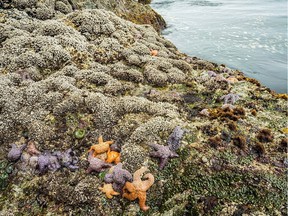
Billions of mussels scorched and baby birds dropping from sweltering nests: North America’s 2021 heatwave caused a cascade of ecological damage, some of it catastrophic, some unexpected, a new study showed Wednesday.
The heat dome that hit the western U.S. and Canada, fuelled by human-induced climate change, was among the most extreme ever recorded globally, with temperatures sometimes exceeding 50 C.
“The heat wave had widespread ecological effects, including an almost 400 per cent increase in wildfire activity and negatively affecting more than three-quarters of the species studied,” said study co-author Diane Srivastava, professor at the University of British Columbia.
To assess the heat wave’s impact, researchers combined weather, ecological and hydrological data with information on wildfires and scientific models. Of the 49 terrestrial and marine species studied, over 75 per cent were negatively affected, according to the study published in the journal Nature Ecology and Evolution.
But the effects were highly variable: some populations fell by nearly 99 per cent, while others increased by up to 89 per cent.
But some thrived: Sea lettuce benefited from the die-off of other algae and expanded, increasing its coverage on beaches by 65 per cent after the heat wave.
Moose returned to the same level of daily camera trap sightings after the heat wave as they had before.
—AFP
Hybrid sales up, EV sales down as B.C. struggles to meet sales targets
The sale of hybrid vehicles is soaring in B.C. even as the sale of fully electric vehicles fell last year, new data shows.
Some observers say the numbers suggest why the province needs to amend its zero-emission vehicle targets to better reflect the cost pressures facing consumers and promote Canadian-made hybrids.
New data from S&P Global found B.C. had one of the largest drop-offs in the adoption of electric vehicles in 2025, with only 18.3 per cent of new vehicle registrations being zero-emission, down from 22.8 per cent in 2024, although there was a rebound in the fourth quarter of last year with 22.5 per cent of new vehicles being zero-emission.
At the same time, the financial information firm found hybrid uptake has surpassed that of electric vehicles in B.C., with hybrids accounting for 20.9 per cent of all new vehicle registrations in the province last year, up from 16.1 per cent in 2024.
—Alec Lazenby
As a kid growing up in China, Shawn Qu might have wanted to immerse himself in history, literature, politics and the study of big ideas, something his math professor parents shuddered to contemplate when he told them he was thinking of pursuing an arts degree at university.
China had just emerged from the Cultural Revolution and becoming an intellectual seemed a surefire path to freely speak one’s mind and run afoul of the authorities.
No, his folks said, what Qu needed was a technical skill, something safe and bankable, but when he suggested he follow in their footsteps and study math, they told him it was too “boring,” so he landed on physics and would later land at the University of Manitoba in Winnipeg for graduate school in a country he knew nothing about.
The 62-year-old is the founder and chief executive of Canadian Solar Inc., a Kitchener, Ont.-based multinational solar energy company he started in 2001. But the Chinese half of his identity and his career as a solar energy industry pioneer are at odds with U.S. President Donald Trump’s administration, as are, perhaps, his ambitions.
Qu’s already underway plan is to scale down overseas production and build out a network of factories in the U.S. — and possibly Canada — to make what he refers to as the “fairy tale” return of U.S. manufacturing come true.
“Canadian Solar is not radical,” he said. “We see solar not only as a solution for climate change, but a solution for energy.”
—Joe O’Connor, Financial Post
The BBC is reporting that Londoners face a unique overheating risk in their own homes due to climate change affecting a densely built environment and an outdated planning and design system.
The report says extreme heat is becoming an increasing issue in London, with more than a 10th of the 3,271 U.K. heat-related deaths in 2022 in the capital, according to City Hall.
The report says this is due to the city’s increasing density of buildings and roads leading to the “urban heat island” effect.
City Hall is drafting London’s Heat Risk Delivery Plan, which could include “cool spaces” around the city, thousands of water refill points and plans to plant thousands more trees, the BBC reported.
—BBC
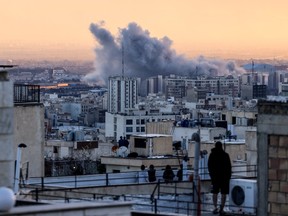
For green investors, the current war-fuelled surge in oil and gas prices conjures up painful memories of 2022, when renewables were gripped by a sell-off that lasted into 2025. But at Jefferies, clients are being urged to double down on a bold upbeat call.
Last year, Jefferies started telling green investors they were entering the “glory days” of a strategy that had long seemed like a losing bet. That advice ended up coinciding with a 44 per cent surge in clean energy stocks in 2025, trouncing the 16 per cent gain in the S&P 500 Index.
Now, despite the prospect of higher inflation, higher interest rates and supply chain disruptions — a cocktail that in the past has derailed green strategies — Jefferies is telling clients not to panic and to stick with the clean energy sector.
The guidance of 2025 is “still very much” the narrative at Jefferies today, according to Aniket Shah, the New York-based bank’s global head of sustainability and transition strategy. Jefferies hasn’t changed its outlook “at all,” and expects the Iran war to trigger a new wave of investment in renewables as governments race to increase energy independence, he said.
Investors staying the course this year have — for now — been rewarded with market-beating returns. The S&P Global Clean Energy Transition Index is up more than 6 per cent, compared with a roughly 1.5 per cent decline in the S&P 500 Index. But the weeks and months ahead look set to test their conviction.
—Bloomberg News
I’m a breaking news reporter but I’m also interested in writing stories about health, the environment, climate change and sustainable living, including zero-waste goals. If you have a story idea related to any of these topics please send an email to ticrawford@postmedia.com