
B.C. climate news: UBC study finds invasive grasses spreading after B.C. wildfires could fuel future fires | Europe’s green power revolution softens Iran energy price shock
Here’s all the latest local and international news concerning climate change for the week of March 16 to March 22, 2026.
You can save this article by registering for free here. Or sign-in if you have an account.
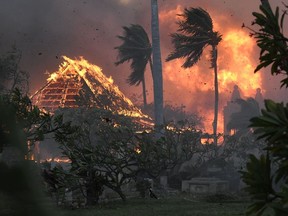
Here’s the latest news concerning climate change and biodiversity loss in B.C. and around the world, from the steps leaders are taking to address the problems, to all the up-to-date science.

Subscribe now to read the latest news in your city and across Canada.
- Unlimited online access to articles from across Canada with one account.
- Get exclusive access to the Vancouver Sun ePaper, an electronic replica of the print edition that you can share, download and comment on.
- Enjoy insights and behind-the-scenes analysis from our award-winning journalists.
- Support local journalists and the next generation of journalists.
- Daily puzzles including the New York Times Crossword.
Subscribe now to read the latest news in your city and across Canada.
- Unlimited online access to articles from across Canada with one account.
- Get exclusive access to the Vancouver Sun ePaper, an electronic replica of the print edition that you can share, download and comment on.
- Enjoy insights and behind-the-scenes analysis from our award-winning journalists.
- Support local journalists and the next generation of journalists.
- Daily puzzles including the New York Times Crossword.
Create an account or sign in to continue with your reading experience.
- Access articles from across Canada with one account.
- Share your thoughts and join the conversation in the comments.
- Enjoy additional articles per month.
- Get email updates from your favourite authors.
Create an account or sign in to continue with your reading experience.
- Access articles from across Canada with one account
- Share your thoughts and join the conversation in the comments
- Enjoy additional articles per month
- Get email updates from your favourite authors
Sign In or Create an Account
Check back every Saturday for more climate and environmental news or sign up for our Sunrise newsletter HERE.

tap here to see other videos from our team.
B.C. climate news: UBC study finds invasive grasses spreading after B.C. wildfires could fuel future fires | Europe’s green power revolution softens Iran energy price shock Back to video
tap here to see other videos from our team.
In climate news this week:
• Europe’s green power revolution softens Iran energy price shock
• Several residents rescued after flooding, mudslide shuts Coquitlam road
• UBC study finds invasive grasses spreading after B.C. wildfires could fuel future fires
Human activities like burning fossil fuels and farming livestock are the main drivers of climate change, according to the UN’s intergovernmental panel on climate change. This causes heat-trapping greenhouse gas levels in Earth’s atmosphere, increasing the planet’s surface temperature.
The panel, which is made up of scientists from around the world, including researchers from B.C., has warned for decades that wildfires and severe weather, such as the province’s deadly heat dome and catastrophic flooding in 2021, would become more frequent and intense because of the climate emergency. It has issued a code red for humanity and warns the window to limit warming to 1.5 C above pre-industrial times is closing.
According to NASA climate scientists, human activities have raised the atmosphere’s carbon dioxide content by 50 per cent in less than 200 years, and “there is unequivocal evidence that Earth is warming at an unprecedented rate.”
As of March 5, 2026, carbon dioxide in the atmosphere was 429.35 parts per million, up from 428.62 ppm the previous month, according to the latest available data from the NOAA measured at the Mauna Loa Observatory, a global atmosphere monitoring lab in Hawaii. The NOAA notes there has been a steady rise in CO2 from under 320 ppm in 1960.
-
Advertisement 1Story continues belowThis advertisement has not loaded yet, but your article continues below.
Quick facts:
• The global average temperature in 2023 reached 1.48 C higher than the pre-industrial average, according to the EU’s Copernicus Climate Change Service. In 2024, it breached the 1.5 C threshold at 1.55 C.
• 2025 was the third warmest on record after 2024 and 2023, capping the 11th consecutive warmest years.
• Human activities have raised atmospheric concentrations of CO2 by nearly 49 per cent above pre-industrial levels starting in 1850.
• The world is not on track to meet the Paris Agreement target to keep global temperature from exceeding 1.5 C above pre-industrial levels, the upper limit to avoid the worst fallout from climate change including sea level rise, and more intense drought, heat waves and wildfires.
• UNEP’s 2025 Emissions Gap Report, released in early December, shows that even if countries meet emissions targets, global temperatures could still rise by 2.3 C to 2.5 C this century.
• In June 2025, global concentrations of carbon dioxide exceeded 430 parts per million, a record high.
• There is global scientific consensus that the climate is warming and that humans are the cause.

Latest News
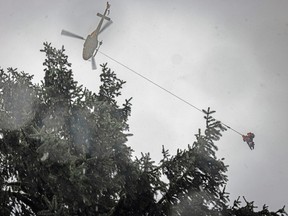
As the B.C. coast continues to be hammered by torrential rains from an atmospheric river, several people were evacuated Thursday by helicopter from their homes in the north end of Coquitlam after a mudslide hit the area.
Two people at a property hit by the mudslide just after 5:35 a.m. needed to be evacuated, and residents from another three homes decided to evacuate because the only road access was cut off, said Chris Fox, deputy fire chief of the City of Coquitlam Fire and Rescue.
At least six people and a dog were brought to safety by helicopter. No one was injured.
Volunteer members of Coquitlam Search and Rescue used a helicopter long line to evacuate the residents from the homes along a forested stretch of Pipeline Road, north of the Upper Coquitlam River Park near Metro Vancouver’s Coquitlam water treatment plant.
—Gordon Hoekstra, Cheryl Chan
Europe’s power market is facing its first serious geopolitical stress test since the 2022 energy crisis — and, so far, it’s holding up.
German and French prices have been much more resilient than natural gas to the turmoil caused by the war in the Middle East, declining last week despite a surge in oil. High energy prices four years ago caused a deep inflationary shock that lasted years, but this time the continued investment in solar panels and wind turbines is helping to blunt any major price shocks.
Contracts remain a fraction of the levels seen after Russia cut pipeline flows in the last crisis, when power costs spiralled and forced governments into emergency interventions. This time, the system looks better prepared.
“The electricity market is significantly more diversified than the oil market and can therefore better withstand a supply constraint of oil or gas,” said Morgane Trieu Cuot, Alpiq Holding AG’s interim trading head.
Higher oil and gas prices are adding to inflationary pressure, with the EU warning its measure could exceed 3 per cent this year if the war in the Middle East drags on. Electricity prices, however, remain far lower than they were four years ago, a buffer that could help limit the need for further rate hikes.
—Bloomberg News
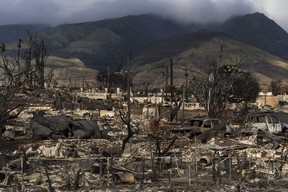
UBC study finds invasive grasses spreading after B.C. wildfires could fuel wildfires
A new study by UBC researchers says invasive grasses are creeping into wildfire-scorched landscapes, providing fuel for massive wildfires.
The study, published this month in the journal Fire Ecology, monitored landscapes two years after major wildfires in the B.C. Interior.
While some native plants returned, recovery was slower and more fragile than expected, according to a UBC news release.
The study says invasive grasses act like dry runways that spread flames. Scientists say this is what contributed to the catastrophic 2023 Lahaina fire in Maui.
“Areas that looked like post-apocalyptic ground right after the fire are now blanketed in cheatgrass. Once you can see the invasion, the opportunity for rapid response may already be gone,” said Dr. Jennifer Grenz, senior author and restoration ecologist and a member of Lytton First Nation, in a statement released by UBC.
“In a new era of megafires, understanding where and how vegetation recovers could determine the intensity of the next wildfire.”
Your local soccer field could be killing salmon: UBC study
When the North Shore Streamkeepers, a group of volunteers that focuses on the ecological stewardship of North Vancouver, stumbled across a charnel cluster of dead fish in Mosquito Creek, they wondered if two plus two equalled six — as in 6PPD-quinone.
The site of the mass death was next to William Griffith Park, which features a large artificial-turf playing field, and they wondered if there was a connection. 6PPD-quinone, a chemical used on tires to prevent degradation, was found to be toxic to some fish species in studies that focused on rubber waste washing off roads into waterways. The Streamkeepers reported that crumb rubber had been washing off the field into the surrounding area, including Mosquito Creek.
“The concern about that site came up because there was a fish kill in that creek, and the Streamkeepers knew about 6PPD-quinone, and knew it was next to a turf field. And so they basically asked us: ‘Could the field have caused it?’ ” said the University of B.C.’s Dr. Rachel Scholes.
“We don’t know for sure that the field did cause it, but we know it probably contributed to the toxicity of the water those fish were experiencing because toxic chemicals were coming off of (the field). I think in scenarios where you have a field, or even a whole sports complex with a drainage designed to go into a salmon-bearing stream, you could have pretty significant impacts on that habitat.”
The students in UBC’s environmental engineering lab launched an investigation of the incident in late 2023, culminating in a recently released study that shows that artificial turf fields leach 6PPD-quinone into storm and freshwater systems, proving lethal to Coho salmon and other fish species.
—J.J. Adams
Geothermal escapes Trump’s renewable crackdown, boosts Fervo’s IPO bid
Tim Latimer is the rare clean-energy executive having a good time in Donald Trump’s America.
His geothermal company, Fervo Energy, is operating in the only renewables sector that has escaped the administration’s disdain, just as hyperscalers hunt for electricity to power their data centres. Conditions are so favourable that Fervo is targeting an initial public offering this year, according to a person familiar with the matter.
It’s riding a wave of enthusiasm for businesses that provide uninterrupted and emissions-free power, which wind and solar can’t do alone. Nuclear stocks have soared over the past year, as have shares of Ormat Technologies Inc., an older geothermal operator. But Fervo’s IPO hinges on whether that surge in interest can extend to a relatively unproven company in an industry that’s still a niche part of the world’s energy mix.
“We’ve been incredibly lucky,” Latimer said. “It’s one thing to get lucky on timing, but it’s another to make sure you don’t ruin the opportunity.”
—Bloomberg News
I’m a breaking news reporter but I’m also interested in writing stories about health, the environment, climate change and sustainable living, including zero-waste goals. If you have a story idea related to any of these topics please send an email to ticrawford@postmedia.com