
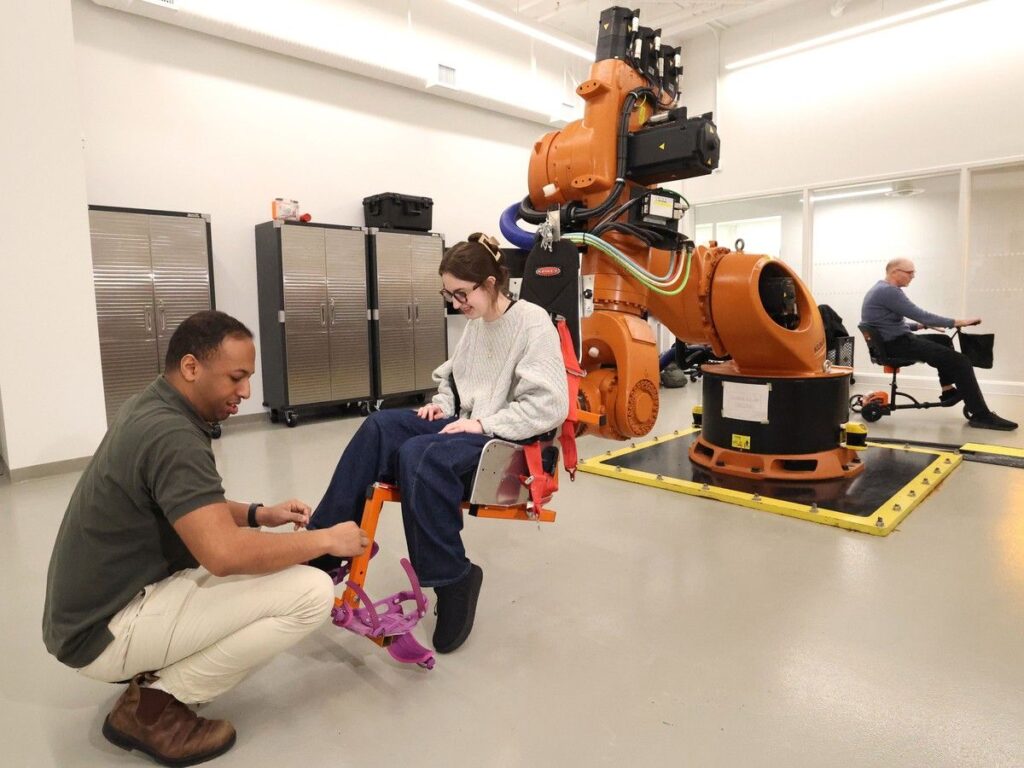
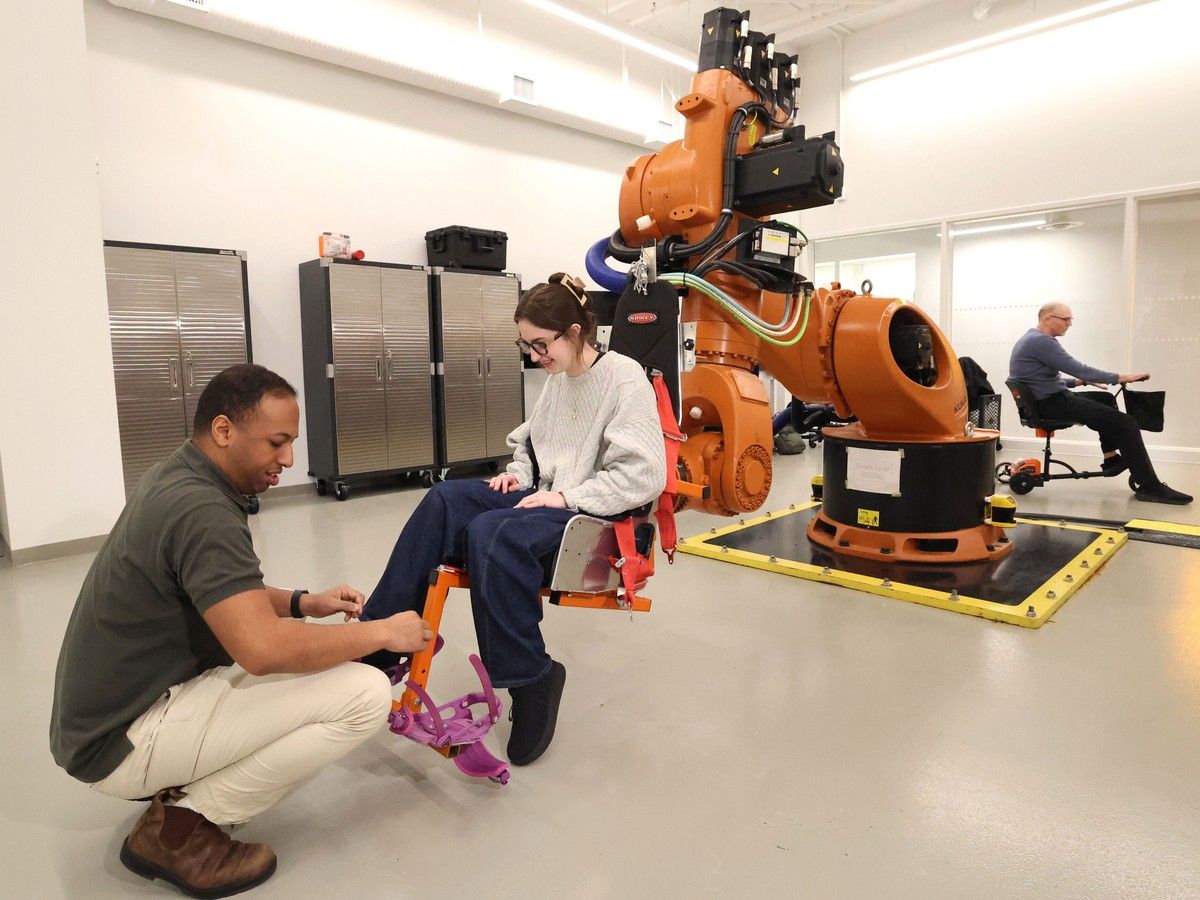
From seatbelts to bike helmets, much of the safety equipment people rely on every day was designed with men in mind.
A new undergraduate course at the University of B.C. aims to change that — by teaching students to recognize and address gender gaps that leave women less protected.
“Women are half the species, and there is a lack of equity in safety equipment in the sense that a lot of them don’t work as well for women as it does for men,” said Peter Cripton, a biomechanics researcher and professor at UBC’s school of biomedical engineering.
The course looks at injury biomechanics through a more inclusive lens, looking at how injuries affect women and how biological differences between men and women affect safety design, including seatbelts and airbags in vehicles, and other protective equipment.
Crash-test dummies used to develop vehicle-safety systems have largely been modelled on men, typically representing the 50th percentile and the 95th percentile of male bodies by the standards of the 1970s.
The female dummy in use is based on a fifth percentile body, representing the smallest five per cent of women, which Cripton said would be roughly the size of a 12-year-old child.
The differences go beyond anatomy. For example, women’s vertebrae and spines are weaker, as are their ligaments depending on where they are in their menstrual cycle.
“Even though we had a female crash-test dummy, it wasn’t very female, if you will,” he said. “It was really based on a male data set. This has left a big hole in the safety space.”
Cripton’s research team has been working to fill that data gap.

In 2023, it conducted detailed MRI scans of nine pregnant women at Vancouver General Hospital, examining how seatbelts fit at different stages of pregnancy. A second study, recently wrapped up, used laser scans of about 330 pregnant women at an OB-GYN clinic in Surrey.
The results confirmed a common frustration: Most women aren’t able to follow seatbelt positioning guidelines late in pregnancy because the abdomen forces the belt into incorrect and potentially unsafe positions.
“We know seatbelts are effective at preventing injuries, and we always recommend women wear the seatbelts when pregnant, but it’s a big challenge for contemporary seatbelts to try to restrain people in their third trimester when the abdomen is so large,” Cripton said.
So far, there has been little change. The research is still in the phase of trying to build better computational models that could evaluate alternative seatbelt strategies, he added.
“It’s a very difficult problem,” said Cripton, whose work contributes to international research by Toyota to improve vehicle safety for pregnant occupants. “Working with a car company on this gives us the best opportunity to translate these findings.”

The goal, he said, is to get students to confront that inequity and empower future generations to design technologies that are more inclusive.
Sophia Katramadakis, a fifth-year biomedical engineering student, is one of about 20 students who signed up for the new course.
From previous courses, she’s been aware of the male bias in data, but wanted to have a better understanding of biomechanics across unrepresented populations.
“The field is becoming more aware these disparities exist, but there’s still so much work that can be done.”
In addition to seatbelts, the undergraduate course also looks at things like concussion tolerance and ACL injuries, which are more common in women than men. It also tackles transgender biomechanics, injuries from intimate partner violence, and physiological changes due to menopause and the menstrual cycle.
Katramadakis, who plans to pursue a career in biomechanics research specializing in injury mechanics, said the course will shape how she approaches her work in future.
“I want to make sure the data I’m collecting is representative of the whole population,” she said.