First Nations say they have yet to see any of the proposed changes to the province’s reconciliation framework, even as B.C.’s premier promises they will be introduced this spring after concerns about private property and mineral rights.
The current legislative session ends on May 28, but it sits for only seven of the next 10 weeks and the Ministry of the Attorney General said there are no updates as to when the amendments will be introduced.
Robert Phillips of the First Nations Summit says even though First Nations have been asked to sign non-disclosure agreements, the province has not provided information on its plans.
He said a meeting with Premier David Eby on March 9 with over 100 First Nations didn’t clear anything up, with the government simply saying it is concerned by how the court is handling Indigenous rights in relation to private property.
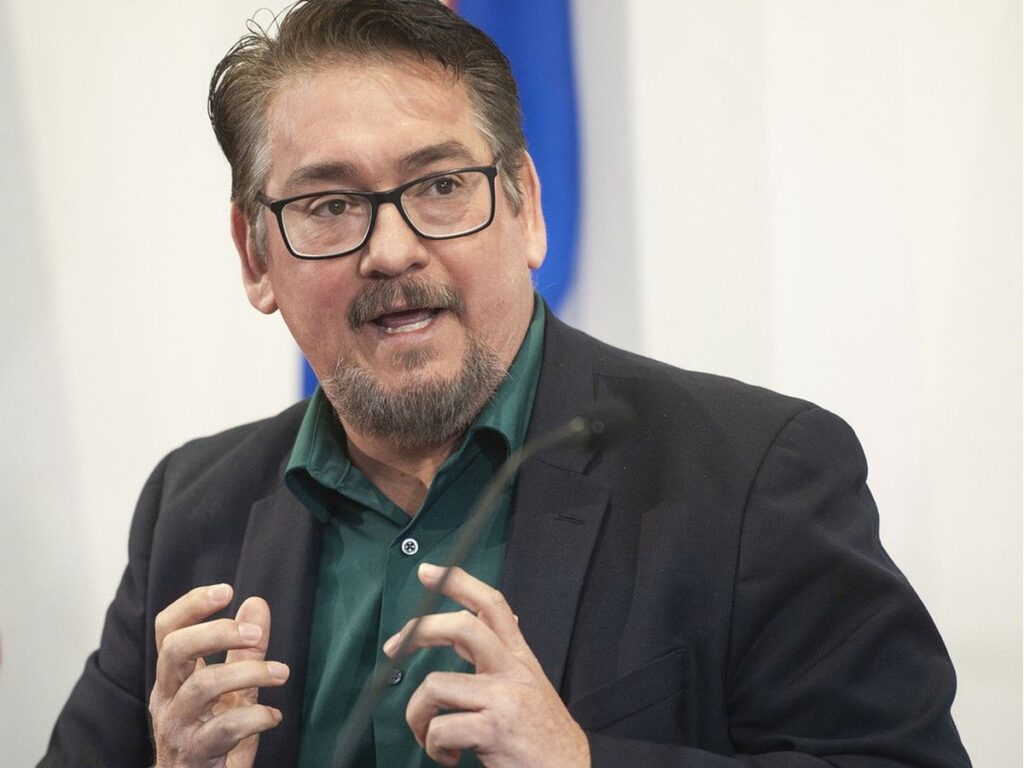
“I think the premier is looking for a way out of this, to save face even, and it’s very difficult to do, because we don’t know what the heck he’s doing,” said Phillips, calling the amendments a “political ploy.”
“Very smart man, but for this, he’s put himself in a big corner.”
The Declaration on the Rights of Indigenous Peoples Act, known as DRIPA, was passed unanimously in 2019 by the legislature in an effort to bring the province in alignment with the United Nations Declaration on the Rights of Indigenous Peoples. Two years later came the Interpretation Amendment Act, which charted a path for how B.C. laws could be amended to be consistent with DRIPA.
Together, DRIPA and the Interpretation Amendment Act set out how Indigenous rights, title and self-determination should be handled in B.C.
A December ruling from the B.C. Court of Appeals found B.C.’s Mineral Tenure Act is inconsistent with DRIPA due to its lack of a requirement for those seeking mineral tenure rights to consult with local First Nations. This caused concern about how mining development can proceed.
That led Eby to promise to amend DRIPA to ensure courts aren’t involved in political decisions.
The announcement came as the province continued to deal with the fallout from August’s B.C. Supreme Court that granted the Cowichan Tribes title to a swath of southeast Richmond that had been the site of a summer fishing village until the land was taken away by the province in the late 19th and early 20th century.
Both rulings are being appealed by the province and Eby has said that the amendments to DRIPA will likely include measures to prevent the courts from interpreting DRIPA on their own.
Scott McInnis, Conservative critic for Indigenous relations and reconciliation, said his party’s position is still that the NDP should fully repeal DRIPA.
He said Section 35 of the Constitution already requires government to consult First Nations and argued DRIPA goes further by requiring consent for certain activities such as resource development.
“Some of the challenge is that DRIPA operates under the presumption that traditional territory is treated as Aboriginal title land,” said McInnis. “We see that in the Northwest with the approaches that government’s taking with needing consent, and consent is permission when containing things like resource extraction.”
While the Conservatives are urging the government to repeal DRIPA, First Nations are urging the province to back away from any amendments, warning it will set reconciliation backwards and lead to even more court cases.
Huy’wu’qw Shana Thomas, a Lyackson hereditary chief, said the ideal path is for the government to engage in good faith negotiations to sign treaties, the absence of which eventually led to the Cowichan case in the first place.
She also said that the province only started consultation with members of the Lyackson First Nation on the amendments after the meeting between Eby and First Nations leader on March 9, months after he first promised the changes to DRIPA.
“The expeditiousness in which the premier is attempting to do this work does not allow the opportunity for communities to really deeply engage and reflect on the proposals, because it’s being put in front of them and they’re being demanded to respond within X number of days, otherwise it’ll be too late,” said Thomas.
UBC adjunct law professor James Hickling agreed, stating that it would be “prudent for the province to slow down and take a more thoughtful and collaborative and measured approach to the implementation of DRIPA.”
Whatever the province decides to do carries political risk, says UBC political scientist Stewart Prest, as amendments could destroy the relationship the NDP have built up with First Nations over their nine years in office.
Conversely, amendments may not actually do anything to address the uncertainty around how Indigenous title affects private property rights.
“It’s not clear that any single set of amendments are going to address the larger, almost philosophical problem,” said Prest.
“And so I do think this is an issue where the province needs to and can even benefit from demonstrating leadership by convening different interested groups to come to shared understandings about how these situations will be handled going forward.”