
B.C. climate news: Emperor penguin now on endangered list | Vancouver’s Science World goes green with solar panels | A potentially strong El Niño on the way
Here’s all the latest local and international news concerning climate change for the week of April 6 to April 12, 2026.
You can save this article by registering for free here. Or sign-in if you have an account.
Here’s the latest news concerning climate change and biodiversity loss in B.C. and around the world, from the steps leaders are taking to address the problems, to all the up-to-date science.

Subscribe now to read the latest news in your city and across Canada.
- Unlimited online access to articles from across Canada with one account.
- Get exclusive access to the Vancouver Sun ePaper, an electronic replica of the print edition that you can share, download and comment on.
- Enjoy insights and behind-the-scenes analysis from our award-winning journalists.
- Support local journalists and the next generation of journalists.
- Daily puzzles including the New York Times Crossword.
Subscribe now to read the latest news in your city and across Canada.
- Unlimited online access to articles from across Canada with one account.
- Get exclusive access to the Vancouver Sun ePaper, an electronic replica of the print edition that you can share, download and comment on.
- Enjoy insights and behind-the-scenes analysis from our award-winning journalists.
- Support local journalists and the next generation of journalists.
- Daily puzzles including the New York Times Crossword.
Create an account or sign in to continue with your reading experience.
- Access articles from across Canada with one account.
- Share your thoughts and join the conversation in the comments.
- Enjoy additional articles per month.
- Get email updates from your favourite authors.
Create an account or sign in to continue with your reading experience.
- Access articles from across Canada with one account
- Share your thoughts and join the conversation in the comments
- Enjoy additional articles per month
- Get email updates from your favourite authors
Sign In or Create an Account
Check back every Saturday for more climate and environmental news or sign up for our Sunrise newsletter HERE.

tap here to see other videos from our team.
B.C. climate news: Emperor penguin now on endangered list | Vancouver’s Science World goes green with solar panels | A potentially strong El Niño on the way Back to video
tap here to see other videos from our team.
In climate news this week:
• Emperor penguins now listed as endangered because of climate change
• Vancouver’s Science World goes green, and not just the dome’s changing light colours
• Bottom sea trawlers snaring many endangered species: UBC study
• March the fourth warmest on record
Human activities like burning fossil fuels and farming livestock are the main drivers of climate change, according to the UN’s intergovernmental panel on climate change. This causes heat-trapping greenhouse gas levels in Earth’s atmosphere, increasing the planet’s surface temperature.
The panel, which is made up of scientists from around the world, including researchers from B.C., has warned for decades that wildfires and severe weather, such as the province’s deadly heat dome and catastrophic flooding in 2021, would become more frequent and intense because of the climate emergency. It has issued a code red for humanity and warns the window to limit warming to 1.5 C above pre-industrial times is closing.
According to NASA climate scientists, human activities have raised the atmosphere’s carbon dioxide content by 50 per cent in less than 200 years, and “there is unequivocal evidence that Earth is warming at an unprecedented rate.”
As of March 5, 2026, carbon dioxide in the atmosphere was 429.35 parts per million, up from 428.62 ppm the previous month, according to the latest available data from the NOAA measured at the Mauna Loa Observatory, a global atmosphere monitoring lab in Hawaii. The NOAA notes there has been a steady rise in CO2 from under 320 ppm in 1960.

-
Advertisement 1Story continues belowThis advertisement has not loaded yet, but your article continues below.
Quick facts:
• The global average temperature in 2023 reached 1.48 C higher than the pre-industrial average, according to the EU’s Copernicus Climate Change Service. In 2024, it breached the 1.5 C threshold at 1.55 C.
• 2025 was the third warmest on record after 2024 and 2023, capping the 11th consecutive warmest years.
• Human activities have raised atmospheric concentrations of CO2 by nearly 49 per cent above pre-industrial levels starting in 1850.
• The world is not on track to meet the Paris Agreement target to keep global temperature from exceeding 1.5 C above pre-industrial levels, the upper limit to avoid the worst fallout from climate change including sea level rise, and more intense drought, heat waves and wildfires.
• UNEP’s 2025 Emissions Gap Report, released in early December, shows that even if countries meet emissions targets, global temperatures could still rise by 2.3 C to 2.5 C this century.
• In June 2025, global concentrations of carbon dioxide exceeded 430 parts per million, a record high.
• There is global scientific consensus that the climate is warming and that humans are the cause.
Latest News
Emperor penguins now listed as endangered
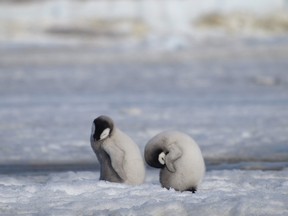
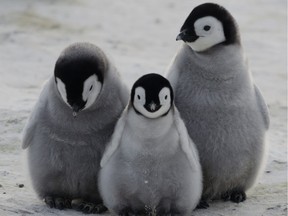
The emperor penguin and the Antarctic fur seal are now both endangered, according to International Union for Conservation of Nature Red List of Threatened Species.
The IUCN said in a statement this week that climate change in Antarctica is leading to changes in sea ice that are projected to cause the emperor penguin population to halve by the 2080s, while reduced food availability has already driven a 50 per cent reduction in the Antarctic fur seal population since 2000.
The southern elephant seal is also now at risk of extinction, due to disease, the IUCN added.
“Penguins are already among the most threatened birds on Earth. The emperor penguin’s move to endangered is a stark warning: climate change is accelerating the extinction crisis before our eyes,” said Martin Harper, CEO of BirdLife International, which co-ordinated the emperor penguin assessment as the authority for birds on the IUCN Red List.
Harper said governments must act now to urgently decarbonize the economy.
The primary driver threatening the birds is the loss of sea ice, which the IUCN said has reached record lows since 2016. Emperor penguins require sea ice that is “fastened” to the coastline, ocean floor or grounded icebergs as habitat for their chicks and during their moulting season, when they are not waterproof. If the ice breaks up too early, the result can be deadly, according to the IUCN.
—Tiffany Crawford

Vancouver’s geodesic dome is going green, but not just the dazzling lights that change colour for special occasions.
Science World has unveiled B.C.’s first vertical solar array as part of a major energy efficiency overhaul in the battle against human-caused climate change.
The $39‑million retrofit is designed to reduce the building’s energy use by more than 40 per cent and greenhouse gas emissions by about 75 per cent, according to B.C. Hydro. The project is funded by $20 million from the province and $19 million from the federal government.
Science World’s retrofit includes three solar arrays, which the Crown corporation said is the first of its kind in B.C.
The 76 panels, installed late March will begin generating energy before summer, B.C. Hydro said.
—Tiffany Crawford
Near-record low snowpack for B.C.’s South Coast
Snowpack in parts of southern and coastal B.C. are at some of the lowest levels in decades, even as other parts of the province recorded near record highs, according to the latest snow survey.
The April 1 survey from the River Forecast Centre showed a stark regional divide, ranging from a low of 26 per cent of normal in the Skagit area to a high of 146 per cent in the Nechako and Peace regions.
“It’s really quite unusual to have so many so high and so many so low,” said Jonathan Boyd, a hydrologist with the River Forecast Centre.
Vancouver Island is 44 per cent of normal, one of the lowest levels in the province, according to the survey. The South Coast basin, which includes the North Shore mountains and is the source of much of Metro Vancouver’s drinking water, is 57 per cent of normal. The Okanagan, at 58 per cent, broke a previous low set in 1981.
Less water increases the potential for drought conditions through the summer, Boyd said. “And oftentimes drought is associated with wildfire, as well,” he added.
—Nathan Griffiths

Bottom sea trawlers snaring many endangered species: UBC study
Thousands of ocean species are being caught in bottom trawls, including many that are listed as threatened, such as the critically endangered giant guitarfish, the zebra shark and at least three sea horse species, according to a new UBC study.
The peer-reviewed study, which is the first global inventory of fish species caught in trawlers, was published in the journal Reviews in Fish Biologies and Fisheries.
Researchers compiled the inventory from 236 sources from the United Nations Food and Agriculture Organization’s document repository. They documented nearly 3,000 different fish species from more than 9,000 records of fish caught in bottom trawlers from 1895 to 2021.
Among those, one in seven fish species were listed as threatened or near threatened with extinction, based on the International Union for Conservation of Nature’s Red List.
Sarah Foster, senior researcher and program leader at UBC’s Project Seahorse, said bottom trawling — which drags heavy nets across the ocean floor — is one of the most destructive fishing practices that must be overhauled to conserve species for commercial use and to preserve the ocean ecosystem.
—Tiffany Crawford
A proposed passenger-only electric-ferry service connecting downtown Vancouver with Bowen Island and the Sunshine Coast is picking up speed, with a report going before the Vancouver park board next week.
Park board staff has identified a “preferred concept” for the proposed project, which would use the public dock at Harbour Green Park at the north end of Bute Street. It would include a “charge barge,” a publicly accessible viewing platform, and a dock for short-term recreational use.
The park board is expected to vote on the proposal Monday. If approved, it would allow Vancouver staff to negotiate an agreement with Victoria-based Cirql Ferries.
“Vancouver is defined by its waterfront, the seawall, that lifestyle piece, but there’s such huge opportunity to also be moving people in transportation beyond the bridges and B.C. Ferries,” said Cirql founder Callum Campbell. “We’re excited about re-engaging that part of the waterfront.”
—Cheryl Chan
The construction sustainability organization Light House has spent the past 14 months creating a business case for collecting the plastic waste from construction sites that is normally thrown out and turning it into new products.
Light House received $400,000 from the provincial and federal governments to fund a pilot project to collect 38 tonnes of plastic trash from eight Lower Mainland construction sites and turn it into egg-carton shaped forms that can be used to reduce the amount of concrete in slab construction.
In a full-circle moment on Tuesday at a small plastics manufacturing plant on Annacis Island in Delta, Light House, the product’s inventor, Infina, and Plascon Plastics invited the public to see a test run of its production.
“At its core, (the pilot) is about understanding, in real working conditions, what it would actually take to recover these materials and reuse them,” said Gil Yaron, a managing director at Light House and head of the pilot.
Yaron said he believes the initiative has proven their point: That plastic from construction waste, which is typically either landfilled or incinerated in waste-to-energy facilities, can be recycled.
—Derrick Penner
A blast of hot weather will sweep into the eastern U.S., toppling records, sparking energy demand and bringing sultry conditions to New York City and Washington by the middle of next week.
Washington will likely reach a high of 34 C on the National Mall on Wednesday, while New York’s Central Park is set to go over 30 C, the National Weather Service said.
The heat will extend across much of the mid-Atlantic and southeast with at least 165 daily records expected to be threatened or broken next week.
The looming warmth in the eastern U.S. comes just weeks after an unusual heat wave set records across California and the Southwest, melting the region’s much-needed snow pack and raising concern for drought and wildfires later this year.
—Bloomberg News
March was fourth warmest on record globally, say climate experts
March was the fourth warmest March globally, with an average surface air temperature of 13.94 C, or 0.53 C above the 1991-2020 average for March, according to Europe’s Copernicus Climate Change Service.
The warmest March on record was in 2024.
The agency also said the average sea surface temperature for March 2026 was the second highest on record following March 2024 during the last El Niño event.
The Weather Network is reporting a quick flip from La Niña ocean conditions to a potentially strong El Niño over the next couple of months.
The agency says this may be influenced by a series of powerful tropical cyclones over the western Pacific Ocean, which may enhance warming in a critical region of that ocean basin.
—Tiffany Crawford
I’m a breaking news reporter but I’m also interested in writing stories about health, the environment, climate change and sustainable living, including zero-waste goals. If you have a story idea related to any of these topics please send an email to ticrawford@postmedia.com