
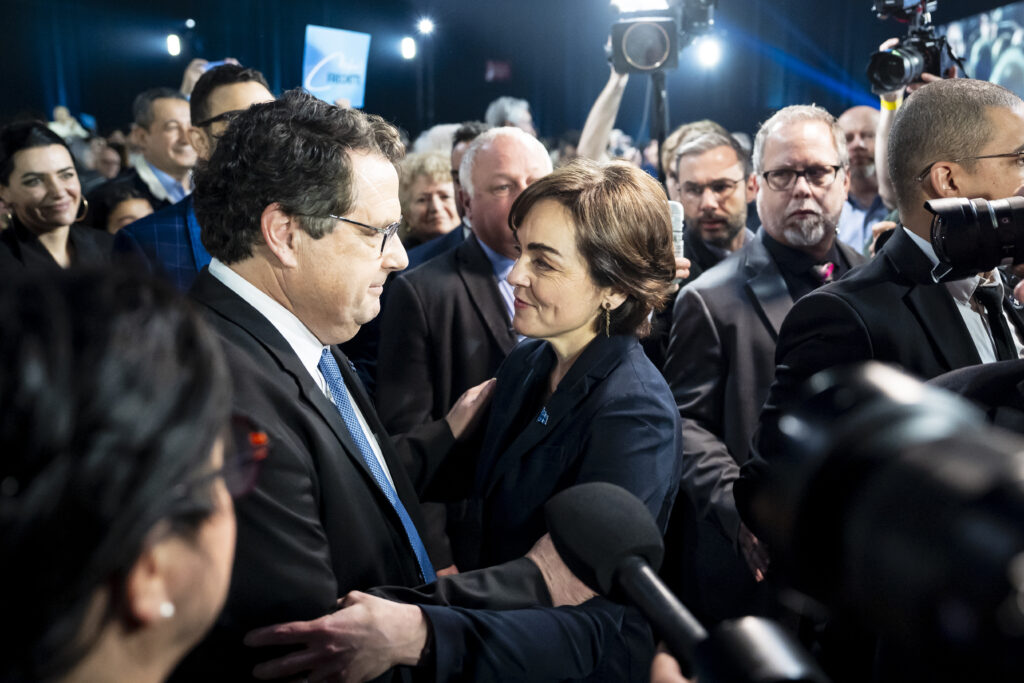
Christine Fréchette has been chosen as the new CAQ leader and premier-elect of Quebec, replacing François Legault at the head of the party and province.
The former cabinet minister defeated Bernard Drainville Sunday with 57.9 per cent of the vote by 15,833 party members. The result was announced at a gathering in Drummondville, east of Montreal, about an hour after the polls closed.
Fréchette, 56, will become just the second woman to serve as premier of Quebec after Pauline Marois.
“Today, you have chosen a woman and a unifying leadership,” Fréchette said in her victory speech. “Dear activists, dear colleagues, dear Quebecers, today may mark the end of the leadership race, but above all, it is the moment to write a new chapter, not only within our party, but for politics in Quebec. And I will write this chapter with you.”
Fréchette becomes the first person at the helm of the Coalition Avenir Québec (CAQ) other than Legault, who created the party in 2011 and has been its sole leader. After winning back-to-back majority governments, Legault announced in January he would step down as polls showed his party was deeply unpopular.
“Each of us is here because you were there, because you mobilized us, you brought us together. You worked for years for the people of Quebec,” the new CAQ leader told her predecessor. “I want to thank you for your unwavering commitment to Quebec, and know that we will build upon what you have built, and where necessary, we will go further.”
Fréchette, who resigned as economy minister to challenge for the top job, is now tasked with overcoming that unpopularity just six months out from an election. Polls show the CAQ hovering below 10 per cent, and a popular poll aggregator is predicting the CAQ will not win a single seat in October.
“I won’t let you take Quebec back 10 years. You’ll find me in your way.”
—Premier-elect Chrstine Fréchette, to the leaders of the Parti Québécois and Liberals
If Fréchette manages to build momentum for the CAQ, it could be at the detriment of the Quebec Liberals, thus facilitating a victory for the Parti Québécois.
In a rare moment of passion in an otherwise quite cerebral 18-minute victory speech, Fréchette addressed those two main opposition party leaders directly, vowing to not back down in the months leading up to Oct. 5.
“In an unstable world, what Quebecers need is certainly not more division,” Fréchette said. “Yet, with the Parti Québécois and the Liberal Party, it’s still the same old yes versus no, the same old constitutional squabbles. So I want to speak directly to Paul St-Pierre Plamondon and Charles Milliard. Quebecers don’t want to go backward. This isn’t the time to erect new borders. This isn’t the time for ‘fling flangs’ or the UPAC. Let me tell you right now: I won’t let you take Quebec back 10 years. You’ll find me in your way.”
That glimpse of fervour from Fréchette earned her a standing ovation in Drummondville.
Fréchette, a former PQ staffer herself, focused her leadership campaign on economic issues, including on reopening the debate around shale gas and hydraulic fracturing.
She promised to limit immigration while also reactivating the Quebec Experience Program (PEQ) for two years; improve access to housing and health care; reduce the size of the government; and strengthen the role of the private sector in health care, education, and infrastructure projects.
To ease the financial burden on Quebecers, she promised to reduce vehicle registration costs and reimburse a significant portion of the property transfer taxes for first-time homebuyers.
“You deserve to breathe easier,” Fréchette said. “You deserve to enjoy the fruits of your labour more fully, and you can count on us to make that happen. We’re going to tackle the cost of living. We’re going to give Quebec families a breath of fresh air, not just with words, but with actions. Easing the pressure means, in particular, that we’re going to simplify your life because your time is precious. And that requires a government that will help you with less red tape and more simplicity.”
“Right now, even though economic development is important for the growth and also the resilience for the province, the main concern of the population is cost of living,” political analyst Daniel Tran, the director of communications and governmental relations at Casacom, told CityNews. “Will she be able to communicate that she’s the solution for that? We’ll see.”
Fréchette was considered the front-runner in the leadership race, which saw 77.1 per cent of CAQ members cast a ballot. Her leadership bid was bolstered by a long list of political endorsements, including ministers from Legault’s cabinet like Finance Minister Éric Girard and Treasury Board President France-Élaine Duranceau.
“She’s shown throughout her campaign that she’s somebody who can mobilize a lot of people, including the stakeholders in economic development,” Tran said. “Right off the bat, she had a lot of ministers and elected officials that did support her and endorse her at the beginning.”
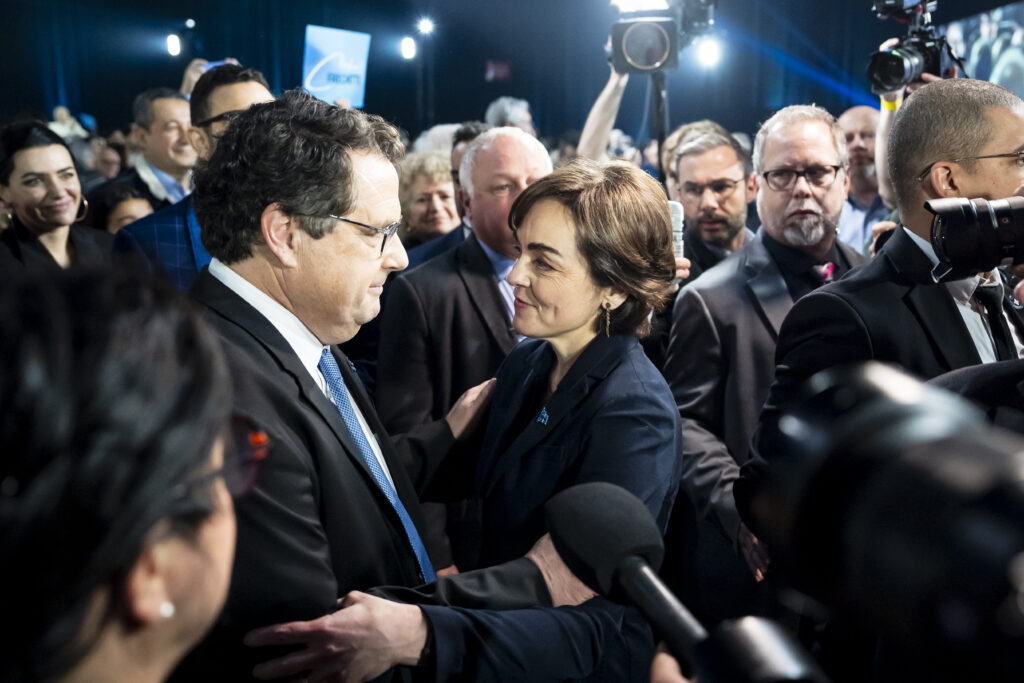
Born in Trois-Rivières, Fréchette was named CAQ MNA for Sanguinet in 2022. Under Legault, she was minister of immigration, economy and energy, regional economic development and was responsible for the Montreal and Montérégie regions.
A graduate of HEC Montréal and Université Laval, Fréchette was a member of the board for the Conseil du statut de la femme, a government body responsible for research on gender equality, prior to officially entering politics.
She was deputy chief of staff to former Parti Québécois minister Jean-François Lisée in 2012 after four years working in Quebec media. She chose to leave the PQ because of her disagreement with the Quebec Charter of Values, which was being spearheaded at the time by Drainville himself.
“Bernard, I repeat, you gave it your all in this race,” Fréchette told her leadership opponent. “And I’d even say you made me a better candidate. And I must say that your communication skills, your ability to connect with people, to explain and to mobilize, will be extremely useful going forward. We’re going to need you, Bernard. Party unity is absolutely essential, and it’s everyone’s responsibility — MNAs, elected officials, and activists alike. So, a huge thank you for your commitment, Bernard. I look forward to building the future with you.”
Fréchette will now take the next three weeks to select and prepare her cabinet before returning to the National Assembly on May 5 to serve as the 33rd premier of Quebec.
The provincial election is scheduled for Oct. 5.
Making his final speech as premier of Quebec, an emotional Legault spoke to CAQ supporters in the hour before before the leadership results were announced.
He said he was proud of the two “solid candidates” and looked forward to what the winner would accomplish in Quebec City.
Legault also warned about the possible divisions within a party following a leadership race, urging unity from all sides.
“A leadership race creates tensions, it’s normal,” Legault said. “But in an hour, we’ll have a new leader and a new premier of Quebec. The winning team will need to be generous, and extend their hand. And the other team will need to accept that hand. That’s the last request I’m asking as leader of this party. Unite!”
That final plea ended Legault’s teary-eyed farewell to public office and the party he was instrumental in creating. He looked back on the CAQ’s beginnings, and how he went from having to “convince people one by one” to forming consecutive majority governments.
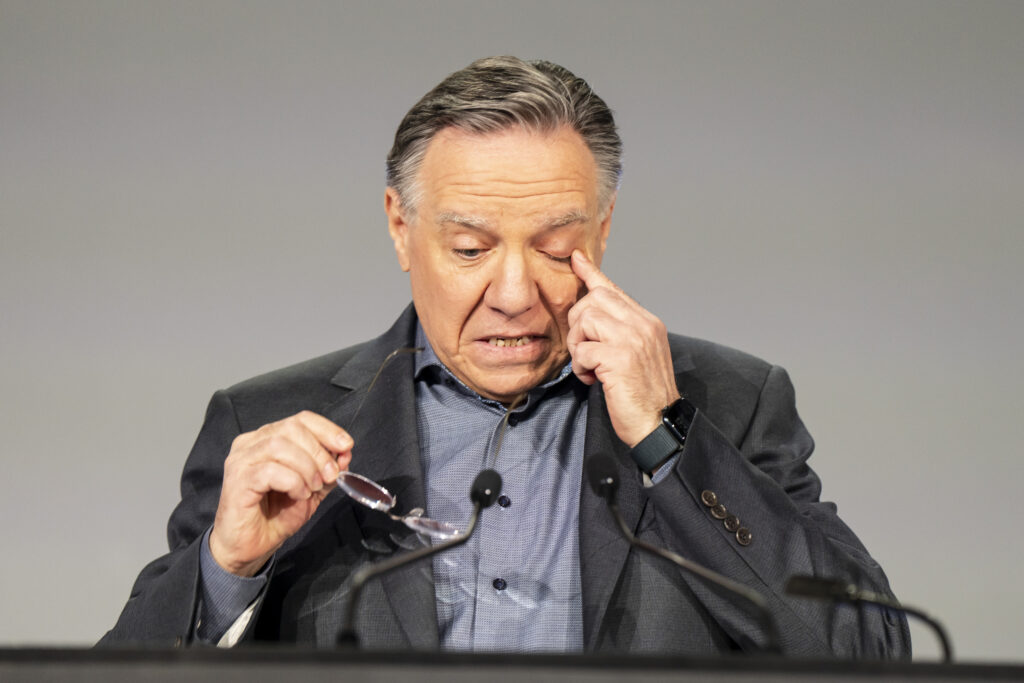
He offered a brief recap of the CAQ’s accomplishments during his time in office, and asked his supporters not to let the party’s opponents “boil our mandates down to a couple of bad decisions.”
“Remember that we changed Quebec. Let’s be proud of what we accomplished,” he said.
Legault was treated to a lengthy homage, with several Quebec personalities paying tribute to him via video message. Supporters in Drummondville then gave him a standing ovation as he walked off the stage for one final time.
CityNews spoke to several Montrealers to find out what they thought of Fréchette, and if her new role as CAQ leader could have an impact on the October election.
Josée Hamel: “Christine Fréchette, well she was more involved in the business. I think she had many responsibilities before. So I would tend to think that she might be able to get more things done.”
Jean Déry: “I think she’ll be OK. I would vote for her because she’s a bit more dynamic. She has a wider perspective of things, I think. And she seems to be, she ponders more on problems instead of affirming directly what most people would think.”
Peter Ashmarin: “I would like to see a focus on the housing issue, the housing crisis that’s affecting most of the people here. I think it’s the number one issue.”
Bella Rohachova: “I would like to see a little bit more support for local businesses and maybe even tourism programs, arts programs.”
Dylan Bello: “Being an immigrant myself personally, immigration is the main issue for me right now. I’m doing my paperwork for residence and I would like a new premier to revise and maybe do a step back on the policy change that’s been happening in the province recently.”
–With files from The Canadian Press