
B.C. climate news: Delta company opens lithium refining plant with first-in-North-America technology | B.C. company creates AI ‘scout’ to predict wildfire risk
Here’s all the latest local and international news concerning climate change for the week of April 13 to April 19, 2026.
You can save this article by registering for free here. Or sign-in if you have an account.

Here’s the latest news concerning climate change and biodiversity loss in B.C. and around the world, from the steps leaders are taking to address the problems, to all the up-to-date science.

Subscribe now to read the latest news in your city and across Canada.
- Unlimited online access to articles from across Canada with one account.
- Get exclusive access to the Vancouver Sun ePaper, an electronic replica of the print edition that you can share, download and comment on.
- Enjoy insights and behind-the-scenes analysis from our award-winning journalists.
- Support local journalists and the next generation of journalists.
- Daily puzzles including the New York Times Crossword.
Subscribe now to read the latest news in your city and across Canada.
- Unlimited online access to articles from across Canada with one account.
- Get exclusive access to the Vancouver Sun ePaper, an electronic replica of the print edition that you can share, download and comment on.
- Enjoy insights and behind-the-scenes analysis from our award-winning journalists.
- Support local journalists and the next generation of journalists.
- Daily puzzles including the New York Times Crossword.
Create an account or sign in to continue with your reading experience.
- Access articles from across Canada with one account.
- Share your thoughts and join the conversation in the comments.
- Enjoy additional articles per month.
- Get email updates from your favourite authors.
Create an account or sign in to continue with your reading experience.
- Access articles from across Canada with one account
- Share your thoughts and join the conversation in the comments
- Enjoy additional articles per month
- Get email updates from your favourite authors
Sign In or Create an Account
Check back every Saturday for more climate and environmental news or sign up for our Sunrise newsletter HERE.

tap here to see other videos from our team.
B.C. climate news: Delta company opens lithium refining plant with first-in-North-America technology | B.C. company creates AI ‘scout’ to predict wildfire risk Back to video
tap here to see other videos from our team.
In climate news this week:
• B.C. company creates AI ‘scout’ to predict wildfire risk
• Austria races to secure power supplies as ‘peak water’ looms
• Delta company opens lithium refining plant with first-in-North-America technology
Human activities like burning fossil fuels and farming livestock are the main drivers of climate change, according to the UN’s intergovernmental panel on climate change. This causes heat-trapping greenhouse gas levels in Earth’s atmosphere, increasing the planet’s surface temperature.
The panel, which is made up of scientists from around the world, including researchers from B.C., has warned for decades that wildfires and severe weather, such as the province’s deadly heat dome and catastrophic flooding in 2021, would become more frequent and intense because of the climate emergency. It has issued a code red for humanity and warns the window to limit warming to 1.5 C above pre-industrial times is closing.
According to NASA climate scientists, human activities have raised the atmosphere’s carbon dioxide content by 50 per cent in less than 200 years, and “there is unequivocal evidence that Earth is warming at an unprecedented rate.”
As of March 5, carbon dioxide in the atmosphere was 429.35 parts per million, up from 428.62 ppm the previous month, according to the latest available data from the NOAA measured at the Mauna Loa Observatory, a global atmosphere monitoring lab in Hawaii. The NOAA notes there has been a steady rise in CO2 from under 320 ppm in 1960.

Quick facts:
• The global average temperature in 2023 reached 1.48 C higher than the pre-industrial average, according to the EU’s Copernicus Climate Change Service. In 2024, it breached the 1.5 C threshold at 1.55 C.
• 2025 was the third warmest on record after 2024 and 2023, capping the 11th consecutive warmest years.
• Human activities have raised atmospheric concentrations of CO2 by nearly 49 per cent above pre-industrial levels starting in 1850.
• The world is not on track to meet the Paris Agreement target to keep global temperature from exceeding 1.5 C above pre-industrial levels, the upper limit to avoid the worst fallout from climate change including sea level rise, and more intense drought, heat waves and wildfires.
• UNEP’s 2025 Emissions Gap Report, released in early December, shows that even if countries meet emissions targets, global temperatures could still rise by 2.3 C to 2.5 C this century.
• In June 2025, global concentrations of carbon dioxide exceeded 430 parts per million, a record high.
• There is global scientific consensus that the climate is warming and that humans are the cause.

Latest News
Beneath the spring snow currently melting in the B.C. mountains, the conditions for a catastrophic wildfire could already exist.
A B.C. company is hoping to help communities understand that risk months before fire season starts using an artificial intelligence model that draws from various data sources, including drone footage, to come up with a threat assessment that can guide fire prevention work.
Michal Aibin, head of the masters program in applied computing at the B.C. Institute of Technology and chief technology officer for SkyScoutAi, came up with the idea for a fire prevention tool several years ago after realizing that while there is technology to detect fires and fight them, there isn’t much to help prevent them.
“You can’t prevent lightning (or other) random natural events,” he said. “But you can prepare the area to respond better.”
A demo on SkyScout’s website shows live data for hundreds of locations across the province as the system constantly calculates and updates the risk of wildfire based on five factors, including fuel moisture, flammability, weather, terrain and historical fires. Each factor is separately rated to determine the overall threat level for the location.
—Glenda Luymes
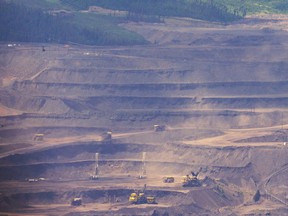
A U.S. court has upheld Montana’s selenium standard for pollution in a border-crossing lake despite objections from a coal mine in southeastern B.C.
The Montana District Court ruled last week that the selenium standard of 0.8 micrograms per litre adopted by the Montana Department of Environmental Quality can stand, a win for environmentalists in a decade-long dispute over transboundary mining pollution. It’s also a blow for a B.C. coal mining company seeking to expand operations at a time when both the federal and B.C. governments are speeding up new resource development projects.
Selenium is a chemical that humans can generally tolerate but is toxic to fish. At high levels it can either kill eggs or cause deformities in juvenile fish. It has been accumulating in the watershed for decades as a result of coal mining by former coal mine owner Teck Resources.
Glencore-owned Elk Valley Resources, which took over from Teck and now operates four steelmaking coal mines in the area, argues that fish would still be adequately protected if the selenium levels were 1½ micrograms per litre.
In an emailed statement in response to the suit, Elk Valley Resources said the company is in favour of having legal, scientifically based standards in place to protect water quality and aquatic life in the Koocanusa Reservoir.
—Tiffany Crawford
A Delta-based startup opened a lithium-refining plant on Thursday using an electrochemical process that will be a first for North America, betting that the technology can be developed into a made-in-Canada supply chain for the critical mineral.
Mangrove Lithium cut the ribbon on its commercial-scale refining plant with the capacity to make enough lithium — an essential element for the heralded energy transition — for up to 25,000 electric vehicle batteries.
Company CEO Saad Dara called Thursday’s official commissioning “a landmark moment,” which Mangrove Lithium hopes will prove the cost competitiveness of their process and break into a global supply chain that is dominated by mines in South America and refining centred in China and other parts of Asia.
“All of Canada’s lithium, all of our mineral resources from lithium mining, end up in other countries for processing and refining,” Dara said in his remarks. “That’s not only a geopolitical risk, but it also means that Canada does not capture the full value of its mineral resources,” he added.
Dara hopes the Delta demonstration plant will help justify a final investment decision for a larger-scale commercial refining plant near lithium mines in Quebec with the capacity to refine enough of the element for the equivalent of 500,000 EV batteries.
—Derrick Penner
Austria races to secure power supplies as ‘peak water’ looms
Austria’s economic model has long been anchored in alpine water flowing through turbines to generate power for homes and businesses, but as climate change redraws the country’s hydrological map, it faces a structural shift and geopolitical tensions have heightened the sense of urgency.
Scientists warn that the country is approaching a tipping point known as “peak water,” which means that as alpine glaciers shrink, these frozen reservoirs will no longer be able to boost river flows and generate electricity to the same extent they once did.
“Almost all glaciers have been losing mass. That is consensus,” said Francesca Pellicciotti, a glaciologist at the Institute of Science and Technology Austria. “There will be less water for hydropower at some point.”
Climate change is already causing more volatile precipitation patterns, but the prospect of declining water availability underscores the need to diversify into wind, solar and energy storage to cushion both climate-driven shocks and external supply risks. Iran’s closure of the Strait of Hormuz after the U.S. and Israel attacked has highlighted how vulnerable export dependence energy systems can be.
—Bloomberg News
Royal Bank of Canada and Bank of Nova Scotia have abandoned plans to reduce the carbon footprint associated with loans to heavy emitters such as oil and gas producers.
The Canadian banks, announcing their decisions in separate statements on Thursday, said they are withdrawing their 2030 financed emissions targets. Both cited the geopolitical and energy-security context. RBC said it will retain its 2050 ambition to achieve net zero emissions via its loan book, while Scotiabank said it had retired that goal altogether.
Just half a decade ago, banks in North America and Europe lined up to join net zero alliances, as they touted their dedication to addressing climate change. Since then, such commitments have been dramatically wound back against a backdrop of war, higher interest rates, political opposition and energy crises.
RBC said last year it was reviewing goals it set in 2022 for reducing the carbon emissions intensity of oil and gas, power generation and automotive clients. It now says that the “changing and uncertain operating environment makes some of our interim targets not reasonably achievable and the outlook for others unclear.”
—Bloomberg News
When Hurricane Michael, a Category 5 storm, tore through Florida’s Tyndall Air Force Base in 2018, it battered F-22 stealth fighter jets, destroyed hundreds of buildings and churned up 700,000 cubic yards of debris. The total cost of the damage approached $5 billion.
Now, Tyndall is being rebuilt as a super-resilient “installation of the future.” New buildings sit more than a foot above the ground, to remain dry through 75 years of sea-level rise. Their roofs are designed to withstand winds of up to 165 miles per hour. Manmade oyster reefs will protect coasts by breaking up waves.
The massive project will be 70 per cent complete next year, said the officer leading it, Col. Robert Bartlow, chief of the U.S. Air Force Civil Engineer Center Natural Disaster Recovery Division. “This is a first for the Air Force,” he said, with large-scale, cutting-edge construction taking place “on top of an existing base, while there was a continued flying mission.”
Storms like Michael are becoming more powerful and damaging as the world warms, and many military installations are exposed to them and other climate hazards. Still, Secretary of Defense Pete Hegseth vowed last year that the Pentagon wouldn’t do any “climate change crap” on his watch. Biden-era climate action plans were scrapped, and the 2025 National Security Strategy invoked climate change only to label it a “disastrous” ideology. Hegseth cancelled nearly 100 research studies related to global warming and security, which experts say will compound the loss of climate knowledge across the federal government under President Donald Trump.
But as Tyndall shows, the department is still engaged on one front of the climate fight: steeling its bases against the effects of a warming atmosphere, such as higher seas, fiercer storms and deadlier fires. A new flood wall is rising at the U.S. Naval Academy in Maryland; a low-lying Air Force runway is being elevated in Virginia; and projects are underway to reduce wildfire risk around various military sites in Hawaii.
—Bloomberg News
I’m a breaking news reporter but I’m also interested in writing stories about health, the environment, climate change and sustainable living, including zero-waste goals. If you have a story idea related to any of these topics please send an email to ticrawford@postmedia.com