
‘Backup plan:’ Vancouver woman opens Mexican egg-freezing retreat for fertility patients
Aliza Virani had a bad experience freezing her eggs in Vancouver, so turned to Mexico for an alternative. But here in Canada, the egg-freezing business is booming
By Lori Culbert
Last updated 7 hours ago
You can save this article by registering for free here. Or sign-in if you have an account.

Aliza Virani lost her international event-planning career and “prime dating years” during COVID-19 and a subsequent health scare.

Subscribe now to read the latest news in your city and across Canada.
- Unlimited online access to articles from across Canada with one account.
- Get exclusive access to the Vancouver Sun ePaper, an electronic replica of the print edition that you can share, download and comment on.
- Enjoy insights and behind-the-scenes analysis from our award-winning journalists.
- Support local journalists and the next generation of journalists.
- Daily puzzles including the New York Times Crossword.
Subscribe now to read the latest news in your city and across Canada.
- Unlimited online access to articles from across Canada with one account.
- Get exclusive access to the Vancouver Sun ePaper, an electronic replica of the print edition that you can share, download and comment on.
- Enjoy insights and behind-the-scenes analysis from our award-winning journalists.
- Support local journalists and the next generation of journalists.
- Daily puzzles including the New York Times Crossword.
Create an account or sign in to continue with your reading experience.
- Access articles from across Canada with one account.
- Share your thoughts and join the conversation in the comments.
- Enjoy additional articles per month.
- Get email updates from your favourite authors.
Create an account or sign in to continue with your reading experience.
- Access articles from across Canada with one account
- Share your thoughts and join the conversation in the comments
- Enjoy additional articles per month
- Get email updates from your favourite authors
Sign In or Create an Account
So in 2023, at age 33, she decided to freeze her eggs.
All the messaging around the procedure made the North Vancouver woman feel like she was under “a pressure cooker” to do it before she turned 35.
With financial support from her parents, she paid $16,000 but was able to freeze only three eggs, a low result for a woman her age. It was an “emotional and disappointing” experience, which she partially attributes to stress at that stage of her life.
“We have the pressure to own a home, the pressure to have a career, the pressure to take care of our aging parents,” Virani said.
Not to mention “the pressure to be married” and “still look young and beautiful.”
The deafening tick-tick-tick of her “biological clock” had piqued her interest in egg-freezing, but when it was over she felt uninformed about the odds of success and alone while enduring harsh side-effects following her egg retrieval.
Virani’s concerns echo those of many women interviewed for Fertility Inc., a five-part series by the Investigative Journalism Bureau and Postmedia News, which delves into the largely unregulated egg-freezing industry. Journalists documented examples of misleading advertising full of emotional manipulation, high costs that weren’t properly explained to patients and a lack of transparency about the odds of egg-freezing leading to a successful pregnancy.
Egg-freezing involves collecting and storing eggs until a woman wants to have a baby. Then the eggs are thawed and fertilized with sperm to create embryos, which are transferred to the uterus to try to achieve pregnancy.
While the procedure was developed in the 1980s to help women undergoing certain medical treatments, egg-freezing for family planning began in 2012 in Canada.
-
Advertisement 1Story continues belowThis advertisement has not loaded yet, but your article continues below.
Today, the industry is booming — more than doubling from 2020 to 2024. And yet, of the 4.1 million babies born in this country between 2013 and 2023, just 70 are known to have come from frozen eggs, according to Canadian Fertility and Andrology Society data.
Despite this, Canadian women paid millions to freeze their eggs between 2013 and 2023.
In an ideal world, Virani wishes society would allow women to slow down and protect their health, to improve their chances of having babies naturally.
But for those women who want to freeze eggs, Virani set out to address the problems she had faced: high costs, lack of clear information, isolation and emotional uncertainty. She created an egg-freezing retreat in Mexico, The Fertility Co-Living, where women go through the medical procedure together.
She held two retreats in July and November 2025, with eight clients from Canada, the U.S. and New Zealand, ranging in age from 31 to 43. The next one is scheduled for September, when four women are enrolled.

The 21-day retreats are held inside a rented penthouse in Mexico City, where yoga and meditation are offered to reduce stress; nurses mix the often-complicated medication that patients inject twice a day for about two weeks; and the women remain together for five days post-retrieval to recover from the surgery.
Virani offers a three-month prep program for clients before they freeze their eggs, so they understand the parts of the journey that she didn’t: they’ll need to freeze multiple eggs because not all will survive the many steps toward pregnancy and they may need to pay for additional retrieval rounds to increase their odds of a successful pregnancy.
“If you’re not fully educated or informed how the process works, you can feel very blindsided by it all,” said Virani, who hasn’t yet tried to use her frozen eggs.
She said she also tells her clients that she can’t promise freezing eggs will make them mothers one day.
“It’s not an insurance plan,” she said. “It’s a backup plan, but it’s not going to guarantee a baby in the future. So like any big purchase, I recommend women don’t do it from a place of fear and panic: they do it from a place of empowerment and knowledge.”
She charges about $15,500 for a double room, and almost $17,000 for a single, which includes the prep course, egg-freezing, average cost of medication, three weeks of accommodations and five years of storage fees.
“(Egg-freezing) is already an expensive, overwhelming, isolating and emotional experience, and we’re making it better for a lower cost,” Virani said.
An IJB analysis of Canadian fertility clinics found rates range from $6,500 to $13,000 for one cycle of egg-freezing. Additional mandatory fees include medication costs of $3,000 to $9,000, while the bill to store frozen eggs fluctuates between $300 and $1,000 a year.
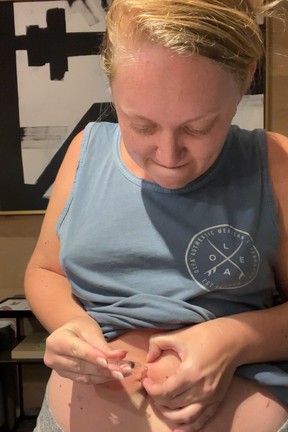
Shaina Braun was 31 when she went to Virani’s retreat in July 2025 and froze 13 eggs.
For financial, career and relationship reasons, she wasn’t in a place to become a mother yet. But she saw this science as an option to improve her odds later in life.
She chose to go to Mexico because Virani’s retreat was cheaper than other options in the U.S., where she was living at the time. There were extra benefits to doing this with other women, she added, including comparing notes about medications, side-effects and costs, and to lend support during a process that could be scary to do alone.
Braun encouraged women to keep “their eyes wide open” when it comes to the odds of success with egg-freezing. She still hopes to conceive naturally with a partner one day, and said if that happens she won’t feel like she’s wasted her money on egg-freezing.
“The whole point of doing it now is (to) give yourself more time, is to give yourself that sense of relief. So it’s not about what happens in the future as much as it is about the present moment.”
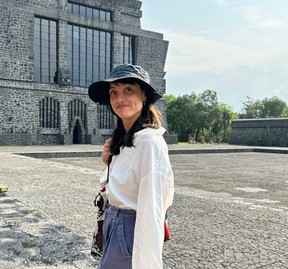
Sue-Li Tasker Yeo attended the same retreat in summer 2025, where she froze seven eggs at age 40. Not in a long-term relationship, she was “on the fence” about whether she wanted to become a mother, but it was important for her to try to keep the option open.
She went into the procedure understanding that her return on investment may be low if she tries to use the eggs to get pregnant, as statistics show a lower success rate for women as they age.
“I did the research about my odds at this age,” Yeo said. “I knew that it was going to be bleak.”
Yeo decided to proceed because she had the money, and may do additional cycles to boost her number of frozen eggs. She found the group setting helpful for her first round, and remains happy with the motherhood gamble she has taken.
“I would regret not doing it.”
Related
For more health news and content around diseases, conditions, wellness, healthy living, drugs, treatments and more, head to Healthing.ca – a member of the Postmedia Network.