Douglas Todd: Tough watering restrictions threaten Metro Vancouver’s trees
With the average Metro Vancouver tree living less than eight years, horticulturalists urge politicians to get out the message that trees need deep watering, even during restrictions.
By Douglas Todd
Last updated 13 hours ago
You can save this article by registering for free here. Or sign-in if you have an account.
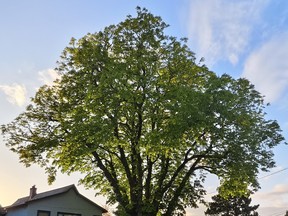
The average Metro Vancouver tree has a lifespan of less than eight years. That makes it even more important to preserve as many trees as possible, particularly those that are older.

Subscribe now to read the latest news in your city and across Canada.
- Unlimited online access to articles from across Canada with one account.
- Get exclusive access to the Vancouver Sun ePaper, an electronic replica of the print edition that you can share, download and comment on.
- Enjoy insights and behind-the-scenes analysis from our award-winning journalists.
- Support local journalists and the next generation of journalists.
- Daily puzzles including the New York Times Crossword.
Subscribe now to read the latest news in your city and across Canada.
- Unlimited online access to articles from across Canada with one account.
- Get exclusive access to the Vancouver Sun ePaper, an electronic replica of the print edition that you can share, download and comment on.
- Enjoy insights and behind-the-scenes analysis from our award-winning journalists.
- Support local journalists and the next generation of journalists.
- Daily puzzles including the New York Times Crossword.
Create an account or sign in to continue with your reading experience.
- Access articles from across Canada with one account.
- Share your thoughts and join the conversation in the comments.
- Enjoy additional articles per month.
- Get email updates from your favourite authors.
Create an account or sign in to continue with your reading experience.
- Access articles from across Canada with one account
- Share your thoughts and join the conversation in the comments
- Enjoy additional articles per month
- Get email updates from your favourite authors
Sign In or Create an Account
The startling statistic, from Brian Minter, a prominent B.C. horticulturalist, serves as a deadly warning: Metro Vancouver’s unusually early and severe watering restrictions are a threat to the region’s trees.

tap here to see other videos from our team.
Douglas Todd: Tough watering restrictions threaten Metro Vancouver’s trees Back to video
tap here to see other videos from our team.
Given that so many young trees in Metro Vancouver do not reach their tween years — mostly for lack of watering — Minter has come to think of the metropolis’s relatively few older trees as rare and precious “gold.”
Minter’s concern exemplifies why some residents fight so hard to protect mature trees. After all, officials with Metro Vancouver’s municipalities often tell us trees are a boon to birds and insects, and a bulwark against global warming.
Metro Vancouver lost one per cent of its tree canopy between 2014 and 2020, according to a regional district study. Just to restore what has been lost requires planting enough trees to cover about 19 square kilometres.
So, in light of continuing dangers to trees, citizens from time to time rise up to stop an older tree from being chopped down. One of the latest examples of activism is in the Vancouver neighbourhood of Kitsilano, where neighbours are urging city officials to stop the chainsawing of a horse chestnut tree, which is more than 100 years old, on a private lot.
The details are complicated. But suffice to say the goal of neighbours, in light of losing so many older trees to drought-like summers, is to protect at least one impressive specimen. It is, they say, a “heritage-scale tree that provides shade, climate resilience and documented habitat for a Cooper’s Hawk. Removing it works directly against the city’s own urban forest strategy goal of 30 per cent canopy cover by 2050.”
The oft-pronounced goals of Metro Vancouver officials are similar to those of the citizens. Less than three blocks away from the at-risk chestnut tree is a newly revitalized green space with West Coast trees, plants and wild flowers, a project that cost more than $3 million.
-
Advertisement 1Story continues belowThis advertisement has not loaded yet, but your article continues below.
The lush area is dotted with signs extolling the virtues of reintroducing trees and plants, including as habitat for birds and pollinating insects and to help cool the area.
So where does that leave us with Metro Vancouver’s Stage 3 watering restrictions, which, for starters, ban the watering of lawns? The restrictions were introduced earlier than ever, on June 8. And they dictate that “all sprinklers and soaker hoses are strictly prohibited for trees, shrubs, and flowers.”
Bill Manning, retired director of horticulture for Vancouver parks, is among the experts who worry that many residents, and even city staff, will fail to properly water trees, especially the young ones.
“The watering restrictions do affect the trees,” said Manning. If they are to survive, he said, immature trees need more than superficial watering. “They need slow, extensive watering to promote deep roots.”
Because of lack of time, knowledge or concern, Manning said, many homeowners, tenants and strata councils don’t recognize that, though they’re not allowed to use sprinklers on trees, they are permitted to water trees by hand using a hose with a spring-loaded shut-off nozzle, a watering can, or drip irrigation.
And it’s not only private citizens who need to be vigilant, Manning said. Municipal staff also often don’t prioritize watering trees on boulevards and in parks.
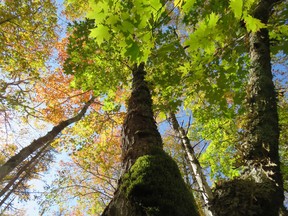
Neither Manning nor Minter criticize Metro Vancouver’s early watering restrictions, the most severe in at least a decade. But that doesn’t mean they don’t think the restrictions can have negative unintended consequences.
About 31 per cent of Metro Vancouver’s landscape is under a tree canopy. But the proportion is shrinking, in part because of population growth and property development, but also because of neglect.
Metro officials did not respond to Postmedia’s questions about whether they’re concerned about loss of trees because of the watering restrictions.
Metro officials have, however, said part of the reason for instituting the Stage 3 restrictions in June is that upgrades are underway to an old, metre-wide water pipeline under Stanley Park.
Due to construction logistics, the existing pipeline has been temporarily shut down. “
Metro Vancouver is still on track to have work on this phase complete and … back in service by the end of July,” says Metro. “At that time conditions will be assessed, and Stage 3 water restrictions will be lifted if water supply allows.”
Maple Ridge gardening centre co-owner Bill Hardy, chair of the Green City initiative of the International Association of Horticulture Producers, said many members of the public have an unfortunate response when governments announce outright watering bans, such as for lawns.
“Many of our customers think that applies to everything,” Hardy said.
While not questioning Metro Vancouver’s tough water rules, Hardy urged the district to do a much better job of getting out the message to the public, and to municipal parks departments “that you can water your trees — and you should.”
The trouble with many Metro Vancouver municipalities, Hardy said, is they don’t treat public trees as “infrastructure. Instead, they treat them as amenities, as decorative. As nice-to-haves.”
Most municipalities, therefore, don’t track the health of trees the way they monitor the viability of infrastructure, like sewers or community centres, Hardy said.
“Cities will give you a count of how many trees they’ve planted, but they don’t give you a count of how many of those trees are alive after six years.”
Hardy can’t stress enough the ecological value of thriving trees, including for creating oxygen and combating climate change. He urges governments to follow cities like San Francisco and build extensive secondary water supplies, including of grey water.
Even with Metro Vancouver’s mild, temperate climate, it’s no simple task to manage its elaborate water network. Still, many things can be done to preserve water while better protecting trees.
As Manning, who spent 25 years working with the Vancouver’s parks system, says: “It’s an ongoing balancing act.”