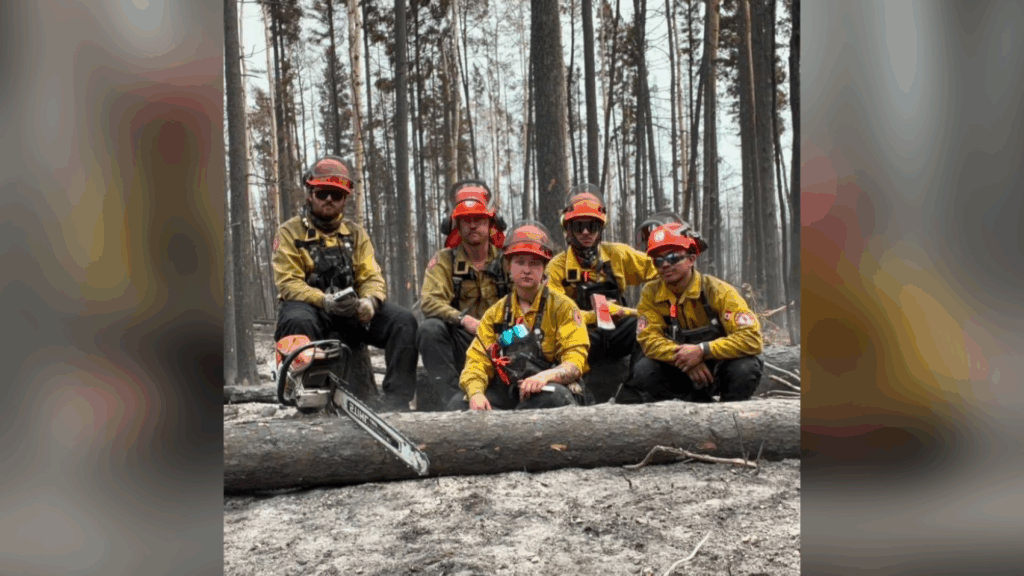
With wildfires burning across much of the country, including large swathes of B.C., members of Yukon First Nation Wildfire (YFNW) have been ready to lend a hand.
But unlike in years past, the calls for assistance never came.


“Last year, we got sent out twice down to Alberta to help out,” said YFNW CEO Nick Mauro.
“But for some reason, this year it’s different, and they don’t want the help that the Yukon can provide.”
Mauro says his crews have grown frustrated, feeling as if they have been left on the sidelines as international crews have been called in to assist in the fight.
While Mauro says he welcomes international help, he questions why Canadian resources didn’t receive the call first.
In addition, he fears the impact these limited opportunities could have on his highly trained members.


“We want to keep people as long as possible,” he said.
“If you don’t give people work and if you don’t give opportunity for people to do what they’ve trained to do, then there’s not much reason for them to come back the next year.”
Earlier this season, roughly 48 per cent of Yukon Wildland Fire Management’s firefighters had been deployed to parts of the country, including B.C.
However, with wildfire resources coordinated through the Canadian Interagency Forest Fire Centre (CIFFC), the amount of support they send is based on the needs of incident commanders on the ground.
To explain the process, Mike Fancie, community engagement officer for Yukon Wildland Fire Management, gave the hypothetical example of five initial attack crews being needed to fight a wildfire in Manitoba.
“We will say, ‘We can provide three initial attack crews in Manitoba; would you like us to begin establishing the logistics to get them there?’” Fancie said.
“Either the CIFFC folks will say, ‘Yes, we still need them, let’s get them moving,’ or, ‘No, somebody else has filled the request.’”
A spokesperson for B.C.’s Ministry of Forests tells CityNews that they recognize the important role Indigenous crews play in wildfire response. However, they said, with this company operating outside the province, their deployment would need to be initiated by the government in the Yukon.
But Mauro argues the current system wasn’t designed with Indigenous-run organizations in mind, with barriers limiting their participation.
He is hopeful these barriers can be removed, because at the end of the day, all they want to do is help.
“We’re not asking for a handout. We’re not asking for a free pass,” Mauro said.
“We’re asking for a path to work on together.”