
Twelve years after it was first spotted in North America, a destructive, invasive pest that can pose a significant threat to numerous agro-based industries has made its appearance in Canada for the first time.
The spotted lanternfly, native to southeast Asia, was detected in Windsor, Ont., on Sept. 15, the Canadian Food Inspection Agency (CFIA) has confirmed.
First found on the continent in 2014 in Pennsylvania, it is known to damage and kill grapevines, which can significantly impact the grape and wine industries.
However, it can feed on the sap of more than 100 different plant species and could also impact other crops and the horticulture and forestry industry at large as well as residential yards and public parks. Nymphs and adults feed primarily on native hardwood and fruit trees. While their preferred host is the invasive tree-of-heaven (Ailanthus altissima), they also tend to feed on black walnut trees.
“Spotted lanternfly can have widespread economic, ecological, and social impacts if allowed to spread uncontrolled,” said the Invasive Species Centre in a press release.
In response to the discovery, the centre said movement restrictions have been put into effect to prevent the movement of regulated materials, including plant material that could be infested. The surrounding area is also bgeing surveilled to determine the extent of the infestations and steps are being taken in accordance with the Canadian Food Inspection Agency’s (CFIA) spotted lantern fly response framework.
“You can help identify and report new invasive species, such as spotted lanternfly,’ says Colin Cassin, Executive Director of the Invasive Species Centre. “The earlier an invasive species is detected, the better the chances of reducing spread to other areas.”
You can help prevent the spread of spotted lantern fly by following the “spot it, snap it, catch it, report it” protocol.
Spot it
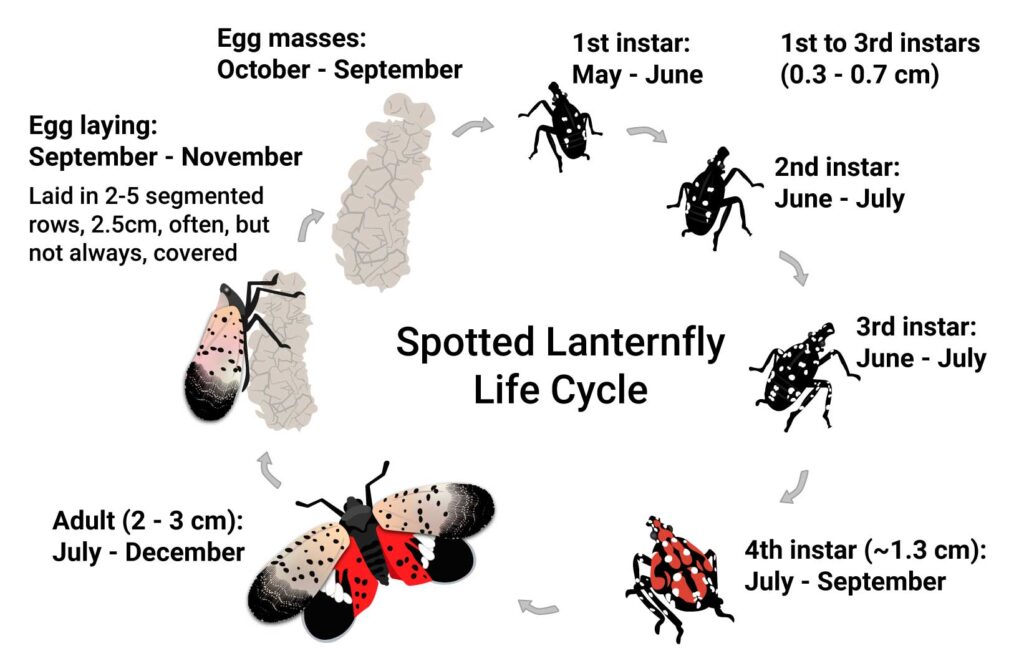
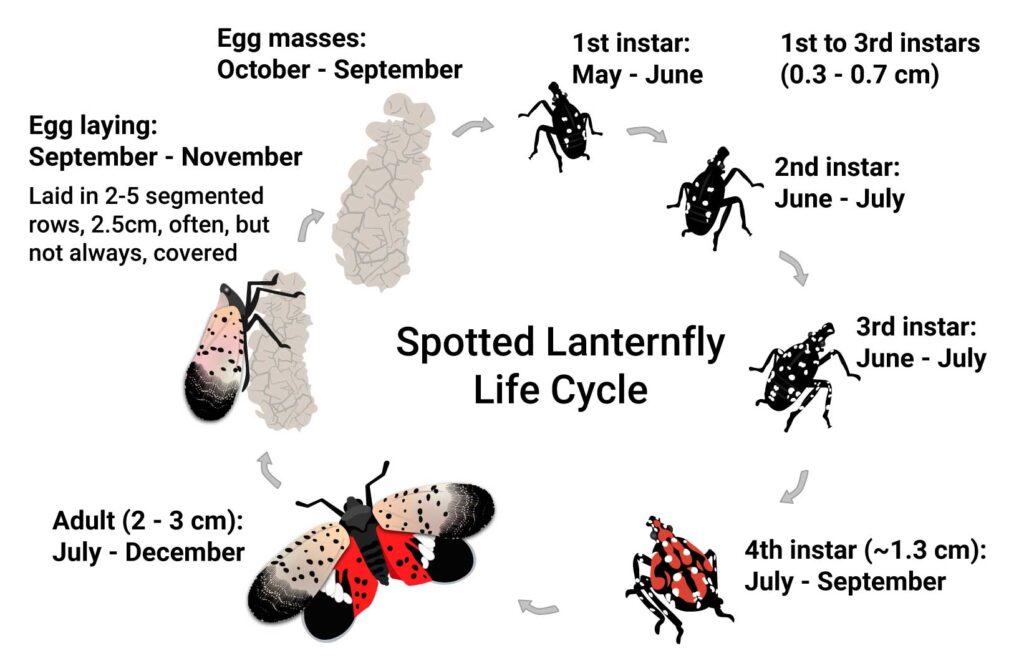
Learn how to spot the insect in all life stages:
Snap it
Take a photo or a video of any suspected spotted lanternfly egg mass, nymph or adult.
Catch it
Put the insect or scrape the egg masses into a sealable plastic bag or container.
Report it
Any suspected sightings of spotted lanternflies must be reported to the CFIA immediately. Include accurate locations and photos of the insect. The CFIA will respond and take the necessary actions which may include site surveying and insect collection.
In addition to these steps, reducing the spread of the invasive insects is an important step in preventing their proliferation.
If you are visiting areas known to have spotted lanternfly infestations, be sure to check your vehicle and any other items that are left outside for a long period of time – like camping equipment – for egg masses, nymphs or adult insects before you leave the area. Running your vehicle through a high-pressure car wash is also recommended if possible.
In addition, if you need firewood, buy and burn it locally. Do not move firewood from one area to another.
Click here to report any sightings to the CFIA.