
Brain project at SFU aims to discover why some people don’t get dementia, despite risk factors
Researchers at SFU’s Institute for Neuroscience and Neurotechnology are figuring out what contributes to a healthy brain and how that might prevent dementia.
Last updated 1 day ago
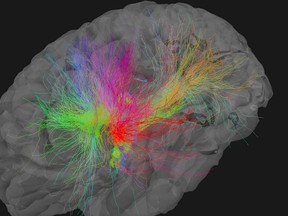
Simon Fraser University scientists are studying what makes some people more resilient to brain conditions, such as dementia.

Subscribe now to read the latest news in your city and across Canada.
- Unlimited online access to articles from across Canada with one account.
- Get exclusive access to the Vancouver Sun ePaper, an electronic replica of the print edition that you can share, download and comment on.
- Enjoy insights and behind-the-scenes analysis from our award-winning journalists.
- Support local journalists and the next generation of journalists.
- Daily puzzles including the New York Times Crossword.
Subscribe now to read the latest news in your city and across Canada.
- Unlimited online access to articles from across Canada with one account.
- Get exclusive access to the Vancouver Sun ePaper, an electronic replica of the print edition that you can share, download and comment on.
- Enjoy insights and behind-the-scenes analysis from our award-winning journalists.
- Support local journalists and the next generation of journalists.
- Daily puzzles including the New York Times Crossword.
Create an account or sign in to continue with your reading experience.
- Access articles from across Canada with one account.
- Share your thoughts and join the conversation in the comments.
- Enjoy additional articles per month.
- Get email updates from your favourite authors.
Create an account or sign in to continue with your reading experience.
- Access articles from across Canada with one account
- Share your thoughts and join the conversation in the comments
- Enjoy additional articles per month
- Get email updates from your favourite authors
Sign In or Create an Account
The brain resilience study is underway as a recent report found that scientists around the world are on the brink of new dementia and Alzheimer’s treatment discoveries.
SFU’s study is being led by the university’s institute for neuroscience and neurotechnology, and involves an initial cohort of more than 1,000 B.C. participants. Researchers plan to develop this research over 10 years to identify patterns that reveal what makes a healthy brain.
The team is using a supercomputer and virtual brain software to collect data on brain structure, cognitive functioning, genetics, lifestyle and environmental factors to build a picture of how a participant’s brain has changed over years. Scientists can then analyze the data and create virtual simulations of how that person’s brain will evolve over time.
So far, they have analyzed about 800 participants, who were recruited from the B.C. Generations Project, with some encouraging findings, particularly how sleep plays a role in a healthy brain.
“We’re trying to move beyond risk factors and look at aspects that make people more resilient,” said Brianne Kent, the institute’s associate director and Canada research chair in translational neuroscience and dementia.
For the next phase, involving the second cohort, researchers plan to work with community organizations to recruit people who don’t normally take part in trials compared to the usual participants, who tend to be highly educated, white and affluent city-dwellers.
“There could be culturally specific things that people are doing that actually make them resilient, and that we are totally missing if we are only studying the one homogeneous group,” she said.
Kent said if scientists can better understand the factors that make the brain resilient, then treatments for brain conditions can be more targeted and personalized. She added this could also help clinicians identify early warning signs of dementia and other neurological disorders.
-
Advertisement 1Story continues belowThis advertisement has not loaded yet, but your article continues below.
For example, she said sleep disturbances that can happen early in the disease progression could actually be contributing to disease progression, at least in some cases.
With some patients, sleep has nothing to do with their dementia. But in an estimated 15 per cent of cases, treating sleep may actually prevent dementia, said Kent.
Before a patient has severe cognitive impairment, the disease can be developing in the brain unnoticed for about 20 years, while sleep problems are also occurring.
“So in some people you get these early changes in sleep that can actually be contributing to that disease development in the brain,” she said, adding there are some studies that have shown one night of sleep deprivation can affect the measure of proteins that cause Alzheimer’s disease.
The goal of the research is for personalized medicine, so to build a resilience profile, and find out what interventions or treatments would be most beneficial for that person.
If sleep apnea is a contributing factor, for example, then a CPAP (continuous positive airway pressure) machine would be recommended, or insomnia could be treated with medication.
For instance, Trazodone, an anti-depressant, is showing promise in treating sleep disturbances and insomnia, said Kent, although it has yet to go through clinical trials as a sleep treatment.
An estimated one million Canadians are expected to have some form of dementia by 2030, according to the Alzheimer Society of Canada.
The study is a collaboration between SFU researchers and the B.C. Generations Project, and has received funding from the Canadian Institutes of Health Research and the Alzheimer Society of Canada.
Researchers plan to have data on the first cohort finished by February, and then will continue onto cohort two if funding can be secured.