Keep those umbrellas handy.
Metro Vancouver has been hit by another strong storm system, and the North Shore is expected to see the heaviest rainfall.
With heavy rain expected in some areas this week, Environment Canada is reminding residents to monitor updates from the River Forecast Centre for any potential flood warnings and to clear catch basins and storm drains to help prevent flooding and water from pooling on roads.
“We expect rainfall amounts of 100 to 150 millimetres for the North Shore and the northern parts of Vancouver,” said Environment Canada meteorologist Michael Gismondi.
Province-wide, up to 250 mm of rain is possible in some areas.
Environment Canada is also urging residents to remain vigilant, especially with wind gusts. Over the weekend, a woman in Surrey was killed when a tree fell onto her vehicle during the storm.
“Our hearts go out to the family impacted by this tragic event,” Gismondi said. “A tragic and unfortunate incident.”
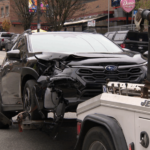
And in Surrey’s Newton neighbourhood, one family experienced a string of unfortunate events after a tree snapped during the storm and crushed their brand-new vehicle less than two hours after they took ownership. The same tree also toppled onto a trampoline just minutes after three young children had been jumping on it, bringing down a power line as well.
BC Hydro spokesperson Whitney Deane says downed power lines during storms can cause outages for nearby homes, and more outages are possible.
“Whenever you see a power line, you need to treat it as though it’s live, even if it’s not sparking, buzzing, or smoking,” Deane said.
“With the rain, what we find is that it can destabilize trees. Because we had a really dry fall, the ground can’t absorb all the moisture at once, so it becomes saturated. Combined with wind gusts, trees can fall onto power lines.”
The utility is encouraging residents to be prepared for the next storm. Last weekend, more than 415,000 customers across the province lost power. Having an emergency kit stocked with flashlights, batteries, water, food, and any necessary medications can help people stay safe during an outage.
“During a storm, the best thing you can do is stay home if you can, stay off the roads, hunker down, make sure your emergency kits are ready to go, and ride it out,” Deane said.
“Stay inside if you can.”
The City of Vancouver will have extra shelter spaces open for anyone sleeping outside. Those in need of these spaces can get the latest updates on available beds by texting or calling 211.
— With a file from The Canadian Press