
Coroner’s jury makes recommendations in police shooting of autistic Surrey teen
The coroner’s jury called for better co-ordination between the mental-health care system and crisis responders
Last updated 8 hours ago
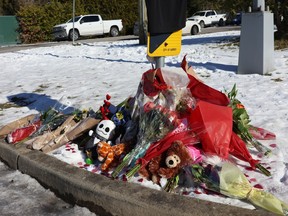
A B.C. coroner’s jury has made wide-ranging recommendations to police and health officials to better co-ordinate emergency responses after an autistic teen was shot and killed by police in Surrey.

Subscribe now to read the latest news in your city and across Canada.
- Unlimited online access to articles from across Canada with one account.
- Get exclusive access to the Vancouver Sun ePaper, an electronic replica of the print edition that you can share, download and comment on.
- Enjoy insights and behind-the-scenes analysis from our award-winning journalists.
- Support local journalists and the next generation of journalists.
- Daily puzzles including the New York Times Crossword.
Create an account or sign in to continue with your reading experience.
- Access articles from across Canada with one account.
- Share your thoughts and join the conversation in the comments.
- Enjoy additional articles per month.
- Get email updates from your favourite authors.
Create an account or sign in to continue with your reading experience.
- Access articles from across Canada with one account
- Share your thoughts and join the conversation in the comments
- Enjoy additional articles per month
- Get email updates from your favourite authors
Sign In or Create an Account
Chase de Balinhard, 15, died on Feb. 9, 2025, after a 911 call about a gun-wielding teen led to a nearly half-hour standoff with police. Though the gun was fake, officers didn’t know that and, after the troubled teen ignored repeated requests to drop the gun, he was fatally shot in the chest.
One of the officers who testified during an emotional week in Burnaby coroner’s court said police knew Chase was neurodivergent, but they hadn’t received specific training on how to de-escalate in situations like the one that led to the tragedy.
The jury called for the Public Safety and Health ministries and the Fraser Health Authority to review how crisis and safety information can be made easier to access in an emergency. That would include making voluntarily provided health records and personalized safety plans, such as safe words or calming techniques, available to emergency responders in a crisis.
Health officials are urged to make individualized safety plans easier to find and ensure that those plans are regularly reviewed and updated. That could include letting emergency responders know if a youth’s home contains low-velocity, imitation or conventional firearms.

Health and safety officials, including Vancouver Coastal Health, Fraser Health, the RCMP and the Surrey Police Service, should consider reviewing whether police and mental-health response teams have enough capacity and equipment, and whether mobile integrated crisis response teams — formerly known as Car 67 in Fraser Health — are up to the task or need more resources and more geographical range.
The Health Ministry is asked to review whether psychiatric nurses attached to police mental-health teams can get time-sensitive health information, including someone’s individualized safety plan, in a crisis.
-
Advertisement 1Story continues belowThis advertisement has not loaded yet, but your article continues below.
At the federal and provincial level, the jury asked whether steps can be taken to make realistic imitation firearms and pellet guns easier to identify by giving them a clear and conspicuous visual cue that they’re fake or low-velocity. That might include changing product, manufacturing and import rules to require that they have a visual difference from real guns and that those markers can’t be removed or altered.
The jury also suggested adding provisions to the recently implemented Firearm Violence Prevention Act about imitation guns.
The Education and Child Care, and Children and Family Development ministries are asked to review “how supports for children with autism or other forms of neurodivergence are delivered and monitored, including how changes to those supports are communicated to families.”
The Independent Investigations Office of B.C. is asked to review how family members get information during an investigation into a police-involved incident, including whether that process “gives families clear and timely information about what can be shared, what cannot yet be shared, and why,” and whether it can meet or exceed the services delivered by police-based victim services programs.
Police in Surrey are urged to review their procedures for contacting family if an initial attempt is unsuccessful, including whether there should be a set protocol or if that process should be left to the discretion of the officers involved in a crisis.
The jury suggested a review of whether the SPS has adequate access to helicopters and drones during an emergency response. It also recommended the service could “explore opportunities to improve relationships and trust between youth and police within Surrey schools.”
And, finally, health and school officials are asked to work together to figure out whether families of autistic and neurodivergent children and youth in Surrey have “clear information about existing autism and mental-health supports and how to access them.”
A coroner’s jury establishes the facts surrounding a death and can make recommendations to relevant authorities, but doesn’t assign blame and can’t call for a criminal investigation. The officers involved in Chase’s death were cleared by independent investigators, who said there were no reasonable grounds to believe anyone committed an offence.