

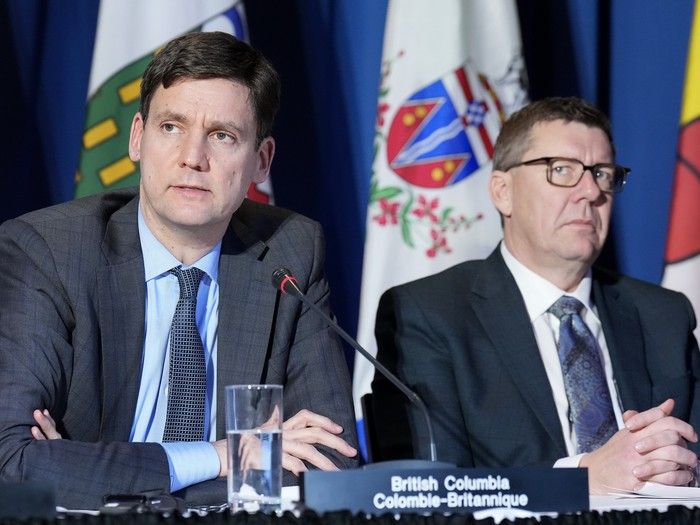
VICTORIA — Premier David Eby is pleading ignorance about the recent decision by Nutrien, the Saskatchewan-based potash producer, to choose Longview, Washington, over B.C. ports for a $1 billion export terminal.
“I had no idea that this company would consider putting themselves in the hands of Donald Trump,” Eby said Sunday on CTV’s Question Period.
He accused Saskatchewan Premier Scott Moe and the federal Liberal government of complicity in keeping him out of the loop.
“The Nutrien decision gets me agitated,” Eby told host Vassy Kapelos. “Instead of Premier Scott Moe engaging with me about this huge billion-dollar decision about whether to ship potash out of B.C. or out of Washington state, he was engaging with (Alberta premier) Danielle Smith on this non-existent pipeline project.”
“I didn’t hear from the federal government about the Nutrien decision,” Eby added. “We should have been talking about the (company’s) concerns about clogged-up rail lines and access to the port.”
Eby also blamed Moe in the legislature last week, drawing a sharp rejoinder from the Saskatchewan premier.
“Premier David Eby is blaming everyone but himself for Nutrien building its new port facility in the U.S. not Vancouver,” wrote Moe on his X account on Saturday. He linked to an interview he gave on Regina radio station CJME.
“When someone makes a decision not to invest in your area, you should look in the mirror, not blame others,” Moe told host Evan Bray.
“He (Eby) feels like he can pick and choose which projects are going to land in Canadian West Coast ports, and that just simply isn’t the way. And so Nutrien has made the decision that they have made.”
NDP BC Premier David Eby is blaming everyone but himself for Nutrien building its new port facility in the US, not Vancouver.
I was asked about that on the Evan Bray show this morning and here was my answer.
Every team I’ve played on, I want all of the players to score, not… pic.twitter.com/8rrl5PXpH4
— Scott Moe (@PremierScottMoe) November 29, 2025
Moe said he would support a joint federal-provincial effort to get the company to change its mind. “Certainly I want to see it in Canada.”
But Eby’s hostility to the oil pipeline was “in no way positive for an investment like this to land.”
As for Eby’s assertion that he had “no idea” Nutrien was looking at West Coast sites for potash exports, the company announced its intentions in a news release six months ago.
“Nutrien is reviewing options to increase West Coast port capacity as part of our long-term strategy to strengthen supply chain resilience and support rising global demand for potash,” said the May 28 release.
Reuters reported it as follows: “Canada’s Nutrien plans major Pacific Northwest terminal to boost potash exports.”
The Globe and Mail published a follow-up interview with Nutrien CEO Ken Seitz. He said the company planned a terminal to ship up to six million tonnes of potash a year to fertilizer-hungry India, China and Japan.
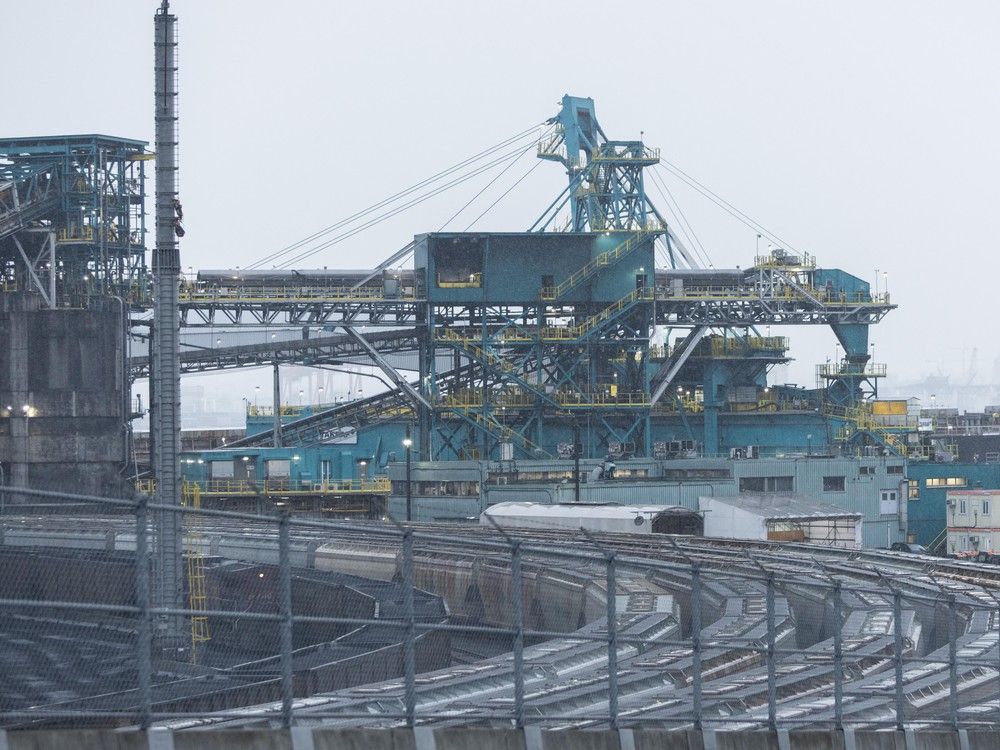
He declined to name the ports on the short list. But the company was already shipping potash from Neptune Terminals in North Vancouver and from Portland, Oregon, upriver from Longview.
Seitz emphasized the need for a deep water port with enough rail infrastructure to handle bulk shipments. Other factors being considered were regulations, taxes, freight rates and approval timelines for construction of the terminal.
Nutrien’s proposal was expected to provide an early test of Prime Minister Mark Carney’s vow to streamline approvals for major projects. Potash was also high on the federal government’s priority list of three dozen critical minerals.
Though B.C. has also made a port expansion and critical mineral development a priority, the Nutrien announcement did not attract attention from the New Democrats.
“B.C. had no line of sight into the Nutrien decision,” said a statement from the Ministry of Jobs and Economic Growth after the company announced its choice late last month.
“Nutrien’s decision to ship some of their product through the United States was based on available rail and port capacity in Longview, Washington,” the statement conceded. “This furthers reliance on U.S. infrastructure for Canadian potash exports signaling broader competitiveness issues for Canadian bulk commodity exports.”
The ministry vowed to do better in future.
“We are reaching out to both the federal government and to the company to understand what the challenges are and to find solutions,” it said. “Decisions like this reinforce the need for all of us to look strategically at the bottlenecks in our system.”
By way of example, the ministry cited the “single lane Second Narrows Rail bridge,” a potential bottleneck for Nutrien’s potash shipments destined for Neptune Terminals in North Vancouver.
B.C.’s after-the-fact realizations stood in marked contrast to the efforts south of the border, where Longview was well ahead of the game. Nutrien considered some 30 factors in the decision and the Columbia River port came out ahead in most of them.
One key was the port’s investment of $100 million U.S. to modernize and upgrade a berth that had been unused since 1989. Despite Eby’s insinuation that Canadian potash would be at peril “in the hands of Donald Trump,” Longview’s funding includes $40 million from the U.S. Transportation Department.
Nutrien is now negotiating a contract for exclusive access. The berth is said to be “shovel ready” for the potash terminal, language that echoes Eby’s claims about his preferred projects. However, this $1 billion investment seems to have escaped notice by his NDP government.