
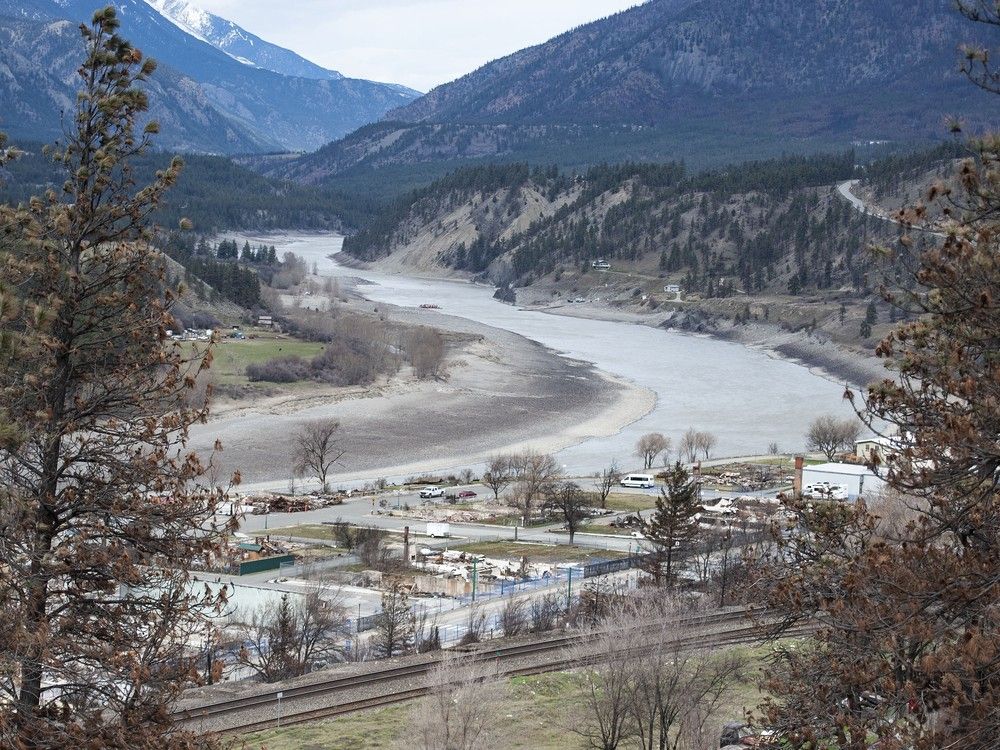
The operations of Canadian Pacific and Canadian National railways might have sparked the devastating June 2021 Lytton fire,
according to a B.C. Supreme Court judge
.
On Tuesday, Justice Ward Branch approved a class-action lawsuit — meaning the lawsuit can go ahead — that alleges the deadly blaze was linked to the two rival railways that have parallel lines running through the village 100 kilometres north of Hope. A section of that line is shared by the two railways.
“CN and CP have, by agreement, granted one another the right to operate trains on each other’s tracks. Under this agreement, CN and CP predominantly operate westbound trains down the CN track. The implicated train in this case was running westbound on the CN track, heading down toward the South Lytton Bridge,” Branch wrote.
“It is operations on the CN track that the plaintiff hypothesizes caused the fire.”
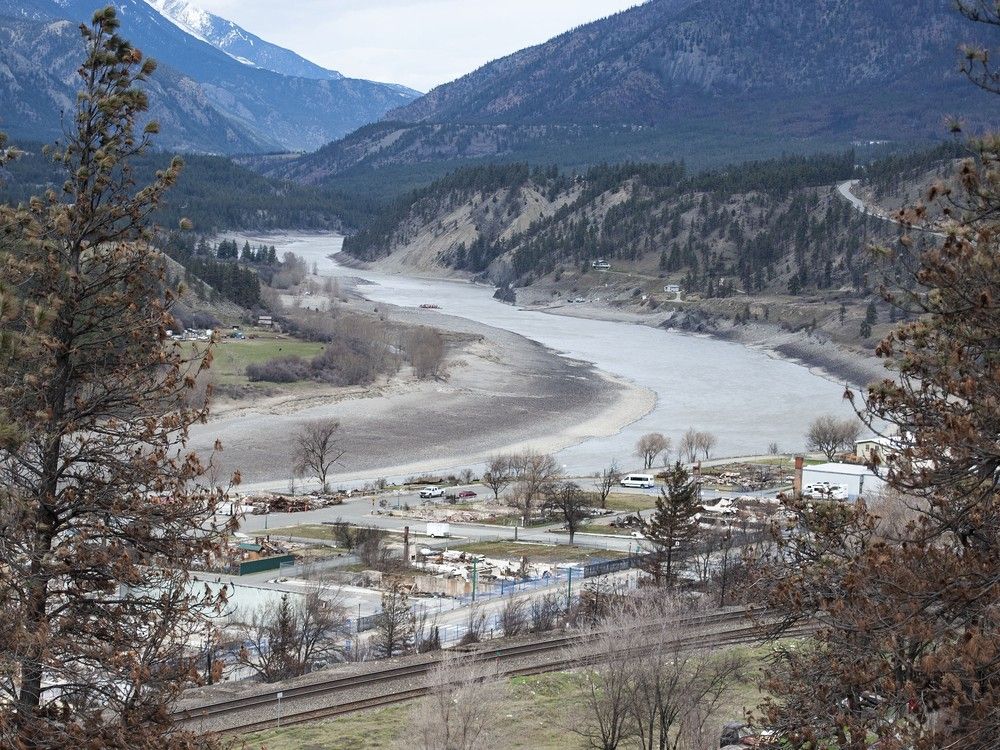
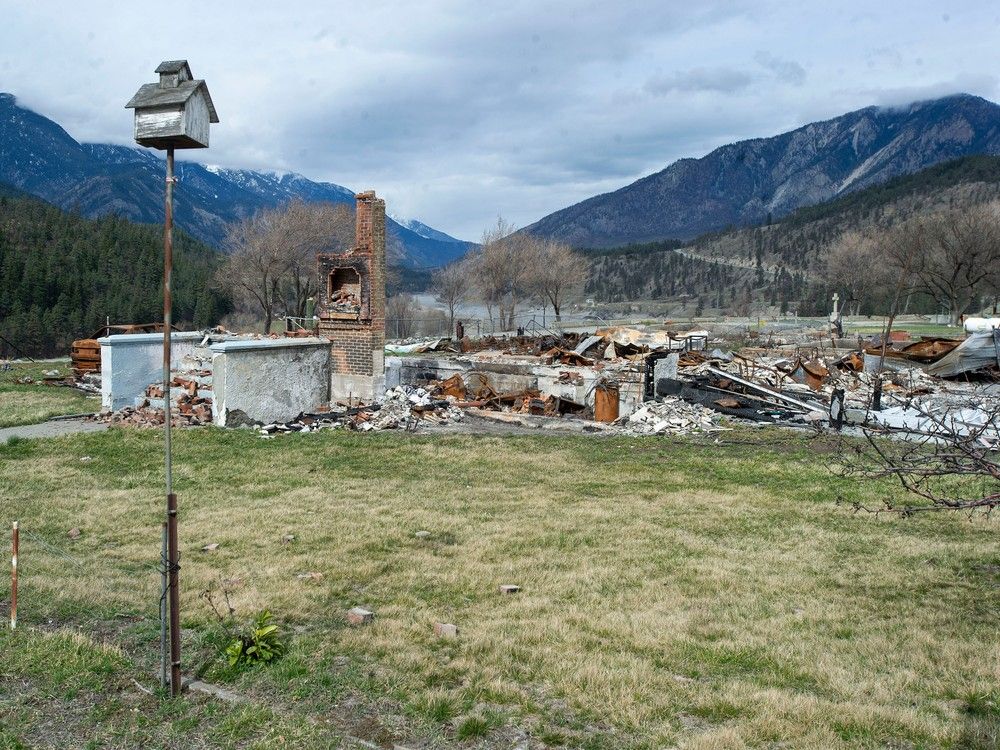
Branch said there was “some basis in fact” in the plaintiffs’ allegations that the railway operations were linked to the blaze that burned almost the whole town. Four years later, the village has not recovered, with few new buildings.
A similar attempt at a class action lawsuit seeking compensation from the railways was dismissed in 2023, but in this later case the judge said far more evidence and expert analysis is now available.
In this case, the representative plaintiff is Carel Moiseiwitsch, whose Lytton home and business were destroyed by the fire. Another representative plaintiff is Kanaka Bar Indian Band member Jordan Spinks, who was displaced by the fire.
Anyone who suffered losses in the fire is invited to join the class action.
In October 2021, the Transportation Safety Board
between rail activity and the Lytton fire, noting there were no defects found on the train and “hot box” detectors that monitor wheel temperatures did not record any anomalies. An extensive RCMP investigation could not determine the cause of the fire.
At that time, Vancouver lawyer Jason Gratl said the TSB had failed to invest significant manpower or money into its investigation.
In the ruling Tuesday, the judge said he was not bound by the TSB report and suggested updated evidence since then has closed the time gap between when the train went through and the fire was noticed by witnesses to between two and five minutes, from an earlier 18-minute gap.
On June 29, 2021, the day before the blaze, B.C. experienced a heat dome and drought with Lytton recording a Canadian record of 49.6 Celsius. As a result trains were running at reduced speeds, using minimal braking, and track owner CN was running fire patrols.
For the class-action lawsuit to succeed, the plaintiffs have to prove not only that the train caused the fire, but that the railways were negligent in taking proper steps to prevent a fire — known as breaching “the standard of care.”
In his lengthy ruling, Branch noted that some evidence suggests the fire started close to tracks, that witnesses noticed it within two to five minutes of the passage of CP train 731 which was enroute to Kamloops, that the train’s video recorder showed evidence of dry vegetation, including sagebrush, very close to the track, and that witnesses did not notice any people in the area where the fire started.
In addition, a CN Rail fire patrol travelling on the tracks about 15 minutes after the train encountered fire on both sides of the track within 160 metres of the origin of the fire alleged in the lawsuit.
The plaintiffs argue that “operating train 731, particularly at this particular time and place, posed an ‘extraordinary risk’ to adjacent lands and persons while providing no significant benefit to the community subjected to that risk.” They also argue that the train was hauling 20,000 tonnes of coal, that particles of coal escaped the train, and they were “likely to ignite a fire if they escaped.”
“The risk of fire was at peak levels due to the extreme heat and wind on the day in question. These conditions created a situation in which the smallest error by the defendants could operate as a causal tipping point,” the judge said. He also noted visual evidence of coal particles in the air over the train at the point where the fire is alleged to have started.
However, the judge’s ruling indicated the train was not using extreme braking nor had any automated overheat warnings.
About half an hour later, the ruling says, “track detectors further along the CN track outside of Lytton at Mile 112 indicated that train wheel temperatures reached a ‘medium’ level of 278 F (137 C) on the left side of Train 731. This was four times hotter than the previous measurement before the proposed origin (of the fire). It was also seven times hotter than the train’s average temperature between Kamloops and Lytton.
“However, they did not reach the level necessary to trigger an alert to CN personnel. At 300 F (149 C), the data would have been reviewed. Personnel would determine whether a crew should perform an inspection. An alert requiring the train to stop would only issue if a detector reached 550 F (288 C).”
Only 2½ hours after the train went through Lytton, most structures in the town had been destroyed.
With files from Postmedia News