
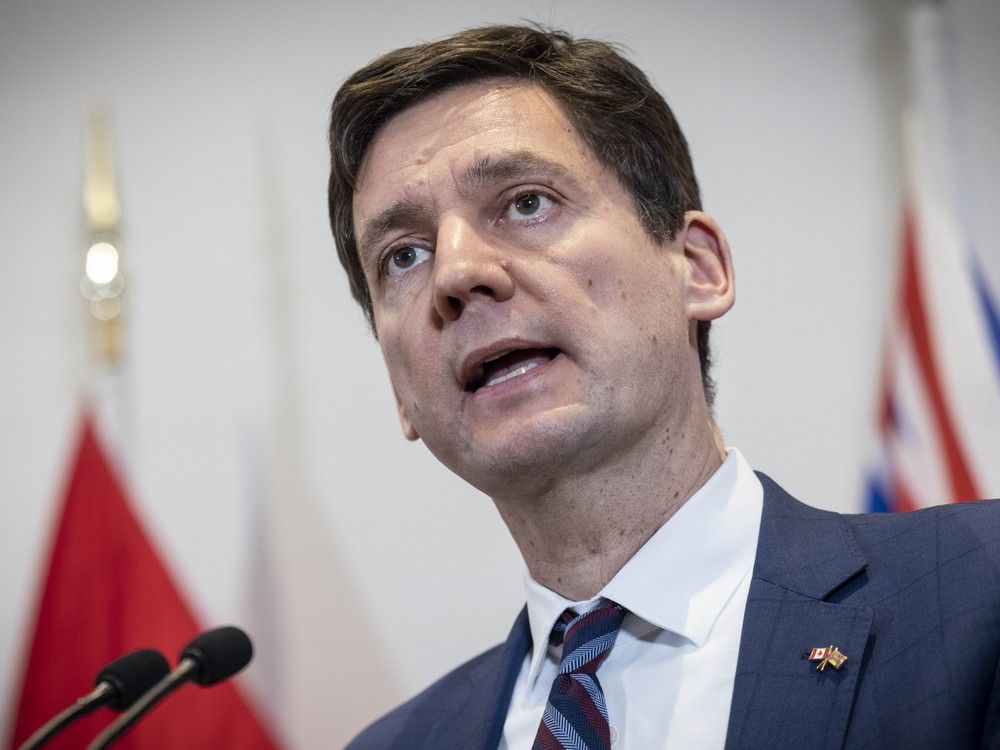
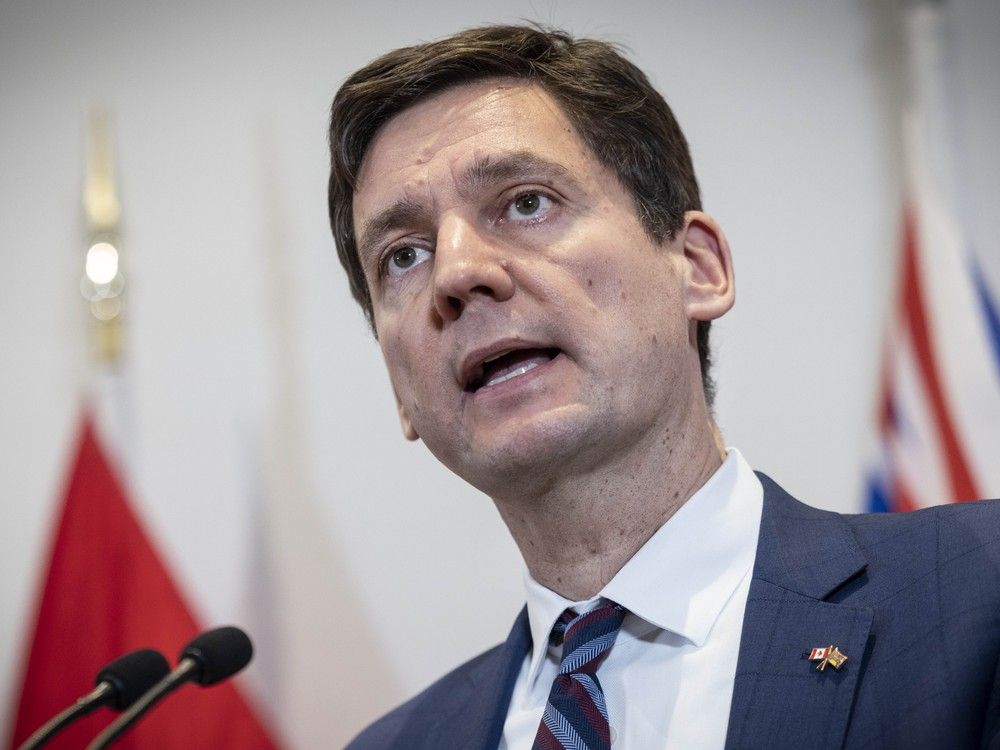
VICTORIA — Premier David Eby called a news conference Wednesday to tout “major projects in B.C.,” hoping to provide an upbeat ending to a year fraught with “challenges,” not all of them of his own making.
Earlier in the day, Eby had a session with the federal government’s major projects office. He pushed them on the need to upgrade transportation infrastructure key to exports: Highway 1, the Massey tunnel, the single-track Second Narrows railway bridge, and the Port of Vancouver.
He’ll be pressing a similar theme in a virtual meeting Thursday with Prime Minister Mark Carney and the other provincial premiers.
But when it came time to take questions from reporters, Eby faced many about his government’s deteriorating position on reconciliation with First Nations.
The combination of stinging court decisions and NDP government secrecy has spoiled the reconciliation narrative for Eby this fall and threatens to spill over into the new year.
The first question involved the Interpretation Act, which says that provincial laws and regulations “must” be interpreted in light of B.C.’s legislative embrace of the UN Declaration on the Rights of Indigenous peoples.
Eby promises to rewrite the law now that the courts have cited it in overturning private fee-simple title under the Land Act and the province’s mineral claims system.
Hadn’t Eby himself, as attorney general, steered that provision through the legislature and cut off debate without answering the key question about how the directive should be interpreted by senior public servants?
Eby sidestepped the question and instead talked about how “our government has really tried to get away from courts and to focus on agreements.”
He cited the August B.C. Supreme Court decision that awarded the Cowichan Tribes Aboriginal title over a tract of public and private land in Richmond as “a really good example of our anxiety about trying to stay out of court and trying to reach resolution at the table.”
I asked Eby about his promise to put up $150 million worth of provincial loan guarantees for the 150 or so private property owners affected by the court’s declaration of Aboriginal title.
Some experts have suggested it will take far more than $150 million to fully cover the financial implications, the land in question being valued at well over $1 billion.
Was he sure his ballpark estimate would be enough?
The government has been conducting its own research in Richmond and has found a level of anxiety, particularly among seniors with homes in the affected area, Eby replied.
“We find particularly that the anxiety is centred on whether I’m going to be able to refinance, whether I’m not going to be able to get a mortgage, if I’m able to sell my place,” said the premier.
“So, the goal here is not for government to take over, to buy all the properties, but to provide that constancy around being able to access financing, business-as-normal, for both homeowners and for business owners as we go through the court process.
“The good news is that every single bank that we’ve checked with, they’ve confirmed they haven’t changed their lending policies in the area,” said the premier.
If the banks continue to provide mortgages and renewals, the province guarantee may amount to zero, said Eby, before adding a cautionary note: “They have advised us they will let us know if that changes.”
The province is still working on taking the Cowichan decision to the B.C. Court of Appeal. However it plays out there, Eby expects the case will end up at the Supreme Court of Canada.
He speculated that the B.C. case might arrive there at the same time as a recent New Brunswick case. There the Court of Appeal rejected a designation of Aboriginal title over private land, saying it would be the “death knell” of reconciliation for non-Indigenous Canadians.
I asked Eby about the B.C. government’s recent refusal of a request from Postmedia reporter Gordon Hoekstra for a list of all the claims of Aboriginal title filed in court in B.C.
Did the province decline because it doesn’t know how many such cases there are? Or because there are so many that disclosure would alarm the public?
“There are multiple land claims underway in B.C.,” confirmed Eby. “They all are filed with and managed by the Ministry of Attorney General within the province of British Columbia.”
But rather than provide the requested tally, he rambled into a vague discussion of how such cases have confounded several generations over several governments.
“The challenge, I guess, as I would put it, is no one has really nailed how to move forward on this in order to provide both the certainty to the business community, but also address reconciliation.”
No one has really nailed down how to move forward on this issue?
A surprising admission from a premier who regularly declares that his way is the right way and the only way to proceed.
•
Leading From the Heart is the title of the memoir by former cabinet minister Judy Darcy, not Learning from the Heart as I wrote earlier this week.