
The risks desperate Vancouver renters are taking to secure housing
Renters are increasingly agreeing to share a room, often with people they just met online
By Sage Smith
Last updated 1 day ago
You can save this article by registering for free here. Or sign-in if you have an account.
When Hansley Ambia rented a room in Vancouver, he had no idea that, like many other desperate renters, he would have to agree to no rental protections, poor living conditions, and even to sharing a room with a stranger — or risk losing his housing.

Subscribe now to read the latest news in your city and across Canada.
- Unlimited online access to articles from across Canada with one account.
- Get exclusive access to the Vancouver Sun ePaper, an electronic replica of the print edition that you can share, download and comment on.
- Enjoy insights and behind-the-scenes analysis from our award-winning journalists.
- Support local journalists and the next generation of journalists.
- Daily puzzles including the New York Times Crossword.
Subscribe now to read the latest news in your city and across Canada.
- Unlimited online access to articles from across Canada with one account.
- Get exclusive access to the Vancouver Sun ePaper, an electronic replica of the print edition that you can share, download and comment on.
- Enjoy insights and behind-the-scenes analysis from our award-winning journalists.
- Support local journalists and the next generation of journalists.
- Daily puzzles including the New York Times Crossword.
Create an account or sign in to continue with your reading experience.
- Access articles from across Canada with one account.
- Share your thoughts and join the conversation in the comments.
- Enjoy additional articles per month.
- Get email updates from your favourite authors.
Create an account or sign in to continue with your reading experience.
- Access articles from across Canada with one account
- Share your thoughts and join the conversation in the comments
- Enjoy additional articles per month
- Get email updates from your favourite authors
Sign In or Create an Account
Ambia, 35, arrived in Vancouver from Cameroon in May 2024 to work and study. He found a room for $700 in a three-bedroom basement suite on King Edward Avenue. He said the property had black mould in the bathrooms, peeling walls, and a constant water leak from upstairs.

tap here to see other videos from our team.
The risks desperate Vancouver renters are taking to secure housing Back to video
tap here to see other videos from our team.
Two months later, Ambia claims, the man he thought was his landlord, Oscar Pelaez Aguilar, said his rent was nearly doubling — and if he couldn’t pay, he would have to share his room. Ambia couldn’t pay.
“That’s how someone moved into the room, and I was sharing the room with a total stranger,” he said.
Pelaez Aguilar, he later learned, was the “head tenant”. He found occupants and collected rent for the rental management company Sunwise Property, which managed the property on behalf of the property’s owner. Renting from a head tenant made Ambia an “occupant/roommate” under the Residential Tenancy Act (RTA), with no protection from rent increases or eviction, and no right to demand basic maintenance.
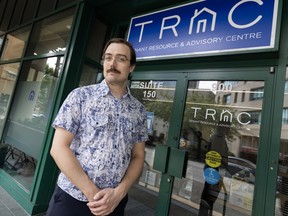
Robert Patterson, a lawyer with the Tenant Resource and Advisory Centre (TRAC), said renters increasingly find themselves in situations where, at “the extreme end of the process,” they are sharing a bedroom, often with people they just met online.
Rising rents mean tenants are “pressured, pushed and forced” into increasingly precarious situations, he said.
-
Advertisement 1Story continues belowThis advertisement has not loaded yet, but your article continues below.
In one search, Postmedia found 35 ads for shared rooms in Metro Vancouver on Craigslist and Facebook Marketplace. Weeks later, another search found more than 60 such ads, some offering bunk beds, three beds in a single room — or even one bed to share with a stranger. The advertised monthly rent for most was from $400 to $600.
Although Statistics Canada doesn’t gather data specific to shared rooms, in 2022 its data indicated nearly 12 per cent of Vancouver’s 472,900 renter households were in “unsuitable” housing. Housing is deemed “suitable” if it has enough bedrooms — defined by the National Occupancy Standard as all adults having separate bedrooms, except those living as a couple, and a maximum of two people per bedroom for other occupants.
Roommate households are the fastest-growing household type in Vancouver, increasing 15 per cent from 2016 to 2021, up from 20,720 to 23,825 households.
The RTA sets no occupancy limits on rooms. While a Vancouver bylaw says, “No dwelling unit shall be used or occupied by more than one family,” it also allows “a maximum of two boarders or lodgers.”
The TRAC website states that with shared housing only the “head tenant” is protected by the Residential Tenancy Act, and warns “always try to enter into a tenancy agreement with the landlord of the property — not just another tenant.”
“Occupant/roommates” have no dispute-resolution mechanism and would have to go to court to settle conflicts, something few people have the means or ability to do, Patterson said.
The use of head-tenants “does add another layer of disenfranchisement and disempowerment of folks who are just roommates, or deemed ‘occupants’ by the Act,” he said.
Ambia’s King Edward home has five bedrooms, and rents totalled approximately $5,600, utilities included. A living room was used as an additional bedroom, and two bedrooms were shared, totalling eight occupants.
Ambia said sharing a room was “a very terrible experience” and he didn’t feel safe.
He worried about protecting his personal information, such as his credit card and passport, which he would lock in a box in his room, frequently checking to see if anyone had touched it.
Coexisting with his roommate was a struggle. Ambia, who later found a job in the tech industry, had to wake at 5 a.m., but said his roommate would talk loudly on his phone until very late.
“Sometimes I feel like I need to scream,” Ambia said. “But then you understand he’s someone who has paid the rent, too.”
Ambia later moved into a smaller room in the same house before finally moving out.
“Seriously, I’d rather go to the streets than share with one more stranger,” he said. “I can’t do that anymore.”
‘Everyone has the right to choose’
Aaron Hutchinson owns Sunwise Property, which manages the King Edward house for owner Qi Na Yang. Sunwise’s website advertises itself as “pre-demolition rental innovators: vacant spaces into vibrant rentals.” Hutchinson is also the director of Sundial Investments.
Sunwise rents directly from the homeowner, who may be a developer, becoming the primary renter. Sunwise then does “necessary repairs” and rents to tenants, assuring clients “guaranteed rent despite condition of home.”
Its website describes one property it fixed up as originally in a “sorry state,” with the basement “looking like the backdrop of a horror film” where “the previous owner lived with lots of cats and pets, leaving an unpleasant odour that permeated the house.”
“Our expertise is renting your home, slated for demolition, regardless of its condition, while ensuring your unique building timeline is respected by cooperative tenants,” reads its website. “Say goodbye to tenancy woes and speculation tax.”
Sunwise helps clients crunch the numbers, detailing the thousands of dollars saved by avoiding the three per cent empty homes tax and the 0.5 per cent speculation tax.
Sunwise’s website says the owners of one house in the Hastings-Sunrise neighbourhood saved more than $104,500 in such taxes after they bought the house with the intention of demolishing it. They needed a “quick rental for less than a year while organizing building permits,” says the site.
The 2017 empty homes tax was designed to help address housing affordability and availability challenges.
The speculation and vacancy tax is designed to turn vacant homes into housing and ensure foreign owners contribute fairly to B.C.’s tax system. The tax is either 0.5 per cent or two per cent, depending on the owner’s nationality and untaxed foreign income.
Hutchinson said he screens head tenants, then leaves them to choose the other occupants, saying they are “entitled to have whatever roommate (they) want.” He has rental contracts with the head tenant, but not with other occupants.
Hutchinson said he was not aware Ambia’s rent was doubled by Pelaez Aguilar. “In truth, like in any situation at any house where you’re just entering a roommate handshake with somebody like that, I could understand somebody might be taken advantage of.”
Pelaez Aguilar did not respond to multiple requests for comment.
Said Hutchinson: “It doesn’t worry me (because) I never know. Once we have the contract in place, you’re essentially subleasing the place and it’s yours. And however you decide to treat people is how you decide to treat people.
“Everyone has the right to choose, and if you’re being manipulated, or you don’t feel safe, or are being taken advantage of, on the other side of it, as a roommate, you can choose to leave.
“You can’t control everything,” he said, adding, “Ultimately, my duty is to create safe housing choices.”
Hutchinson said when Pelaez Aguilar stopped forwarding the rent to him earlier this year, he evicted everyone in the King Edward house, giving two months notice and offering alternative housing to some. He has since renovated the property and has new tenants.
Roommates necessary to make ends meet
Among other properties, Sunwise also manages a six-bedroom house on East Georgia Street, where nine people generally live and pay a total of approximately $6,250 per month, plus utilities. Again, one of the living rooms is used as a bedroom.
Head tenants at the East Georgia house have been given a short-term lease to sign with Sundial Investments, with an addendum document on Sunwise Property letterhead aimed at ensuring the occupant-tenants understand they will get little notice, and no compensation, in the event of development and eviction.
The addendum says: “The Landlord in this agreement is a tenant of the Imminent Development Inc. (“Head Landlord”) and is party to a residential tenancy agreement between the Landlord and the Head Landlord (the “Head Lease”) and that the Tenant under this agreement is a sub-tenant to the Landlord.”
The addendum includes an “Informed Sublease Covenant” specifying the tenant is fully aware the property will be redeveloped and “by signing the agreement, the tenant demonstrates full support for the development permit application.”
It says all roommates must be informed of the redevelopment and the tenant cannot rent to anyone “in opposition to the redevelopment plans. This ensures a harmonious living environment aligned with the property’s intended use.”
If any occupant is opposed, the sublease will be ended and they must vacate the property within 30 days of written notice.
Hutchinson said he doesn’t use “traditional leases” and instead uses sublets because he himself is the “official tenant” and is financially responsible. He said because of his transparency about the short-term leases and redevelopment timeline, renters have already received their four months of notice under the RTA. He also said he frequently moves people into other houses he manages, for a “win-win” solution.
Hutchinson admits the houses are “not great, fantastic homes”, so it is too difficult for regular property managers, because the properties “require too much work” and the lease is too short. “It’s just not feasible time-wise nor financially. We can do things at a lot quicker rate, a better timeline.”
Hutchinson usually manages around 10 houses, averaging eight months before development proceeds. On rare occasions, it can take two or three years when it is “maybe not cost-effective to rebuild.”
TRAC’s Patterson said it is “unfortunately quite common” for landlords to rent to companies, sometimes even shell-companies, that then rent to desperate people on similar fixed-term “subleases.” Such agreements “should be a massive red flag,” he said.
Patterson says a real sublet is when a tenant leaves temporarily and rents, short term, to a sub-tenant.
Sublets are not intended to allow landlords to “insulate themselves with layers of middlemen and say, ‘Oh, actually I can force you tenants to move out whenever I want,’” he said.
Developers are using fixed-term agreements, or vacancy clauses, to get out of following rules on tenant relocation and other protection policies, he said. They give landlords greater control over the tenancy, and often lead to illegal rent increases and evictions.
For a landlord to end tenancy for redevelopment, the RTA says they must give tenants four months notice and one month’s rent. Developers wanting to start work immediately after getting permits can, however, legally offer financial incentives to tenants to move out sooner.
Sunwise advertises itself as part of the solution to the housing crisis and “a positive impact on Vancouver’s housing landscape.”
“By providing affordable, shorter-term housing, you’re helping individuals or families in need of transitional accommodation,” its website says. “This can include people relocating for work, students, or families seeking a temporary home.”
Joan Vishal, 26, studied tourism in India then moved to Vancouver and enrolled in Capilano University in August 2023.

Vishal expected to find a room within a week, but faced countless rejections because, like many international students, he was unable to provide credit checks or references. “I was speechless because I was so alone,” he said. “I didn’t know anyone in Vancouver.”
He finally found a two-bedroom Burnaby suite for $2,700 a month, far higher than he had anticipated. So he arranged for roommates to help cover the rent. First, he shared his room with a classmate and then advertised the second bedroom on Facebook Marketplace, renting it to two more students who were offered a shared bed.
Sharing a bedroom was hard, he said. “When I’m doing a night shift, I’ll be sleeping in the morning. But the other person will be awake, so they will be disturbing you, like playing some music or talking with their friends or family.”
Vishal recently finished school and works full-time. He has put a door on the living room and moved into it, paying $800 monthly for the larger space. The room he vacated rents for $800.
When one of the roommates in the remaining shared room moved out, Vishal advertised the shared room for $550.
Someone showed immediate interest, but dropped out at the last minute.
Vishal worried about filling the space because the roommate left due to conflict with the remaining tenant, who did not keep the room clean or respect boundaries.
Vishal evicted the remaining tenant, giving him four months notice, then rented the room with the shared bed to two men from Toronto, for $550 each. “I would not say they’re happy, but they’re OK with it for now,” he said. “I keep on checking in with them.”
‘People should be able to afford secure housing’
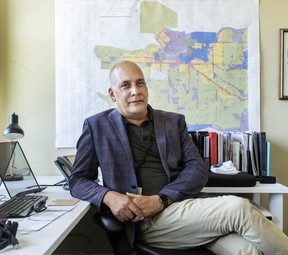
Vancouver Councillor Pete Fry said even where bylaws on occupancy do exist, they are continually violated, but are only investigated if there is a complaint.
With both the housing crisis, and the public’s right to privacy, it would not be well-received if the city were to enforce occupancy bylaws, he said, unless there is a “serious life-safety issue involved.”
Bylaw inspectors try to deal with unscrupulous landlords, but it’s difficult, Fry said. For example, recently a “serial abusive landlord” had been illegally evicting long-term tenants, partitioning the rooms, and packing international students in “like sardines,” causing potential health and safety issues, he said.
To inspect, the city had to give 24-hour notice. Tenants later told Fry the landlord took down the partitions and moved the tenants out for the inspection, only to move it all back in afterwards.
“We’re just one step behind,” he said.
Vancouver had a Renter Office that was empowered to monitor and report on these issues, but it was eliminated in 2023, Fry said.
TRAC’S Patterson said that until about 10 years ago the Residential Tenancy Branch exercised jurisdiction over roommate households and that nothing in the Act explicitly says it does not apply to roommate situations. The branch could exercise jurisdiction again and has capacity to hear more cases, he said.
“They’ve never been better equipped to take on applications.
“Given the critical nature of the thing that they rent to people, they are shockingly unregulated,” he said, adding that due to the lack of a registry of landlords, renters cannot access RTB complaint histories or bylaw violations.
“Imagine if we had the same registry requirements for food producers. We’d all be sick. Or if anyone got sick, you’d never be able to figure out where the heck the contaminant originated from.”
“Housing is a human right,” he added. “People should be able to afford accessible, secure housing. There needs to be a legislative change.”
B.C.’s housing minister declined requests for an interview to discuss possible legislative changes to protect renters. A prepared ministry statement said government is “continuously monitoring how co-tenancies are covered under the RTA to ensure both tenants and landlords are protected.”
It said those not listed on tenancy agreements should access the Independent Civil Resolution Tribunal to resolve disputes.
While the province said it has been providing renter protections and implemented rules to prevent illegal renovictions since 2017, that is no help to the growing ranks of occupant/tenants who are roommates without rights. They continue to live with uncertainty — and, in the worst cases, with strangers.
Sage Smith was a renter in the house described on King Edward Avenue and then at the house described on East Georgia Street until moving out in May 2025.
Sage Smith is a 2025 recipient of the Langara College Read-Mercer Journalism Fellowship. This feature was produced through the fellowship.