
How a Vancouver neurosurgeon is working to improve depression, cognitive decline in patients with Parkinson’s disease
Dr. Stefan Lang already uses deep brain stimulation to help motor symptoms. Now his team is researching how to use this to treat anxiety, depression and cognitive decline for Parkinson’s patients.
Last updated 1 day ago
You can save this article by registering for free here. Or sign-in if you have an account.
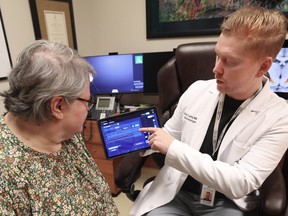
A Vancouver General Hospital neurosurgeon is working on new research that could help Parkinson’s patients suffering from non-motor symptoms such as depression, anxiety and cognitive decline.

Subscribe now to read the latest news in your city and across Canada.
- Unlimited online access to articles from across Canada with one account.
- Get exclusive access to the Vancouver Sun ePaper, an electronic replica of the print edition that you can share, download and comment on.
- Enjoy insights and behind-the-scenes analysis from our award-winning journalists.
- Support local journalists and the next generation of journalists.
- Daily puzzles including the New York Times Crossword.
Subscribe now to read the latest news in your city and across Canada.
- Unlimited online access to articles from across Canada with one account.
- Get exclusive access to the Vancouver Sun ePaper, an electronic replica of the print edition that you can share, download and comment on.
- Enjoy insights and behind-the-scenes analysis from our award-winning journalists.
- Support local journalists and the next generation of journalists.
- Daily puzzles including the New York Times Crossword.
Create an account or sign in to continue with your reading experience.
- Access articles from across Canada with one account.
- Share your thoughts and join the conversation in the comments.
- Enjoy additional articles per month.
- Get email updates from your favourite authors.
Create an account or sign in to continue with your reading experience.
- Access articles from across Canada with one account
- Share your thoughts and join the conversation in the comments
- Enjoy additional articles per month
- Get email updates from your favourite authors
Sign In or Create an Account
Dr. Stefan Lang is already known for his work at the Lang Neurosurgery Lab at UBC that uses deep brain stimulation, a surgical therapy that involves implanted electrodes that send electrical signals to the brain, improving tremors and rigidity.
Now Lang and his team are working on new research that could help patients with the non-motor symptoms.
For this, he uses a combination of advanced brain imaging, stimulation approaches, and new smartphone-based monitoring to help patients track their symptoms at home.
“We’re using advanced imaging to study how those symptoms arise in the brain of people with Parkinson’s, and then we’re using deep brain stimulation and the implant to try to treat those symptoms,” said Lang.
“By adjusting the frequency of the device, we think we can improve cognition in some people. We’re also able to use that device to record directly from the brain, and we’re using that to identify a marker of these non-motor symptoms.”
So for example, when patients feel anxious or depressed, they will fill out a survey on their smartphone to share with the team. Then the team records their brain activity from the electrodes that are implanted in the brain.
“And we can put those two things together to try to identify if there’s specific patterns of brain activity that correspond to some of these symptoms.”
Lang was already performing deep brain stimulation surgery regularly, so the team asked the patients if they want to be involved in the new study to try to improve their cognitive function by lowering the frequency of the implant.
-
Advertisement 1Story continues belowThis advertisement has not loaded yet, but your article continues below.
Each patient has different symptoms, but the deep brain stimulators can record the brain activity directly and create markers, which doctors can then correlate with specific symptoms.
Lang is confident this research will one day improve patients’ lives.
“I think there’s promising data that suggests that we can understand these non-motor symptoms, so we can understand how they fluctuate and how that’s related to brain activity, and we also think that there’s promising evidence that we can help improve the symptoms,” he said.
“It’s too early for clinical translation. It’s research based, but we certainly have some promising data to suggest that this is a possibility for us.”
Lang said cognitive impairment is a significant concern for Parkinson’s patients because it can lead to dementia, with no effective treatment.
“We call them the invisible symptoms because when you look at some of the Parkinson’s patients, you don’t see the anxiety, you don’t see the depression, you don’t see the cognitive impairment, but they’re suffering from that, those symptoms, and we have no good treatments. So it’s a really under-represented area of research,” said Lang.
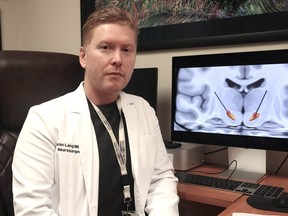
Lang’s research is largely funded by donations from the VGH + Millionaire Lottery. Other sources of funding include the Pacific Parkinson’s Research Institute.
All proceeds from the lottery support VGH and UBC Hospital Foundation for equipment, research and patient care at Vancouver General Hospital, UBC Hospital, Vancouver Coastal Health Research Institute, G.F. Strong Rehabilitation Centre, and Vancouver Community Health Services.
This year’s VGH+ Millionaire Lottery features 10 Grand Prize options. Winners can choose from home packages in South Surrey, Langley, Vancouver, Burnaby, Kelowna, Courtenay, Sooke and Colwood, with packages valued at over $3.3 million.
Tickets are on sale until midnight Friday.