B.C. climate news: Renewable energy defies Trump’s attacks, reaching a new record | Report says Canadian parks, conserved areas contribute billions
Here’s all the latest local and international news concerning climate change for the week of Feb. 23 to March 1, 2026.
You can save this article by registering for free here. Or sign-in if you have an account.
Here’s the latest news concerning climate change and biodiversity loss in B.C. and around the world, from the steps leaders are taking to address the problems, to all the up-to-date science.

Subscribe now to read the latest news in your city and across Canada.
- Unlimited online access to articles from across Canada with one account.
- Get exclusive access to the Vancouver Sun ePaper, an electronic replica of the print edition that you can share, download and comment on.
- Enjoy insights and behind-the-scenes analysis from our award-winning journalists.
- Support local journalists and the next generation of journalists.
- Daily puzzles including the New York Times Crossword.
Subscribe now to read the latest news in your city and across Canada.
- Unlimited online access to articles from across Canada with one account.
- Get exclusive access to the Vancouver Sun ePaper, an electronic replica of the print edition that you can share, download and comment on.
- Enjoy insights and behind-the-scenes analysis from our award-winning journalists.
- Support local journalists and the next generation of journalists.
- Daily puzzles including the New York Times Crossword.
Create an account or sign in to continue with your reading experience.
- Access articles from across Canada with one account.
- Share your thoughts and join the conversation in the comments.
- Enjoy additional articles per month.
- Get email updates from your favourite authors.
Create an account or sign in to continue with your reading experience.
- Access articles from across Canada with one account
- Share your thoughts and join the conversation in the comments
- Enjoy additional articles per month
- Get email updates from your favourite authors
Sign In or Create an Account
Check back every Saturday for more climate and environmental news or sign up for our Sunrise newsletter HERE.
In climate news this week:
• Port of Vancouver starts clock toward dredging shipping channel at Second Narrows
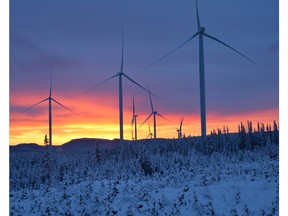
• Renewable energy defies Trump’s attacks, reaching a new record
• New report says Canadian parks and conserved areas contribute billions in taxes, jobs
Human activities like burning fossil fuels and farming livestock are the main drivers of climate change, according to the UN’s intergovernmental panel on climate change. This causes heat-trapping greenhouse gas levels in Earth’s atmosphere, increasing the planet’s surface temperature.
The panel, which is made up of scientists from around the world, including researchers from B.C., has warned for decades that wildfires and severe weather, such as the province’s deadly heat dome and catastrophic flooding in 2021, would become more frequent and intense because of the climate emergency. It has issued a code red for humanity and warns the window to limit warming to 1.5 C above pre-industrial times is closing.
According to NASA climate scientists, human activities have raised the atmosphere’s carbon dioxide content by 50 per cent in less than 200 years, and “there is unequivocal evidence that Earth is warming at an unprecedented rate.”
As of Feb. 5, 2026, carbon dioxide in the atmosphere was 428.62 parts per million, up from 427.49 ppm last month and 426.46 in December, according to the latest available data from the NOAA measured at the Mauna Loa Observatory, a global atmosphere monitoring lab in Hawaii. The NOAA notes there has been a steady rise in CO2 from under 320 ppm in 1960.

Quick facts:
• The global average temperature in 2023 reached 1.48 C higher than the pre-industrial average, according to the EU’s Copernicus Climate Change Service. In 2024, it breached the 1.5 C threshold at 1.55 C.
• 2025 was the third warmest on record after 2024 and 2023, capping the 11th consecutive warmest years.
• Human activities have raised atmospheric concentrations of CO2 by nearly 49 per cent above pre-industrial levels starting in 1850.
• The world is not on track to meet the Paris Agreement target to keep global temperature from exceeding 1.5 C above pre-industrial levels, the upper limit to avoid the worst fallout from climate change including sea level rise, and more intense drought, heat waves and wildfires.
• UNEP’s 2025 Emissions Gap Report, released in early December, shows that even if countries meet emissions targets, global temperatures could still rise by 2.3 C to 2.5 C this century.
• In June 2025, global concentrations of carbon dioxide exceeded 430 parts per million, a record high.
• There is global scientific consensus that the climate is warming and that humans are the cause.

Latest News
The Port of Vancouver has started the clock on the first part of an environmental review process for a harbour dredging project that would boost the potential for increased oil shipments from the Trans Mountain pipeline’s Westridge Marine Terminal in Burnaby.
Dredging along the edges of the shipping channel at second narrows, which is just to the east of the Iron Workers Memorial Bridge, would shave peaks off the sea bottom that prevent tankers that call on the terminal from loading to full capacity.
It’s a project that has the backing of Prime Minister Mark Carney as part of his drive to diversify Canadian trade and has the begrudging support of B.C. Premier David Eby, who has held out on expanding the pipeline’s existing capacity as an acceptable alternative to building a new bitumen pipeline to B.C.’s North Coast.
This week, the port’s governing body, the Vancouver Fraser Port Authority, opened a public comment period for an environmental review process with the Impact Assessment Agency to determine whether dredging “is likely to cause significant adverse environmental effects.”
To gain that approval, however, they will have to navigate the concerns of the Tsleil-Waututh First Nation, which has already raised issue with the proposal and still disapproves of the expanded Trans Mountain pipeline facilities, which would be the first beneficiaries of a deepened second narrows.
—Derrick Penner
Air conditioning contributes to global warming feedback loop, say scientists
As global temperatures heat up, the method to cool us down will exacerbate the problem, says a new study in the journal Nature Communications.
The study estimates that if all low‑income regions gained the same access to air-conditioning as rich regions, global emissions could contribute to an additional 0.015 C to 0.05 C of warming by 2050.
Global warming and socio-economic development are together prompting a surge in the use of air-conditioning yet the technology that delivers thermal comfort also emits large quantities of greenhouse gases, exacerbating climate change, the study says.
Human-caused emissions have already warmed the planet by more than 1.2 C since the pre-industrial era, resulting in a rise in surface temperatures. More frequent and intense heat waves caused nearly half a million heat-related excess deaths between 2000 and 2019, the study says.
The scientists say given that cooling largely relies on electricity, AC has led to a more than threefold increase in global electricity consumption for cooling from 1990 to 2016. Some regions like the U.S. and the Middle East have an AC demand accounting for over 50 per cent of their peak electricity load on hot days.
Air conditioners uses hydrofluorocarbon refrigerants, which are greenhouse gases.
—Tiffany Crawford
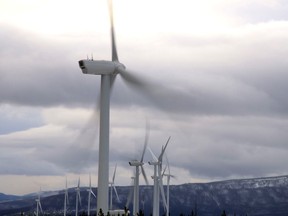
US utilities generated a record amount of energy from renewable sources last year, even as the Trump administration implemented a range of policies to stymie green energy.
Some 1,162 terawatt-hours of the country’s electricity was generated from renewable sources in 2025, a 10% increase over the prior year, according to federal data released this week. That represents 26% of all US electricity made — enough to power about 108 million US homes for a year.
Some months were even greener; in March, for example, renewables generated nearly one in three of the country’s electrons.
That stands in contrast to the Trump administration slashing incentives for wind and solar while gutting clean air regulations in a bid to help fossil fuels. The economics of renewables, though, have helped them generate a greater share of energy.
“Renewables continue to grow, as much as headlines point to natural gas being king right now,” said Patrick Finn, principal analyst at Wood Mackenzie, an energy research company. “Even though there’s plenty of hurdles for renewables coming out of DC, we’re coming out of four years where there weren’t a lot of hurdles.”
—Bloomberg News
Metro Vancouver is mulling whether to ask the federal government for a ban on single-use nitrous oxide cylinders after they have cause several explosions at the region’s waste-to-energy plant in Burnaby.
Inappropriate disposal of large volume, single-use nitrous oxide cylinders — also called whippets or laughing gas — cause safety concerns, soaring costs and an increase in greenhouse gas emissions, which contribute to human-caused climate change.
The small single-use canisters are typically used as whipped cream chargers but are also used illicitly to get high with potentially serious illness such as neurotoxic effects, psychosis or severe frostbite.
According to a staff report to Metro Vancouver’s zero waste committee, at least 100 vape and smoke shops in the region are selling single-use valved nitrous oxide cylinders.
The canisters sold at smoke shops are different than the pharmaceutical versions that combine nitrous oxide and oxygen for managing pain and anxiety at the dentist or while in labour, which are safe when used appropriately, say medical experts.
—Tiffany Crawford
Two years ago, Alberta led Canada in corporate renewable energy procurement. Companies across sectors chose Alberta to decarbonize their electricity through virtual power purchase agreements. These deals brought investment, jobs and millions in municipal tax revenue to communities across the province.
Today, that market has essentially vanished. After falling 95 per cent from 2023 to 2024, corporate renewable energy deals in Alberta dropped another notch in 2025, bringing the cumulative decline to a staggering 99 per cent. Meanwhile, across the country, Nova Scotia has quietly emerged as Canada’s new corporate renewables leader.
The consequences extend far beyond cancelled projects and delayed contracts. In 2025, more than 800 MW of construction-ready solar projects and 300 MW of wind projects cancelled their connection requests. These weren’t speculative ventures; they were shovel-ready projects with millions already invested.
The province added only 38 MW of solar in 2025, the smallest growth since 2019. New wind development has stalled completely. For the first time since 2018, Alberta went an entire year without adding wind capacity. In a sad reversal, total wind capacity decreased, a first in the province’s history.
—Calgary Herald
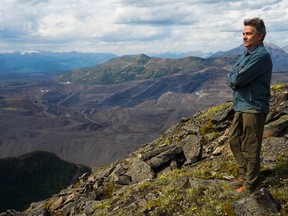
New report says Canadian conserved and protected areas contribute billions in taxes and jobs
A new report from the Canadian Parks and Wilderness Society says that conserved and protected areas were responsible for 150,000 jobs in the 2023-24 fiscal year.
The report says every $1 spent on protected and conserved areas generates $3.62 in visitor spending, driving GDP growth, jobs, income, and tax revenue. The same year, parks contributed to $1.4 billion return in tax revenue to governments through direct, indirect and induced impacts.
This analysis helps put a value on something that has long been taken for granted,” said Jason Wong, an economic analyst for the society and lead author of the report.
“Nature’s worth is infinite, but when you focus primarily on what we can quantify, the economic returns from protected and conserved areas are striking. This report shows that nature is already delivering real, sustained value to Canada’s economy, whether we account for it or not.”
The research also highlights how protecting areas can help mitigate climate change because they are immense carbon stores.
With federal public investment in nature set to expire on March 31, the authors argue this is timely evidence that renewing this funding would be a strategic investment.
—Tiffany Crawford
Wall Street’s oil deals have climate activists resorting to new tactics
In the summer of 2024, Alec Connon was a regular occupant of the small plaza in front of Citigroup Inc.’s Manhattan headquarters.
As a chief architect of a months-long, headline-grabbing protest against the bank’s funding of fossil-fuel companies he was to be found either in a human chain blocking the front door, holding a placard, or chanting, “Hey Citi, get off it, put planet over profit.”
Less than two years on, and Citigroup has increased its financing of fossil fuels through loans and bonds. In 2024, it ranked seventh among banks doing such deals. Last year, it had climbed the league table to become No. 4 thanks to a 16% jump in such transactions, according to data compiled by Bloomberg. JPMorgan Chase & Co. and Wells Fargo & Co. also saw an increase in deals in the period, though less pronounced, the data show.
At the time of the protests, dubbed Summer of Heat by Connon and his co-campaigners, Citigroup said it was open to “constructive engagement,” but criticized any effort to “intimidate employees.” The bank declined to comment for this article.
Connon says it’s now time for climate campaigners like him to acknowledge that the methods they’ve been using haven’t worked as intended, and to come up with a new playbook.
—Bloomberg News
Back in December, the retraction of a key climate report was seen as proof that the economic cost of global warming had been overstated. Now, Norway’s wealth fund says its own analysis indicates that would be the wrong conclusion to draw.
Scientists from the Potsdam Institute for Climate Impact Research last year took down a paper that had fed into scenarios used by central banks and investors, including Norway’s $2.2 trillion wealth fund. The retraction followed criticism from scientists and academics of the paper’s methodology, and a formal review ultimately led the paper’s authors to acknowledge “substantial” issues.
But in Oslo, a team at Norges Bank Investment Management decided to dig further. As part of an ongoing analysis into the potential for climate change to result in portfolio losses, NBIM studied the review of the retracted paper as well as the criticisms of its methodology to arrive at its own assessment.
“At the end of this process, we still believe models tend to underestimate physical risk,” NBIM said in an email to Bloomberg, referring to the real-world fallout of rising temperatures.
The comments come as Wall Street pays less attention to climate risk, with AI disruptions, inflation and war all seen as more pressing issues than the threat of rising temperatures.
—Bloomberg News
Trump administration eases limits on coal plants for emitting mercury, other toxins: The Associated Press
The Environmental Protection Agency has weakened limits on mercury and other toxic emissions from coal-fired power plants, according to a report by The Associated Press.
Toxic emissions from coal- and oil-fired plants can harm the brain development of young children and contribute to heart attacks and other problems in adults, the report says. The plants are also a major source of greenhouse gas emissions that drive climate change.
“EPA’s actions today rights the wrongs of the last administration’s rule and will return the industry to the highly effective original MATS standards that helped pave the way for American energy dominance,” the AP quoted EPA Deputy Administrator David Fotouhi as saying.
The agency said the change should save hundreds of millions of dollars, according to the AP report.
I’m a breaking news reporter but I’m also interested in writing stories about health, the environment, climate change and sustainable living, including zero-waste goals. If you have a story idea related to any of these topics please send an email to ticrawford@postmedia.com