
Douglas Todd: Legacy grows of remarkable British Columbian ‘who wrote more books than he read’
People worldwide are being influenced by Sydney Banks, who taught resilience – offering liberation to people who struggle with stress, trauma, the effects of torture and drug addiction.
By Douglas Todd
Last updated 10 hours ago
You can save this article by registering for free here. Or sign-in if you have an account.
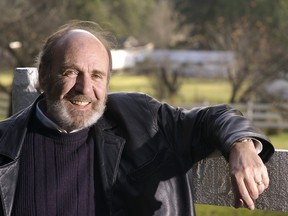
The late Salt Spring Island resident Sydney Banks was a welder at the giant Harmac Pacific pulp mill, with a Grade 9 education from Scotland.

Subscribe now to read the latest news in your city and across Canada.
- Unlimited online access to articles from across Canada with one account.
- Get exclusive access to the Vancouver Sun ePaper, an electronic replica of the print edition that you can share, download and comment on.
- Enjoy insights and behind-the-scenes analysis from our award-winning journalists.
- Support local journalists and the next generation of journalists.
- Daily puzzles including the New York Times Crossword.
Subscribe now to read the latest news in your city and across Canada.
- Unlimited online access to articles from across Canada with one account.
- Get exclusive access to the Vancouver Sun ePaper, an electronic replica of the print edition that you can share, download and comment on.
- Enjoy insights and behind-the-scenes analysis from our award-winning journalists.
- Support local journalists and the next generation of journalists.
- Daily puzzles including the New York Times Crossword.
Create an account or sign in to continue with your reading experience.
- Access articles from across Canada with one account.
- Share your thoughts and join the conversation in the comments.
- Enjoy additional articles per month.
- Get email updates from your favourite authors.
Create an account or sign in to continue with your reading experience.
- Access articles from across Canada with one account
- Share your thoughts and join the conversation in the comments
- Enjoy additional articles per month
- Get email updates from your favourite authors
Sign In or Create an Account
After a life-changing revelation during a personal crisis in the 1970s, he slowly began to be seen as a wisdom teacher. He wasn’t boasting when he once told me in his slight Scottish burr that he wrote more books than he had read.
Banks’s teachings, which emphasize the value of human resilience, are now in wide use by health-care workers and therapists around the world. They have adopted his approach to help people who struggle with stress, trauma, the effects of torture, with drug addiction and with extreme poverty.
Banks, who died in 2009 at age 78, is now a bigger, more-influential figure than when he was alive.
A major conference on his world view will be held this August at the University of B.C.
Today, tens of thousands of people who have been influenced by Banks live and work in Northern Europe, the United States, India and Singapore. Based on internet analysis, Canadians’ interest in Banks seems relatively moderate compared to his fame elsewhere.
Banks taught about the importance of three classic principles, “mind, thought and consciousness.” His philosophy is especially being advanced by a popular movement called the 3 Principles Global Community, whose many adherents are practising what they consider his common-sense approach to emotional health, which bypasses traditional psychiatric methods.
One of the leaders of the 3 Principles Global Community, which is organizing the Vancouver conference, is American Linda Pransky. As she puts it: “Through the principles of mind, consciousness and thought, Sydney revealed that the external world does not control how we feel — our thoughts do.”
- Sydney Banks: Wrote more books than he read
- Obituary: Sydney Banks, Salt Spring Island author/teacher
-
Advertisement 1Story continues belowThis advertisement has not loaded yet, but your article continues below.
Whatever one makes of Banks’s teachings, his influence is remarkable for a man, adopted as a young child in Scotland, who during a therapy session with his wife on Cortes Island long ago came to the sudden realization his many insecurities were not real.
Banks couldn’t sleep for two nights after his inner discovery. He soon ended up at a beach, where he had a mystical experience.
“I was literally shrouded in white light and I realized the true nature of God and mind. I realized life was a divine dream suspended in a place of time, space and matter.”
He started to cry.
“I realized, ‘I made it. I’m home.’ I knew this was going to change psychology forever,” he told me at his home in 2007, during the only interview he ever gave to a mainstream media outlet. Pleasant and self-effacing in person, he had agreed to it to try to spread his world view before he died.
In a nutshell, Banks said people are unhappy because they choose to be unhappy. Unlike therapists who believe people transcend their destructive habits by working through their childhood emotional pain, Banks said people should recognize that negative past experiences only exist in one’s thoughts, which one can control. He invited people to “know the beauty of living in the now.”
At first his influence was local, as he mixed simple aphorisms with high concepts. Sometimes dozens of people a day would show up in the 1980s and ‘90s at his pastoral Salt Spring Island acreage, seeking guidance. As a result, he eventually began offering seminars and wrote six books, including the best-selling Enlightened Gardener series.
His dream of spreading his teaching further is being realized — since his world view has been adopted in hospitals, correctional centres, drug and alcohol programs, social housing projects, multinational corporations, mental-health centres and schools.
The University of Minnesota school of nursing, among other researchers, studied how Banks’s methods, also known as health realization, worked among Somali and Oromo refugee women who had experienced torture.
They found Banks’s approach, which did not require highly trained personnel, proved to be effective and culturally acceptable for the traumatized women, who said it helped quiet their minds and make healthier decisions.
In another example, Banks’s methods were taught at a social-housing complex in Oakland, California, that had a high rate of homicide and gang conflict. After the introduction of health realization classes, the homicide rate began to decrease significantly. Clashes between Cambodian and African American youth ceased.
Natasha Swerdloff, the Denmark-based president of 3 Principles Global Community, said in an email interview there are active communities devoted to Banks’s way of seeing the world in North America, Europe, South America, Africa, and Asia.
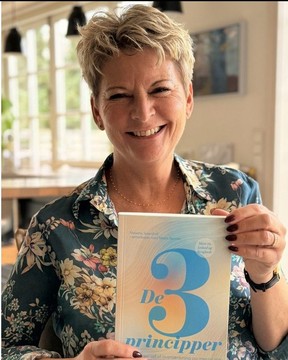
“And there is a growing interest among younger practitioners as well as professionals in organizational settings. Denmark, where I live, is very vibrant and has almost 8,000 people in its organization.”
Banks’s path to self-realization has not reached the vast audience of another teacher who also lives on Salt Spring Island, Eckhart Tolle, who also emphasizes the importance of living in the present.
Yet, Swerdloff said, “There has been a noticeable increase in interest in Sydney’s understanding in recent years,” particularly over the past 12 months. Her Danish-language book on Banks was published this month.
“We saw a spike in online searches around December, which seemed to coincide with a renewed wave of people discovering the videos of Sydney that are now widely shared online. Many of these recordings were originally made privately and have gradually become more accessible through the Sydney Banks YouTube channel.”
As a non-academic who said he had never read anything but a couple of books on welding, Banks declined to put his worldview in the context of other philosophies, psychologies or religions.
Avoiding intellectual analysis, he instead posited that by understanding “mind, thought and consciousness” a person could have a direct experience of insight that would free them from suffering.
While Banks’s approach has been criticized as simplistic, over-optimistic and ersatz Eastern spirituality, defenders have maintained it has similarities to the work of Harvard medical school’s Herbert Benson and to positive psychology, both of which focus on making choices to break out of negative, repetitive thinking.
From Topanga, California, Rohini Ross, a noted practitioner of Banks’s philosophy, said in an email his teachings helped her “to see that I was not broken. I had spent years caught up in the idea that I needed to improve myself.”
That personal task, Ross said, almost became a second job for her.
“I felt I needed to fix my insecurity. What I saw was that there was actually nothing wrong with me. I was simply human with emotions that would come and go. This felt like a great burden was lifted from me.”
Strong praise for a self-taught welder from Salt Spring Island.
Get the latest from Douglas Todd straight to your inbox