‘The last thing we did, we were holding hands’: Victims, responders on how everything has changed a year after the Lapu Lapu Day attack
First responders, survivors, and mental health experts reflect on the horror of a year ago, when 11 people died and many were injured, and their new realities today
By Lori Culbert, Glenda Luymes
Last updated 1 hour ago
You can save this article by registering for free here. Or sign-in if you have an account.

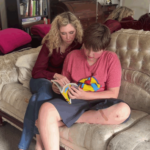
Just after 8 p.m. on Saturday, April 26, 2025, Christi-Ann Watkins and her 11-year-old son Nox were waiting for the French toast they had ordered from a food truck at the Lapu Lapu festival.

Subscribe now to read the latest news in your city and across Canada.
- Unlimited online access to articles from across Canada with one account.
- Get exclusive access to the Vancouver Sun ePaper, an electronic replica of the print edition that you can share, download and comment on.
- Enjoy insights and behind-the-scenes analysis from our award-winning journalists.
- Support local journalists and the next generation of journalists.
- Daily puzzles including the New York Times Crossword.
Subscribe now to read the latest news in your city and across Canada.
- Unlimited online access to articles from across Canada with one account.
- Get exclusive access to the Vancouver Sun ePaper, an electronic replica of the print edition that you can share, download and comment on.
- Enjoy insights and behind-the-scenes analysis from our award-winning journalists.
- Support local journalists and the next generation of journalists.
- Daily puzzles including the New York Times Crossword.
Create an account or sign in to continue with your reading experience.
- Access articles from across Canada with one account.
- Share your thoughts and join the conversation in the comments.
- Enjoy additional articles per month.
- Get email updates from your favourite authors.
Create an account or sign in to continue with your reading experience.
- Access articles from across Canada with one account
- Share your thoughts and join the conversation in the comments
- Enjoy additional articles per month
- Get email updates from your favourite authors
Sign In or Create an Account
“We were holding hands,” the Vancouver mom recalled. “The last thing we did, we were holding hands.”
About the same time, Katryna Bowland-Kwok, the ambulance service’s on-call director that night, was tucking her young children into bed in their New Westminster home when she received a text message about a “significant” event unfolding at the festival, followed by an urgent phone call with more details. She was in disbelief.
“This doesn’t happen here,” she thought to herself.
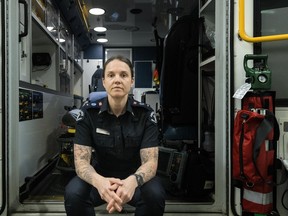
Tanya Hisch and her partner on a specialized advanced care ambulance had just wrapped up a call near Cambie Street when they were alerted to a serious incident unfolding about five kilometres away at Fraser Street and East 43rd Avenue.
“We were one of the first units on scene,” said Hisch, who had responded to large emergencies in the past, “but nowhere near the scale of this one.”
The first 911 call came in at 8:17 p.m. Everything changed after that.
For the horrified witnesses who watched a black SUV indiscriminately mow down festival goers, leaving 11 dead and many more badly injured, it was an unfathomable end to the Filipino community’s day of celebration.
For the injured, many of whom are still struggling to recover, and for the families mourning the senseless loss of their loved ones, the anguish continues as they grapple with heartache, health challenges and financial loss.
For first responders who raced to the scene of the worst mass casualty event in Vancouver’s history, this tragedy, previously unheard of in B.C., prompted changes to policies for training and public safety at big events in the future.
“No one can prepare you for something like that, but we can ensure that the system is prepared for any such emergencies,” said Mary Charters, director of the provincial agency Health Emergency Management B.C.
-
Advertisement 1Story continues belowThis advertisement has not loaded yet, but your article continues below.
One year ago, as they sped to the Lapu Lapu festival, Hisch and her partner weren’t sure at first what they were responding to. But as she read updates from 911 call-takers on the ambulance’s computer screen and heard radio dispatches from first responders who had just arrived on the scene, she began to realize the severity of the situation.
“Your brain just switches into work mode, and you’re thinking about everything,” she recalled.
“What happened? What caused this? Is it even safe for us to to go into the call? How are we going to manage all of these sick patients with the amount of resources that we have?”
They arrived to a chaotic scene. A street bordered by food trucks, overflowing with horrified eyewitnesses and an unclear number of injured people.
“It was a large amount of patients spread across a large area, like three city blocks, which made it particularly challenging to manage, just because communication and organization of the scene becomes harder when it’s spread over such a large area,” Hisch said.
“One thing I remember most is the Filipino community on scene — who had just witnessed something very tragic that impacted them and their family members directly — were continuously trying to help other people.”
Bystanders brought a critically injured patient to Hisch’s ambulance. After quickly conferring with her colleagues about the best plan to help the most urgent patients, she transported the victim to hospital.
‘I remember hearing the sirens’
Just down the crowded street from where Hisch stopped her ambulance, Watkins was lying on the ground. She and her son were hit from behind while waiting for their French toast. They didn’t even see the SUV coming.
Watkins can remember telling herself to keep her eyes open. To breathe.
She felt really uncomfortable, and thought the buckle of her fanny pack was digging into her skin. She didn’t realize that the crash had fractured her knee, pelvis, neck and ribs, as well as punctured a lung and her spleen.
A stranger put pressure on a large gash on her head and held her neck, telling her not to move until the ambulance arrived. Watkins could only see the sky above her, but she could hear frantic sounds all around as terrified people yelled for help and firefighters, police and paramedics rushed in.
“I remember hearing the sirens and feeling a bit of relief: ‘OK, I’m finally going to get taken care of.’”
She also felt relief when a friend leaned down to tell her she had Nox. Watkins didn’t have to worry about her son.
In the ambulance, she felt a flash of modesty as paramedics cut her clothes off, but assured herself: “Let it go. They’re taking care of you now. Let them do what they need to do.”
The paramedics asked her name. She has a hazy recollection of saying it, even spelling it, but no one could hear her.
In the Royal Columbian Hospital trauma unit, medical staff asked her three more times until she was able to convey her name — a crucial piece of information to let families know about the status of loved ones.
“There were a number of people who were trying to look for me. I had cousins go to all the hospitals,” Watkins said.
Eight unidentified victims had been separated from their belongings during the chaos of that evening, said Charters.
Her Health Emergency Management B.C. program assists health authorities during major emergencies with the safety of patients and staff, as well as with the continuity of health services.
One of her staff who was sent to the festival site, a former nurse, helped police reunite families with injured loved ones and tracked patients in hospitals to assist with identifying people like Watkins.
Charters first learned of the festival rampage after Vancouver General Hospital alerted her team that they were preparing for a large number of patients. A regional co-ordination centre was established to notify local hospitals of potential mass casualties, and to organize the response so health staff could focus on the victims, said Charters, a former Vancouver police officer.
One change her team has made since Lapu Lapu is working with the ambulance service to create “a more streamlined, immediate notification system” for mass casualty incidents, for better clarity on the number of patients and to which hospitals they should be sent.
In total that night, 73 paramedics, 31 dispatch staff and more than 30 ambulances from across the Lower Mainland were directly involved in responding to the festival tragedy. They transported 19 patients to various hospitals, and provided first aid at the scene to people who were less seriously injured.

‘Your view of life changes’
Bowland-Kwok’s work that evening included ensuring there were enough resources responding to the scene, without compromising coverage for other parts of the region. She is responsible for ambulance service in Vancouver and Richmond, as the Vancouver Coastal South operations director for B.C. Emergency Health Services.
She also drove to the city’s largest station, No. 248 on Cordova Street in East Vancouver, which has a large ambulance bay that she filled with tables, chairs and food.
She invited staff to come there for a mental-health debrief once they were done at the festival site, and estimates 40 to 60 people eventually trickled in. Some chatted with their colleagues, others sat on their own.
“Some people were fine and others weren’t,” she said. “We tried to get as many of them as possible just to have a big conversation and acknowledge the tragedy and acknowledge that it was a once-in-a-lifetime type of event. Paramedics train for these things, but that doesn’t mean that they actually want to go to them.”
She remembers what it is like to respond to tragic calls, and felt a heavy responsibility not to fail the needs of her colleagues. Speaking to the group, she said, was “one of the hardest things I’ve ever done in my career.”
Bowland-Kwok had asked the ambulance’s scheduling department to put the call out for extra staff, so she told paramedics who didn’t want to finish their 12-hour shift that they could go home. She also promised future access to the support they needed.
“You’ve taken care of this community, and now you need to take care of yourself,” she recalls telling them.
Hisch arrived at the debrief around midnight. Her parter went home afterwards, but she worked until the end of her shift at 6:30 a.m. Sunday morning, riding with another advanced care paramedic who had also been at the festival. It made her feel better to talk about the evening with a colleague, rather than to go home and try to sleep.
“Everyone’s different,” she said. “I think this job can impact you in ways that you might not be aware of in real time.”
Since the Lapu Lapu tragedy, new mass-casualty training has been created for paramedics, which Hisch believes will help prepare her for a similar emergency in the future. “Training for events like this is important because they do happen,” she said.
Paramedics can access support from peers or psychologists through the ambulance service’s “critical incident stress management” program.
B.C. Emergency Health Services would not say how many took advantage of the services after Lapu Lapu, but Bowland-Kwok believes it is important to offer that support.
“I don’t feel like anybody walked away from that event — that call, their patients — and they don’t have some part of it that they relive still.”
For victims of the Lapu Lapu rampage, counselling was available through the province’s crime-victim assistance program, which says it has helped 95 people.
Bystanders, such as vendors, volunteers and community members, could access emotional support through Health Emergency Management B.C., said Dave Hutton, director of psychosocial services.
Roughly 40 paid and volunteer workers provided this assistance immediately after the tragedy, and later at memorial services and at Filipino B.C.’s Kapwa Strong resiliency centre.
They connected with hundreds of people, allowing them “to talk about what has happened, to know that they’re not alone, to get that reassurance over how they’re feeling,” Hutton said.
How bystanders heal will often depend on what they witnessed, or how close they came to being hurt.
“For some people, it was truly a traumatic experience that’s going to stay with them forever,” said Hutton, who formerly worked for the United Nations.
“Your view of life changes.”
He praised the Filipino community for working with his staff to ensure its members got help in a culturally appropriate way.
Hutton said his staff worked more closely with victim services teams during the Lapu Lapu response, compared to past crises, a relationship that can be built on for future emergencies.

‘Every day is rooted in gratitude’
Watkins and her son were offered counselling, but she said it is common for Filipinos to be the helpers, and not to readily accept any help themselves. When it comes to psychological stress, she is more worried about the potential long-term effect on her son.
“What if he gets older and has a flashback? … Is PTSD going to surface in my son?”
Nox, who was separated from his mother during the melée, was frightened by the blood flowing from his broken nose, and by the blood of the many injured — and deceased — people around him. He spent the night at B.C. Children’s Hospital, far from his mother at Royal Columbian.
Watkins feels guilty that her injuries prevented her from protecting him from the panic induced by “all the chaos, all the lights, all the people running around, all the carnage that he saw — and then my mom is gone.”
Another major stress for Watkins is the continuing challenge to recover from her physical injuries, and the financial strain that has caused for her family, which includes her two young sons. Her husband took six months off work to care for her, and she is not yet healthy enough to return to her job in a chocolate shop.
The only compensation she receives is $262 every two weeks from the Insurance Corp. of B.C. That doesn’t cover their bills.
Watkins got a small amount of cash from Filipino B.C., for which she is grateful. She is disappointed by the organization’s handling of the $2 million donated for survivors, a controversy that has many community members demanding more transparency.
But she wonders why people are focusing their anger on the non-profit when, in her opinion, provincial and municipal governments have the deepest pockets and are failing to give meaningful financial support to innocent victims.
The Public Safety Ministry, in an email, said “comprehensive coverage” is available through ICBC, which has paid nearly $5 million to Lapu Lapu victims. That includes $2 million in medical benefits, $1.5 million in death benefits, $755,000 in permanent impairment benefits, $103,000 in funeral costs, and $22,000 in grief counselling.
The city said in an email that long-term health and financial support for victims is the responsibility of senior governments. Watkins dismissed that as finger pointing.
“Nobody wants to help us. We’re just flailing,” she said. “We live a new normal now.”
Her family has survived on GoFundMe donations, but that money “is quickly running out and I am slowly panicking.”
She worries people will forget about this crime, and its victims. She has reminders every day of what happened: her knees click when she walks, and she needs a nap if she stands for too long.
One year after the crash, Watkins still goes to various types of physical therapy four times a week.
There has also been community criticism that Filipino B.C.’s plans to hold a one-day Lapu Lapu Day celebration on April 19 is inappropriate, especially for those still trying to recover. Watkins doesn’t plan to attend the event, mainly because she wants to focus on her family and doesn’t know how Nox will fare as the anniversary approaches.
Despite her struggles and worries, Watkins, who spent 10 days in hospital last April, is grateful that both she and her son are alive.
“Even when I was in the hospital, and until now, every day is rooted in gratitude. Because I know, I’m aware, that things could have been so much worse.”
For more health news and content around diseases, conditions, wellness, healthy living, drugs, treatments and more, head to Healthing.ca – a member of the Postmedia Network.