
The 2026 FIFA World Cup is fast approaching, and as finishing touches are placed on venues around Vancouver to prepare. One building is truly transforming to embrace the beautiful game.
There are some noticeable changes being made to an iconic landmark
CLICK HERE TO LISTEN TO 1130 NEWSRADIO VANCOUVER LIVE!
Science World is quite literally transforming into a giant soccer ball – with custom shaped panels being attached to the exterior over the next four weeks to become the official FIFA match ball ahead of the 2026 World Cup in Vancouver next month.
“The Look Company flew a drone around and took imagery of the whole of the dome and that’s allowed them to individually manufacture 131 panels which is what you see going up today, and each one is a different size and shape so they literally had to have by the cm measurements for each panel – no two are the same believe it or not,” said Rob Hollingsworth, Senior Director, Commercial Sales & Partnerships at Science World.
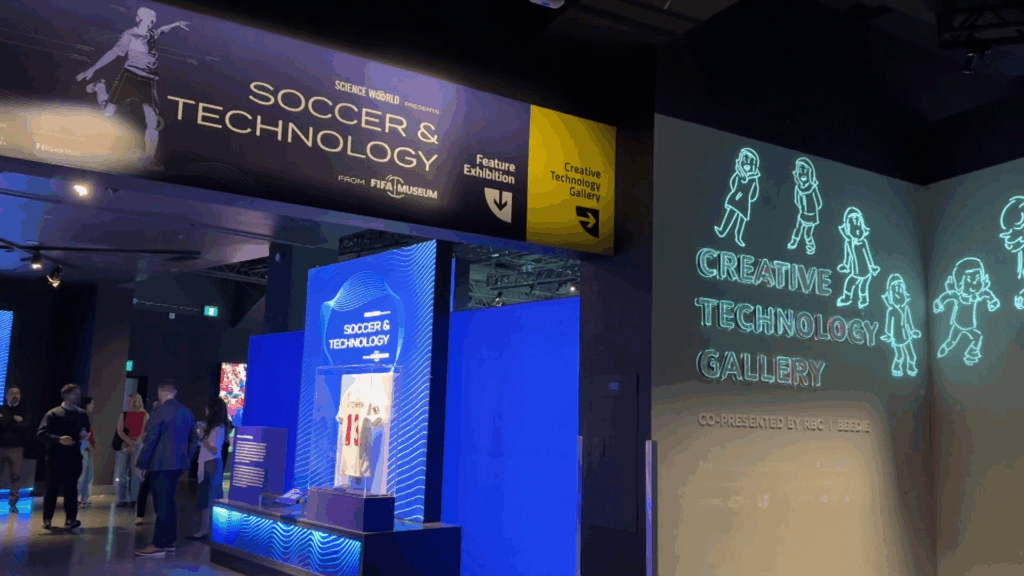
Inside the ball, well the world cup hype continues – with FIFA brining the traveling Soccer and Technology exhibition to North America for the first time – giving soccer fans a chance to discover the innovation and science behind the world-renowned game.

“The idea behind the exhibition like other area’s in our society with sport it grows along technical development, so the idea is behind this to make our beautiful sport to make better decisions and supporting that development,” said Marco Fazzone, Managing Director of the FIFA Museum.
The exhibit will take people through five sections including – broadcasting and media, intelligent data, refereeing and fair play, staging the game, and an innovation lab.
“We’re really big at science world on encouraging all sorts of different types of careers in science and we love that when exhibitors come to this exhibition that they’ll learn you don’t have to wear a lab coat, you don’t have to be in a laboratory to be a scientist but you can take all of that amazing science knowledge, innovation and go and do something behind the beautiful game,” said Fiona Cole-Hamilton, Vice President, Experience & Products, Science World.
From learning about the history of tech that helped shape the game – like this camera used in the 1954 World Cup to wearable sensors and remote-controlled drones used today – to understanding the video assistant referee and how it works.

“The video match officials they do have access to all the match facing camera angles and whenever there is a situation that can be reviewed by one of the video assistance referee to check all the angles, they have a reply operator who helps them to find the best angle and to identify it which is not always easy and that is when they get in contact with the officials in the stadium on field,” said Dirk Schlemmer, Football Technology Strategy, FIFA Innovation The FIFA Museum at Science World opens to the public on Friday and runs until September 7th.