
On paper, British Columbia’s agricultural sector operates under clear labour protections. But step onto a farm field far from public view, and a different reality emerges, one where the province’s most vulnerable workers say exploitation is deeply embedded in the system.
Behind B.C.’s farms, many South Asian immigrant women say their work comes at a cost, facing exploitation, insecurity, and silence as they navigate life and labour far from home.
CLICK HERE TO LISTEN TO 1130 NEWSRADIO VANCOUVER LIVE!
A new report by BC Policy Solutions, Growing Justice: Health, Safety and dignity for South Asian farmworker women in British Columbia, adds to a growing body of evidence pointing to systemic problems faced by South Asian immigrant women working in agriculture, documenting wage theft, a lack of basic sanitation, and gruelling, unpredictable hours.
However, farmworkers who spoke with OMNI News reveal that the crisis extends far beyond the report’s formal findings. While the report’s data focuses primarily on gender, workers on the ground explain that the abuse is driven fundamentally by immigration status and legal precarity.
At the centre of this structure is a largely invisible network of labour contractors. Workers and farmers alike describe a system where contractors, rather than farm owners, control hiring, wages, and transportation, creating a severe power imbalance.
“If the company pays $25 an hour, the worker might only get $10 to $15,” said Gurcharan Brar, a long-time farmworker with more than two decades of experience. “The contractor keeps the rest.”
Brar notes that the issue is not new. When she first arrived in Canada in the late 1990s, farm sites lacked even basic facilities. “There were no washrooms on farms,” she recalled. “Women had to go into the fields during breaks. It was very difficult for them.”
While some permanent employees say conditions have improved at specific workplaces over time, those improvements are uneven and rarely extend to temporary, seasonal, or precarious labour.
Kulwinder Kaur, a permanent farmworker, is careful to draw that distinction. “Those problems are still there, but mostly for temporary workers,” she said, noting that her current workplace does not reflect the severe exploitation highlighted in the report.
Both the report and on-the-ground interviews reveal workers employed through contractors, including seasonal labourers, international students, and undocumented individuals, face the highest risk of abuse. Many depend on contractors not just for employment but for daily transit, leaving them trapped in unsafe situations.
That dependency begins long before the clock starts ticking. Contractors often gather multiple labourers across various locations hours before a shift. By the time workers arrive on-site, they have already spent hours in unpaid transit.
“Sometimes they work 12 hours, but they’re only paid for eight,” Kulwinder Kaur said.
The BC Policy Solutions report highlights cases of verbal abuse, sexual harassment, and retaliation against those who speak out. Frontline interviews suggest these fears are grounded in everyday reality, affecting anyone without stable status.
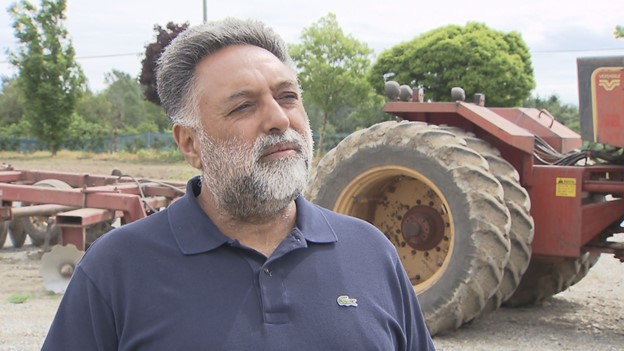
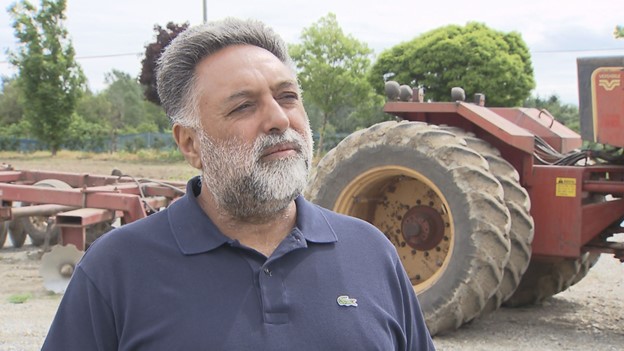
“Many girls who come to farms are misused,” said farmer Pritpal Singh Dhaliwal, a vocal advocate on agricultural issues.
Yet the risk of speaking up is often too high. Brar explains that legal precarity is the most powerful tool contractors use to enforce silence. “Contractors know these people can’t do anything,” he said. “They don’t have proof; they don’t have status. They can’t complain.”
This is particularly true for those paid in cash, a group heavily comprised of international students, visitors on temporary visas, and undocumented individuals. Without official employment records, they lack the legal protections or paperwork required to prove wrongdoing.
While the formal report focuses heavily on structural policy, interviews point to a devastating human cost. Kulwinder Kaur recalls encountering international students working under contractors, young people struggling not just with harsh work conditions but with basic survival.
“Sometimes they couldn’t even cook food at night,” Kaur said. “I felt so helpless. I would bring them food myself.”
For Kaur and Brar, the issue hits close to home. “I have my own children,” Brar said. “When I see them like this, you feel it.”
The report outlines 11 policy recommendations aimed at improving oversight and protection. But for workers and advocates, the core issue isn’t the wording of the law; it is the enforcement.
When asked about the findings, B.C.’s Ministry of Labour pointed to 2024 updates made to the Employment Standards Act, stating that farm sites and transportation systems are regularly inspected. While the ministry acknowledged that more needs to be done and stated the report would be reviewed, it provided no clear answer when asked whether new regulatory changes are actively being considered.
Dhaliwal argues that enforcement efforts will continually fall short until the root cause, the legal status of undocumented workers, is addressed.
“We need to bring these workers into the system,” Dhaliwal said. “Otherwise, they will continue to be used.”
For those at the bottom of the agricultural hierarchy, meaningful change remains slow, uneven, and heavily obscured by an entrenched contractor system.
But as Kulwinder Kaur and Gurcharan Brar look out at their fellow labourers, the fundamental expectation remains simple.
“If we are working,” they emphasized, speaking to the shared reality across the fields, “we should at least be paid properly.”