
Bring your own water: How drought may affect your B.C. summer travel plans
Favourite tourist destinations like Vancouver Island and the Okanagan are expected to be hot and dry this summer, so prepare for water conservations measures, say officials
Last updated 6 hours ago
You can save this article by registering for free here. Or sign-in if you have an account.
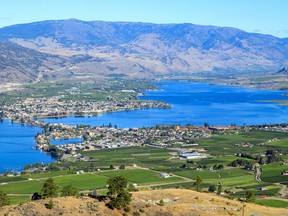
Tourists visiting some of B.C.’s hottest destinations this summer, including Vancouver Island and the Okanagan, should prepare for potential drought conditions and water conservation measures, say officials.

Subscribe now to read the latest news in your city and across Canada.
- Unlimited online access to articles from across Canada with one account.
- Get exclusive access to the Vancouver Sun ePaper, an electronic replica of the print edition that you can share, download and comment on.
- Enjoy insights and behind-the-scenes analysis from our award-winning journalists.
- Support local journalists and the next generation of journalists.
- Daily puzzles including the New York Times Crossword.
Subscribe now to read the latest news in your city and across Canada.
- Unlimited online access to articles from across Canada with one account.
- Get exclusive access to the Vancouver Sun ePaper, an electronic replica of the print edition that you can share, download and comment on.
- Enjoy insights and behind-the-scenes analysis from our award-winning journalists.
- Support local journalists and the next generation of journalists.
- Daily puzzles including the New York Times Crossword.
Create an account or sign in to continue with your reading experience.
- Access articles from across Canada with one account.
- Share your thoughts and join the conversation in the comments.
- Enjoy additional articles per month.
- Get email updates from your favourite authors.
Create an account or sign in to continue with your reading experience.
- Access articles from across Canada with one account
- Share your thoughts and join the conversation in the comments
- Enjoy additional articles per month
- Get email updates from your favourite authors
Sign In or Create an Account
Some regions, like the Gulf Islands, even recommend travellers bring their own drinking water for their vacation.

tap here to see other videos from our team.
Bring your own water: How drought may affect your B.C. summer travel plans Back to video
tap here to see other videos from our team.
Low snowpack, early snowmelt and hot-and-dry weather forecasts are elevating drought hazards, particularly for B.C.’s South Coast and southern Interior, according to the latest snow and water bulletin.
Vancouver Island — home to vacation hot spots such as Tofino, Parksville and Victoria — has a below-normal snowpack, just 11 per cent of normal as of May 15 while the rest of the South Coast is 33 per cent of normal.
Another tourist favourite, the Okanagan with its vast vineyards and lakeside resorts, also faces drought and elevated wildfire risk with a snowpack at just 16 per cent of normal.
“Without a doubt the area that’s most concerning and is a record low this year is the Okanagan,” Jonathan Boyd, a hydrologist with B.C.’s River Forecast Centre, said Friday.
“The Okanagan was in a deficit for precipitation for the whole fall and winter, and that’s the area where I think the most critical focus is for the potential impact for drought.”
Boyd said while the snowpack on Vancouver Island is significantly below normal for this time of year, 2015 holds the record at 15 per cent of normal compared with this year’s 44 per cent of normal using the April 1 bulletin, which scientists use to analyze historical data.
Warm temperatures during the first week of May caused rapid melt of the lower and mid-elevation snowpack, with many locations across B.C. measuring record-high maximum temperatures on May 3 and May 4, according to B.C.’s Ministry of Water, Land and Resource Stewardship.
Bobby Sekhon, a meteorologist with Environment and Climate Change Canada, said while Vancouver Island had near normal rainfall over the fall and winter, the warmer-than-normal temperatures prevented snow pack development.
-
Advertisement 1Story continues belowThis advertisement has not loaded yet, but your article continues below.
He also said April and the first half of May were drier than normal on B.C.’s South Coast. Some showers are expected on Sunday and Monday but whether that will be enough to ease drought fears is uncertain.
“We can’t expect a lot of precipitation from it and amounts are always a bit unpredictable this time of year,” said Sekhon. “So we’ll have to see how things play out with the Sunday-Monday system.”
He added that he’s not seeing much of an indication that June will be wet either.
“Keep in mind, June, July, August — these are pretty dry months here on the South Coast and on Vancouver Island,” said Sekhon, adding there’s not a lot of precipitation expected.

The ministry says about quarter of a season’s snowpack usually melts by May 15. This year, the snowpack is melting earlier and faster than normal with approximately 40 per cent of the snow melting.
“It’s clear right across the province that so far, up to this point in the season, we’re melting earlier than normal. So that’s why it is that much lower, so a combination of a low snowpack and an earlier melt certainly increases the concerns about the potential for drought, especially areas that rely on that later season snow melt to sustain the flows,” said Boyd.
According to the Capital Regional District, the Southern Gulf Islands face chronic summer water shortages. The islands rely on rain to recharge aquifers, and the massive influx of summer tourists severely strains these resources.
Visitors and residents are urged to practice strict water conservation — such as taking short showers — and visitors are asked to bring their own drinking water if possible. Some marinas could suspend filling boat water tanks during severe shortages.
B.C. is experiencing higher annual summer temperatures and more extreme hot days because of human-caused climate change. According to the government, Western Canada is already on average one to two degrees warmer than it was in the 1940s.
The next B.C. snowpack and water report is expected June 8 or June 9.