
Company sues B.C., says it was stripped of mining rights for First Nation deal
The Toronto-based company says it was stripped of its mining rights, and wants compensation, after court ruling on DRIPA
Last updated 2 days ago
You can save this article by registering for free here. Or sign-in if you have an account.

Subscribe now to read the latest news in your city and across Canada.
- Unlimited online access to articles from across Canada with one account.
- Get exclusive access to the Vancouver Sun ePaper, an electronic replica of the print edition that you can share, download and comment on.
- Enjoy insights and behind-the-scenes analysis from our award-winning journalists.
- Support local journalists and the next generation of journalists.
- Daily puzzles including the New York Times Crossword.
Subscribe now to read the latest news in your city and across Canada.
- Unlimited online access to articles from across Canada with one account.
- Get exclusive access to the Vancouver Sun ePaper, an electronic replica of the print edition that you can share, download and comment on.
- Enjoy insights and behind-the-scenes analysis from our award-winning journalists.
- Support local journalists and the next generation of journalists.
- Daily puzzles including the New York Times Crossword.
Create an account or sign in to continue with your reading experience.
- Access articles from across Canada with one account.
- Share your thoughts and join the conversation in the comments.
- Enjoy additional articles per month.
- Get email updates from your favourite authors.
Create an account or sign in to continue with your reading experience.
- Access articles from across Canada with one account
- Share your thoughts and join the conversation in the comments
- Enjoy additional articles per month
- Get email updates from your favourite authors
Sign In or Create an Account
A Toronto-based company is suing B.C., saying it was stripped of its mining rights on an island off the northwest coast as part of a deal with the Gitxaała Nation.

tap here to see other videos from our team.
Back to video
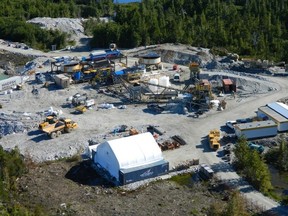
In a lawsuit filed in B.C. Supreme Court, MCC Canadian Gold Ventures Inc. says it was asked to rescue a small gold mine on Banks Island, 110 kilometres south of Prince Rupert.
But then the B.C. government stripped its mining rights to offset some of the impacts of another B.C. Supreme Court ruling involving the Gitxaała, the company says in its filing.
“We are deeply disappointed with the actions of the provincial government,” said company director Danish Mir in a written statement. “If this what the government considers Indigenous reconciliation then every investor in B.C. faces grave risk.”
The company says it invested millions in the mining property — including cleaning up the previous owner’s environmental mess — and now cannot move ahead on the project.
MCC Canadian Gold Ventures is seeking compensation for the market value of its mining leases, loss of investment, business losses, loss of goodwill, and costs and expenses.
The province has not filed a response in court.
The B.C. Ministry of Mining and Critical Minerals said this week it had not been served the claim and would not comment because the matter is before the courts.
Problems at the mining property on Banks Island came to public attention more than a decade ago.
Its original operator was ordered by the province to shut down the mine in 2015 over pollution and improper use of ore from exploration sites. The operator was eventually charged in court and the company went into receivership.
In 2016, the province said it was having discussions with the leading creditor, MCC Non-Ferrous Trading, the parent company of MCC Canadian Gold Ventures, about what it would take for it to reopen the small mining property.
-
Advertisement 1Story continues belowThis advertisement has not loaded yet, but your article continues below.
The company purchased the mining interests in 2019, according to the lawsuit.
During the problems at the mine a decade ago, the Gitxaała First Nation made it clear to the province they did not want the mine on Banks Island.
“It’s a no-go zone for mining,” said Clifford White, the chief at the time.
In 2021, the Gitxaała launched a court challenge of the province’s free-entry mineral claims system that allows registering claims on line without consultation with First Nations, saying it violated the United Nations Declaration of the Rights of Indigenous Peoples, which the B.C. government adopted in 2019.
A court ruling in 2023 found the system didn’t meet the province’s duty to consult with First Nations and the province was given 18 months to create a constitutionally compliant system. In the Gitxaała’s appeal, decided in December 2025, the court ruled that UNDRIP is legally enforceable and not merely symbolic.
In 2024, the province announced new, interim restrictions on mineral claim registrations and mining activities in the Gitxaała and Ehattesaht First Nations territories, while it worked to modernize the mineral claims system.
As the result of the new measures, the First Nations agreed to not proceed, as part of its appeal of the 2023 ruling, with requests to quash specific mineral claims and prevent new claim registrations until a new consultation regime is in place.
In its lawsuit, MCC Canadian Gold Ventures said the province passed orders-in-council to change the province’s mining rules as part of the measures.
“In entering into the settlement agreement and issuing the (orders-in-council), the province made a conscious choice to subordinate the rights and interests of mineral tenure holders, including MCC, to the objectives of the appeal. The province did so with full knowledge of MCC’s rights and interests, and of the adverse impact the province’s decisions would have on MCC,” says the company’s lawsuit.
A five-year moratorium restricts existing tenure and permit holders from engaging in mining activities, with exceptions only allowed for reclamation, monitoring, protection, control, or treatment efforts.
The company’s filing notes that by March 2025, the province had listed the mineral claims as forfeited after the company did not meet a deadline to renew them. The company’s claim notes they were in discussions with the province about renewing the mineral rights, but that the harm was already done which “effectively” prevented the company from renewing.
MCC Canadian Gold Ventures said their case has “striking” parallels to a lawsuit launched by Carrier Lumber in the 1990s.
In 2002, the province paid a large settlement to Carrier Lumber, including $30 million in cash, and property and timber harvesting rights, over a lawsuit it won over government decisions the company said made it impossible to harvest timber in the B.C. Interior.