
New map of B.C.’s publicly owned land is designed to boost housing development
Thousands of plots have been identified throughout the province, but the majority of land with high potential for housing is in Metro Vancouver
By Alec Lazenby
Last updated 1 day ago
You can save this article by registering for free here. Or sign-in if you have an account.
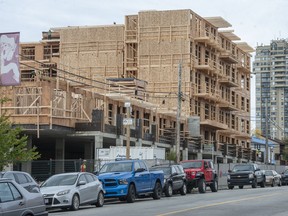
Researchers at UBC have developed a map that shows where publicly owned land is located in B.C. and how suitable each plot is for affordable housing.

Subscribe now to read the latest news in your city and across Canada.
- Unlimited online access to articles from across Canada with one account.
- Get exclusive access to the Vancouver Sun ePaper, an electronic replica of the print edition that you can share, download and comment on.
- Enjoy insights and behind-the-scenes analysis from our award-winning journalists.
- Support local journalists and the next generation of journalists.
- Daily puzzles including the New York Times Crossword.
Subscribe now to read the latest news in your city and across Canada.
- Unlimited online access to articles from across Canada with one account.
- Get exclusive access to the Vancouver Sun ePaper, an electronic replica of the print edition that you can share, download and comment on.
- Enjoy insights and behind-the-scenes analysis from our award-winning journalists.
- Support local journalists and the next generation of journalists.
- Daily puzzles including the New York Times Crossword.
Create an account or sign in to continue with your reading experience.
- Access articles from across Canada with one account.
- Share your thoughts and join the conversation in the comments.
- Enjoy additional articles per month.
- Get email updates from your favourite authors.
Create an account or sign in to continue with your reading experience.
- Access articles from across Canada with one account
- Share your thoughts and join the conversation in the comments
- Enjoy additional articles per month
- Get email updates from your favourite authors
Sign In or Create an Account
The B.C. public lands map has over 50,000 publicly owned parcels, which Craig Jones, associate director of the housing assessment resource tools project at UBC, believes has the potential to accommodate 273,000 units of housing in Metro Vancouver alone. The website for the map became public on Tuesday.
Jones says that the idea for a public land map has been percolating in his head for five years as the NDP government attempts to upzone neighbourhoods and make rental prices come down.
“For a long time we’ve been proponents of more non-market housing in Canada and in B.C. to address this housing crisis that we face, and specifically the affordable housing crisis that we face,” said Jones.
“We know that a very small percentage of what we’ve identified will actually work. There’s thousands and thousands of parcels and all this potential capacity, but I mean, if this tool even helped to produce a few thousand more non-market units than we’ve got, than would otherwise be built, I think that’s a win.”
In a statement, the Ministry of Housing and Municipal Affairs said it welcomed the map and that it had been working with UBC to identify plots of land owned by the province. It said it is working to identify underutilized land owned by B.C. that can be turned into housing.
“Complementary inventories and public lands analysis are also underway within the provincial government to support the identification of underutilized government-owned lands that may support housing programs and other community uses,” it said.
While the 50,000 parcels are spread across B.C., much of the land that Jones and his team identified as having high potential “with good access to schools, health care and other services in and around Metro Vancouver.”
-
Advertisement 1Story continues belowThis advertisement has not loaded yet, but your article continues below.
Jones said that one of the considerations was how much housing the area around each piece of land already has, which is a good indicator of how much housing could potentially be built.
The map also takes into consideration the degree to which the property is sloped, whether it is vacant or underutilized, and whether it is at risk of fires or floods.
Each plot has been given a score from 0-100 based on its suitability for housing and the number of units it could support.
Jones used the example of an old federal services building at the corner of Main and Broadway that has been left unused and would be perfect for housing. Indeed, on that one block there are three plots identified by the map that combined could hold almost 300 units of housing.
“This particular B.C. public lands map, it’s not going to take the place of due diligence. The professionals that do this are going to have to take a look at, OK, you know, here’s a parcel, it’s in a good location. It seems to have all these good characteristics,” said Jones.
“We found a lot of surface-level parking lots out there that are owned under public administration, and so there’s some opportunity there. It kind of runs that gamut from like incredible locations, clearly sitting vacant, clearly something amazing can happen there, to being in smaller towns, oh, the local government owns this parking lot, maybe something different can happen there.”
Andy Yan, director of SFU’s City program, said it isn’t surprising that most of the plots of land with high scores are in Metro Vancouver, as that is where the infrastructure exists to support large-scale housing development.
Of the thousands of plots are the map, only three in the North, all in Prince George, are rated an 80 or higher.
The interior has a bit more potential with 29 sites each in Kamloops and the Okanagan rated highly, with one highly rated in Salmon Arm and 18 in the southeast of the province.
Yan said that the benefit of the map is to make the haystack a little smaller as developers and non-profits look for suitable locations to build.
“It’s not only just say a map of where these properties are, but they look at particular criteria at what would be a viable residential development, as opposed to others,” said Yan, who nevertheless said that there may be reasons why developers would decide not to build on some of these sites.
“There are very specific issues from site to site. A particular property may be a great site for redevelopment, but there may be site-specific reasons why you don’t necessarily want to have that kind of that residential redevelopment.”
Those wanting to look at the map can visit https://hart.ubc.ca/bcplm/