
B.C. class-action lawsuit targets Starbucks’ claim that it buys ethical beans
The lawsuit in B.C. Supreme Court also alleges deceptive practices regarding the company’s use of chemicals to make its ‘100 per cent Arabica’ decaf coffee
Last updated 2 days ago
You can save this article by registering for free here. Or sign-in if you have an account.
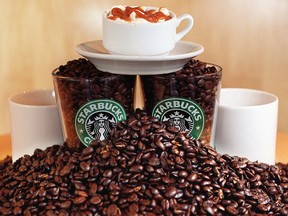
Anyone who’s ever bought a Starbucks coffee in Canada could be eligible for compensation after the launch in B.C. of a proposed class-action lawsuit questioning the source of its beans and its use of chemicals.

Subscribe now to read the latest news in your city and across Canada.
- Unlimited online access to articles from across Canada with one account.
- Get exclusive access to the Vancouver Sun ePaper, an electronic replica of the print edition that you can share, download and comment on.
- Enjoy insights and behind-the-scenes analysis from our award-winning journalists.
- Support local journalists and the next generation of journalists.
- Daily puzzles including the New York Times Crossword.
Subscribe now to read the latest news in your city and across Canada.
- Unlimited online access to articles from across Canada with one account.
- Get exclusive access to the Vancouver Sun ePaper, an electronic replica of the print edition that you can share, download and comment on.
- Enjoy insights and behind-the-scenes analysis from our award-winning journalists.
- Support local journalists and the next generation of journalists.
- Daily puzzles including the New York Times Crossword.
Create an account or sign in to continue with your reading experience.
- Access articles from across Canada with one account.
- Share your thoughts and join the conversation in the comments.
- Enjoy additional articles per month.
- Get email updates from your favourite authors.
Create an account or sign in to continue with your reading experience.
- Access articles from across Canada with one account
- Share your thoughts and join the conversation in the comments
- Enjoy additional articles per month
- Get email updates from your favourite authors
Sign In or Create an Account
The proposed lawsuit, just filed in B.C. Supreme Court on behalf of Canadians, alleges deceptive marketing practices under B.C.’s consumer protection laws.
It alleges that Starbucks tells its customers that it audits its supply chain to ensure it buys beans only from farms that don’t used forced, exploitative or child labour.
“In reality, Starbucks does not and cannot reliably ensure compliance with ethical sourcing,” the lawsuit says.
The lawsuit follows a similar one filed in Washington state in January on behalf of U.S. customers.
The proposed lawsuit in Canada says Starbucks claims to source its coffee from up to 450,000 farms in 30 countries, most of which have records of human rights abuses.
“Starbucks has neither the scope nor the resources to verify compliance,” it says.
It says investigations by journalists, human rights groups and governmental bodies have documented labour violations on farms that participate in Starbucks’ coffee and farmer-equity practices program and found repeated problems “where Starbucks has not.”
Starbucks markets its decaf coffee as “100 per cent Arabica” — that is, pure coffee — but it uses volatile organic compounds, such as benzene and toluene, to remove the caffeine, without disclosing their presence on labels, the lawsuit alleges.
It omits “information necessary for consumers to make informed purchasing decisions,” according to the lawsuit.
-
Advertisement 1Story continues belowThis advertisement has not loaded yet, but your article continues below.
Starbucks customers paid a price premium and therefore “suffered economic loss” by buying that coffee, it argues.
It is seeking restitution for all affected customers in B.C. and the rest of Canada, except for Quebec, which has a unique legal system.
Erin Tosh, the representative plaintiff, alleges Starbucks’ conduct “constitutes deceptive acts or practices,” contrary to the B.C. Business Practices and Consumer Protection Act and “false or misleading representations” under Canada’s Competition Act.
“The plaintiff pleads that the defendants are liable in common law for breach of express and implied warranties, negligent misrepresentation and in equity for unjust enrichment,” it said.
And, for failing to disclose the presence of decaffeinating chemicals, Starbucks violates B.C.’s Sales and Goods Act and similar laws in other provinces, it alleges.
In a statement, Starbucks said: “We take the allegations raised in the lawsuit seriously, but we firmly believe they are inaccurate and misrepresent both our sourcing practices and the integrity of our coffee and farmer equity practices program.”
Tosh regularly bought Starbucks coffee, including decaf, in the past decade and relied upon the company’s claims about the coffee’s quality and sourcing of coffee beans, the lawsuit said.
Given that Starbucks products are more expensive than many other brands, she believed that reflected its commitment to sourcing quality coffee that was ethically sourced, according to the lawsuit.
“The plaintiff would not have purchased the coffee products, including the decaf coffee products, or would have paid less for them, had she known the true facts,” it said.
It also said consumer research shows that misleading environmental or ethical claims, or “greenwashing,” impact consumer behaviour and Canadian consumers report in studies they would reduce or stop buying from a brand that did that.
Starbucks, founded in 1971 in Seattle, opened its first Canadian outlet in Vancouver in 1987. It now has about 1,500 stores in Canada and is one of the largest coffee chains in the world, according to the claim.
None of the allegations have been proven in court. Before a class-action lawsuit can proceed to trial, it needs to be certified by the courts.
EDITOR’S NOTE: This story has been updated with comment from Starbucks.