
Vancouver voters made their voices heard over the weekend, with thousands of people showing up to the polls in record numbers and electing Pete Fry as mayor.
Fry will be taking on the city’s top job from incumbent Ken Sim, becoming the first Green Party candidate elected as mayor of the city.
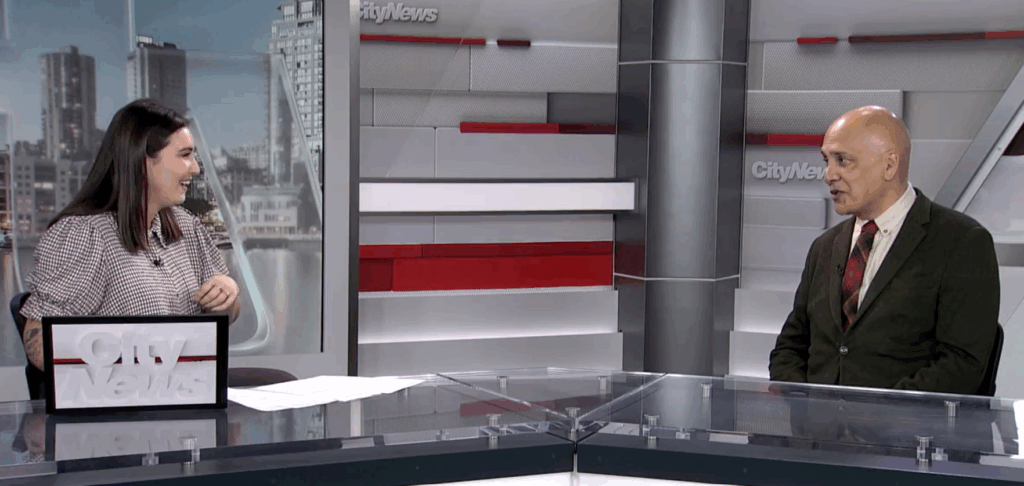
CityNews’ Sarah Jones spoke to the mayor-elect Tuesday.
CityNews: Now that it has been a few days since the election, how are you feeling?
Fry: Overwhelmed, but also very humbled and very grateful to the people of Vancouver, who clearly delivered me a very solid mandate and support. It makes me feel good about our city, because we ran a very positive campaign in the face of some very negative attack ads and very negative messaging. We tried to keep it positive and celebrate what’s great about our city, what the opportunities are, and how we need to work together.

I came out of it so inspired. We went to Elsie Roy Elementary [during the campaign] to support one of my school trustee candidates, Julie Strilesky. And I got there and got swarmed by all these kids, just absolutely swarmed. It was like I was a rock star. They wanted selfies and autographs, and some of them wanted to interview me, and it turned out I’ve been winning all these elementary school and high school mock elections.
After that moment, I just felt totally lifted and cruised into the next 36 hours before the election with a smile on my face and a skip in my step.
CityNews: Once you are in office, what is the first item on your agenda?
Fry: We’ve got a brand new council. They’re going to have a fire hose of information, and they’re going to have a lot of work ahead of them to get up to speed. I want to support them and figure out how we’re working as a team and supporting each other.
I’ve requested a fulsome budget, so that we can make informed decisions. We have some work to do on the budget and setting some priorities through that.
With that said, there are a few key priorities, like reversing the ban on supportive housing and reversing the ban on supervised consumption sites … and really working assertively on how we are going to manage community safety … with the recognition that when we talk about community safety, it impacts our businesses and is scaring away tourists and people are afraid to walk in their city. But it’s also recognizing that we have some very unwell and unhoused folks on our streets, and they do need and deserve a different level of assistance than we have currently been providing. That means like access to daytime shelters and access to toilets. We can do so much better. It’s complicated, and certainly there are jurisdictional issues, but at the end of the day, the buck stops here in the City of Vancouver. We’ve got to figure out how we manage our streets a little bit better and really support folks who need supports.

CityNews: The new council consists of four Greens, four members of COPE, one OneCity, and one lone ABC member. How do you plan to implement collaboration between all of these parties going forward?
Fry: Greens and COPE have had a pretty good working relationship for some time now. And Sean Orr (COPE), when he came on in the by-election, I did take a bit of a mentor role with Sean… we get along quite well and I’ve definitely wanted to help him succeed. That’s a lot of my kind of leadership style in the first place. I’m very into the collaborative style. I want everybody to put aside their partisan colours and really prioritize the City of Vancouver.
Lucy Maloney (OneCity) is a dear friend of mine. I’m setting up meetings with everyone and really excited to work with Lucy and get some of her priorities. And Lucy is so passionate about active transportation and cycling and stuff.
Mike Klassen (ABC), I’ve known longer than anyone on council. Mike and I go back decades and I’m going to be leaning on Mike in a big way, because Mike’s got a lot of knowledge from the last four years. He was a heavy hitter within the ABC party and he did a lot of the work at Metro [Vancouver]. I’m going to be counting on Mike and it’s going to be great, because we do have a relationship. I’ve got Mike’s back and I hope he’ll have mine and we’ll get things done.
CityNews: How do you intend to consider public opinion once you’re in council meetings?
Fry: Local government is the most accessible form of government. It’s the opportunity for folks to lean in and tell us what they think and actually talk to folks who are making decisions. So that is part of what is so great about local government, but it also can be challenging, because it does mean that we take delegations from the public and that we are open to hearing speakers from the public. And it can be long hours.
After the pandemic, we changed the way we did it. It used to be that you’d have to go in person to City Hall to speak. Suddenly we opened it up so that you could phone in. That went from maybe half a dozen speakers to dozens of speakers, literally overnight, as we changed the way that the procedure works. So it can be challenging, but it’s the people’s house. We want folks to feel that they have access to City Hall.

Folks may not realize I’ve been a councillor for eight years, but I’ve also been a director on the Union of BC municipalities for eight years. So that means that I’ve worked with MLAs and the provincial government, but also with local governments across the province of British Columbia.
What I’ve seen is the party system is a bit of an anomaly to Vancouver and some of the bigger cities, and there’s a function there and a reason why party systems exist. But partisan politics can be a bit of a malignancy in the function of a local government.
What I observed, talking to other local governments where the mayor is sort of the cheerleader-in-chief and everybody’s working for the betterment of their regional district or their village or their town or their city… that’s the priority, not the partisan stuff, but actually what are we doing to make our local government great and support people. That’s the kind of culture I want to foster at the City of Vancouver amongst our council, and I think we can do that.
CityNews: We’re also waiting right now to hear from those two plebiscite questions. The results should be coming out Wednesday around strengthening laws around open-air drug use and advocating for additional involuntary care beds. What do you plan to do with those results?
Fry: They are non-binding plebiscite [questions]. This is really just a temperature check, and it was a bit of a cynical election gimmick, I think, to drive folks to the polls. We’ll see what the results say, but it really doesn’t mean that much at the end of the day.
The province is committed to securing care beds.
And as far as the public consumption of hard drugs, it is already under the Controlled Substances Act, illegal under federal law. So it’s not really a thing that has been sanctioned in any way. It just is the reality of folks who are unhoused and on the street. … We’re going to deal with some of that problem right off the top.
I intend to support the Vancouver Police Department. They do amazing work and we’re here for them. We want to introduce new proactive measures to address folks who are in crisis on our streets that don’t necessarily involve policing, because I can tell you that the police don’t really want to be doing a lot of that work. They’re doing what they can, but it’s not their priority.
CityNews: We are days away from the provincial election. How does this race play into how your government works with the provincial level once those results come out on Saturday?
Fry: I have relationships with all the leaders of the parties and am very good friends with Emily Lowan, and am also quite friendly with the premier. I’ve been working with Emily’s ministers around this province for the better part of eight years.
I’m trying to stay a bit neutral as far as how it works in the City of Vancouver, but we have to work together.
Whoever forms government, I’m not going in there to be treating the provincial government as a punching bag, and we’ve seen that in previous administrations. That’s not my style at all. I want to work more collaboratively with whoever the government is and get results for not just the people of Vancouver, but also for the people of British Columbia.