
This Day in History, 1954: Hollywood director predicts end of ‘glamour girls’ in movies
According to Richard Fleischer, the public had indicated it preferred the Bible to Rita Hayworth
By John Mackie
Last updated 11 hours ago
You can save this article by registering for free here. Or sign-in if you have an account.
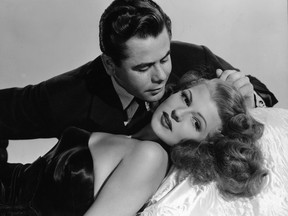
Richard Fleischer’s entrée into Hollywood was that he was the son of animation legend and studio boss Max Fleischer, whose studio produced cartoons like Betty Boop and Popeye the Sailor.

Subscribe now to read the latest news in your city and across Canada.
- Unlimited online access to articles from across Canada with one account.
- Get exclusive access to the Vancouver Sun ePaper, an electronic replica of the print edition that you can share, download and comment on.
- Enjoy insights and behind-the-scenes analysis from our award-winning journalists.
- Support local journalists and the next generation of journalists.
- Daily puzzles including the New York Times Crossword.
Subscribe now to read the latest news in your city and across Canada.
- Unlimited online access to articles from across Canada with one account.
- Get exclusive access to the Vancouver Sun ePaper, an electronic replica of the print edition that you can share, download and comment on.
- Enjoy insights and behind-the-scenes analysis from our award-winning journalists.
- Support local journalists and the next generation of journalists.
- Daily puzzles including the New York Times Crossword.
Create an account or sign in to continue with your reading experience.
- Access articles from across Canada with one account.
- Share your thoughts and join the conversation in the comments.
- Enjoy additional articles per month.
- Get email updates from your favourite authors.
Create an account or sign in to continue with your reading experience.
- Access articles from across Canada with one account
- Share your thoughts and join the conversation in the comments
- Enjoy additional articles per month
- Get email updates from your favourite authors
Sign In or Create an Account
But Richard went on to have a successful career as a film director. He worked in a variety of genres, including the sci-fi of 20,000 Leagues Under The Sea in 1954, the musical Doctor Doolittle in 1967, and the sword and sorcery epic Conan the Destroyer in 1984.
In a Province story that ran on Aug. 14, 1954, he made a bold statement: that movie fans were “shelving” Hollywood’s “glamour girls” in favour of religion, adventure and fantasy.
According to Fleischer, the public had indicated it prefers the Bible to Rita Hayworth, Robinson Crusoe to Terry Moore and weird science-fiction to Jane Russell.
“People want to escape and the ones who don’t want escape want information,” said Fleischer. “They want to learn about the unknown. They’re not curious about sex because they feel they know all there is to know about that.”

That is not the kind of thing you’d normally hear from Hollywood, particularly in the 1950s. The anonymous writer said Fleischer “had found it necessary to turn to squids, sharks, submarines and bearded heroes to keep up with current public taste.”
It noted that the only female in his film of 20,000 Leagues Under The Sea was a seal named Esmerelda.
“This is the ideal fare for the present-day audience,” said Fleischer.
“We have passed through the phase of social themes, new musicals, 3D, widescreen and historical sex appeal. Now we are entering the realm of informative — but exciting — feature length-film.”
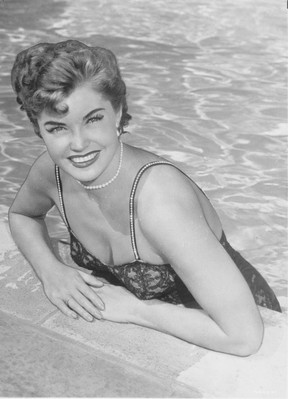
The Province chose to illustrate the story on the end of glamour girls with a photo of Hollywood star Esther Williams. There was also a cheesecake pic of “Miss Portland of 1949,” Colleen Miller, who was starring in a movie called Playgirl.
-
Advertisement 1Story continues belowThis advertisement has not loaded yet, but your article continues below.
Fleisher’s version of 20,000 Leagues Under The Sea proved to be a hit, and won two Academy Awards. Hollywood also did do very well with biblical epics in the 50s, when movies like Ten Commandments (1956) and Ben Hur (1959) were released.
But his prediction that glamorous female stars were on the outs didn’t pan out — Marilyn Monroe and Elizabeth Taylor were both huge stars at the time.
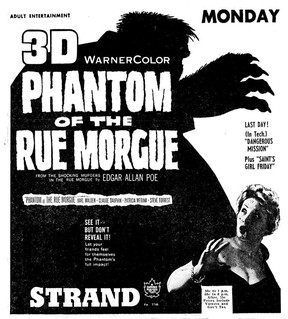
The trend in Vancouver theatres the week Fleisher spoke was horror films. The biggest ad on Aug. 14, 1954 was for a 3D movie of the Edgar Allan Poe classic Phantom of the Rue Morgue, featuring a shadowy monster whose gnarly fingers menace a woman screaming in terror.
Billed as “Adult Entertainment,” it was playing The Strand at Georgia and Granville.
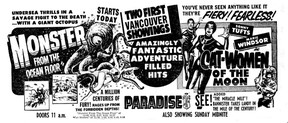
The Paradise Theatre, meanwhile, had its own scary double bill, Mystery From The Ocean Floor (“Undersea thrills in a savage fight to the death with a giant octopus”) and Cat-Women of the Moon (“You’ve never seen anything like it, they’re fiery! Fearless!”).
The Paradise and The Vogue were also showing a newsreel presented by The Vancouver Sun featuring the Miracle Mile race at Empire Stadium.
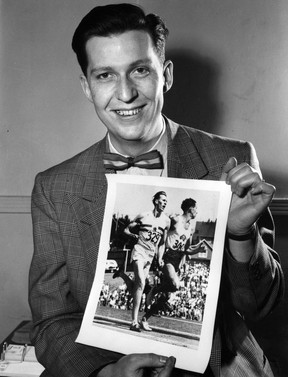
The Aug. 7, 1954, race featured a thrilling finish, when England’s Roger Bannister passed Australian John Landy after Landy looked the wrong way to gauge where Bannister was and the Englishman breezed by him.
The Vancouver Sun’s Charlie Warner took a famous photo of the moment Landy looked left and Bannister passed him on the right. It was the first race where two runners ran a mile in under four minutes.
Vancouver was still basking in the success of the Empire Games, which ran from July 30 to Aug. 7, 1954. A story in the Aug. 14 Sun noted that spectators had munched 115,000 hotdogs and drank 123,000 soft drinks during the Games.
Now that the event was over, Ed Lamoureux of Lamoureux Concessions told the Sun one of the secrets to their success: “We had the manufacturers put garlic in the special wieners they made up for our hotdogs. This made the hotdogs tasty, but it also made people thirsty. That helped soft drink sales.”


Editor’s note: An earlier version of this story stated the games were July 7 to Aug. 7. The error has been corrected.