
Letters to the Vancouver Sun: Poetry in Transit offers ‘quiet reflection and humanity’ for commuters
Public transit shouldn’t just be about moving bodies from point A to point B efficiently; it should also respect the mental environment of the people using it by supporting creative expression
Last updated 1 day ago
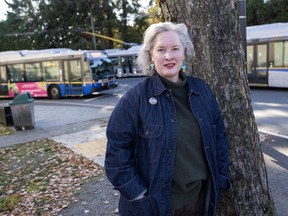
Re: TransLink reverses course on cancelling popular poetry program

Subscribe now to read the latest news in your city and across Canada.
- Unlimited online access to articles from across Canada with one account.
- Get exclusive access to the Vancouver Sun ePaper, an electronic replica of the print edition that you can share, download and comment on.
- Enjoy insights and behind-the-scenes analysis from our award-winning journalists.
- Support local journalists and the next generation of journalists.
- Daily puzzles including the New York Times Crossword.
Create an account or sign in to continue with your reading experience.
- Access articles from across Canada with one account.
- Share your thoughts and join the conversation in the comments.
- Enjoy additional articles per month.
- Get email updates from your favourite authors.
Create an account or sign in to continue with your reading experience.
- Access articles from across Canada with one account
- Share your thoughts and join the conversation in the comments
- Enjoy additional articles per month
- Get email updates from your favourite authors
Sign In or Create an Account
Does anyone who makes decisions at TransLink actually ride the bus?
When the news broke that the Poetry in Transit program was on the chopping block, it felt like another blow to the everyday commuter experience. For years, these poems have provided a wonderful, necessary respite from the overwhelming barrage of crisis lines, debt reduction schemes, and post-secondary recruitment ads that dominate our transit vehicles. They offer a rare moment of quiet reflection and humanity in an otherwise stressful world.
While I am incredibly relieved that TransLink quickly listened to the public outcry and reversed its decision, the fact that it was considered for elimination at all speaks volumes. Public transit shouldn’t just be about moving bodies from point A to point B efficiently; it should also respect the mental environment of the people using it by supporting creative expression.
Let this be a reminder to transit executives: We need more art, beauty, and poetry, not less.
Debra Dolan, West Vancouver
Cuts to virtual group medical visits will hurt thousands
I was dismayed to learn of the B.C. Ministry of Health’s short-sighted decision to change the fee structure for virtual group medical visits.
On Nov. 1, the Ministry plans to cap attendance of virtual health sessions at 30 people and cut specialist fees by 25 per cent. In doing so, the government is effectively ruining an innovative, cost-effective care model developed by the B.C. Centre for Long COVID, ME/CFS, and Fibromyalgia.
This Bowen Island-based clinic currently supports 8,500 British Columbians across the province, many of whom are severely ill and homebound with extremely difficult-to-treat chronic conditions. It is no exaggeration to say that the clinic has been a lifeline for these patients, offering live virtual sessions for up to 50 people at a time and providing group sessions led by specialists such as occupational therapists, psychologists and dietitians.
The fee changes will slash the clinic’s capacity by 40 per cent and cut patients’ access to specialists.
If these cuts aren’t reversed, thousands of patients will be forced to use overstretched family doctors and emergency departments, costing the province far more than is supposedly being saved. B.C. must reverse this decision.
Anne Tolson, Victoria
British Columbians deserve right to formally decline their ballot
The opportunity to express non-violent protest has been considered essential to modern democracy since its theoretical basis was first articulated on both sides of the Atlantic. For precisely this reason, many democratic jurisdictions around the world and elsewhere in Canada have provided the means for such expression through the paradigmatic medium of democratic action — namely, the ballot box.
Ontario, Alberta, Saskatchewan, and Manitoba all furnish the option to formally decline or refuse one’s ballot in provincial elections, thus registering a voter’s disavowal of all political representatives on offer, in a publicly countable way.
B.C., by contrast, leaves voters no recourse for expressing their dissent but by spoiling or otherwise invalidating their ballot (which is registered simply as rejected and counted among technical errors), or by abstention — both of which clearly militate against the spirit of participatory democracy.
It is time for the B.C. Election Act to legitimate the effort of voting in protest, thereby acknowledging that both approval and dissent are democratic acts appropriate to the ballot box.
Cameron W. Pierce, Vancouver
Health care should be standardized across Canada
I was not surprised by the Fraser Institute’s findings on Canada’s health system. When I arrived in Canada in 1968 I was taken aback that, like education, health care was administered at a provincial rather than a federal level, resulting in a balkanization of services.
Why, in an age of instant communication technology, do we need 11 different jurisdictions, with the result that procedures and drugs that are covered in one province are not in the next? Surely, along with making it easier for fully qualified foreign trained doctors to integrate with the Canadian system, one way to streamline services and reduce costs would be to standardize health provision across the whole country.
Christopher Levenson, Vancouver