
Aggravation? ‘Absolutely’: How B.C.’s time change affects businesses on both sides of the border
With B.C. staying on daylight time, the province will be an hour ahead of Western U.S. states — a shift that requires some adjustment
By Cheryl Chan
Last updated 2 days ago
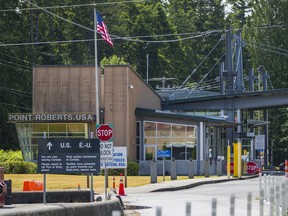
B.C. and its closest American neighbours have weathered COVID border restrictions and the uncertainty of tariff and trade tensions. Now it has another cross-border wrinkle to deal with: Time itself.

Subscribe now to read the latest news in your city and across Canada.
- Unlimited online access to articles from across Canada with one account.
- Get exclusive access to the Vancouver Sun ePaper, an electronic replica of the print edition that you can share, download and comment on.
- Enjoy insights and behind-the-scenes analysis from our award-winning journalists.
- Support local journalists and the next generation of journalists.
- Daily puzzles including the New York Times Crossword.
Create an account or sign in to continue with your reading experience.
- Access articles from across Canada with one account.
- Share your thoughts and join the conversation in the comments.
- Enjoy additional articles per month.
- Get email updates from your favourite authors.
Create an account or sign in to continue with your reading experience.
- Access articles from across Canada with one account
- Share your thoughts and join the conversation in the comments
- Enjoy additional articles per month
- Get email updates from your favourite authors
Sign In or Create an Account
Nowhere is this more felt than in Point Roberts, the small American enclave on the tip of the Tsawwassen peninsula that can be reached from land only through Delta and an international border.
“It’s just another hardship for Point Roberts, especially for our children,” said Brian Calder, a Point Roberts resident and past-president of the Point Roberts Chamber of Commerce.
Most kids take buses to schools in Blaine or Bellingham, but some attend school in Delta, which is a shorter drive, said Calder.
Starting Nov. 1, those students and their families will have to perform extra math to keep their schedules straight.
“It’s just going to be a lot of mental fatigue,” he said, adding many Point Roberts residents also fly from Vancouver International Airport or get medical treatment in the Lower Mainland.
With B.C. staying on daylight time permanently, the province will be an hour ahead of Washington, Oregon and California — a shift that requires some adjustment across a region where businesses, transportation, and communities routinely operate across international borders.
The time change could cause confusion, at least initially.
The Washington State Department of Transportation issued a notice this week informing passengers about changes on their tickets for travel.
While a trip between Seattle and Vancouver is four hours, but tickets will reflect a three-hour trip southbound or a five-hour trip northbound.
-
Advertisement 1Story continues belowThis advertisement has not loaded yet, but your article continues below.
“Similar to what travellers experience when crossing time zones in the United States, tickets will reflect departure time at the city that passengers are leaving and arrival times for their destination city,” it said in a notice.
A similar adjustment applies to Victoria Clipper and Black Ball ferries, which informed customers on its websites that schedules and arrival times will reflect the local time in each city. The ferries connect Victoria to Washington state.

The time difference could cause mixups for truck drivers, said Dave Earle of the B.C. Trucking Association, although not as much as one would expect because “we’re pretty used to screwy things.”
He pointed out that B.C. already spans different time zones, with some communities in the Peace Region and East Kootenay on Mountain Standard Time.
Canada Border Services Agency is changing the hours of several commercial crossings from Nov. 1 to March 14 to align with their U.S. counterparts, which might result in the occasional driver getting stuck at the border and not being able to cross. “Big issues? No. Aggravation, absolutely,” he said.
Other companies adjusting operations to account for the shift include Praise 106.5, a Washington radio station, which has shifted its programming to keep in step with its predominantly Canadian audience. Its U.S audience will now hear shows an hour earlier, the station said.
At least one Vancouver Island attraction also said it is changing its hours to accommodate the new time difference.
Butchart Gardens says it will shift its operating hours an hour later to 10 a.m. to 4:30 p.m. in November, January and February before reverting to its regular schedule in March, once daylight time kicks in again in the U.S.
Destination Greater Victoria said it has not heard significant concerns from its members about the change.
“Greater Victoria has strong connections with Washington state, and our tourism businesses are accustomed to welcoming visitors and working with partners across different time zones,” said CEO Paul Nursey.
“There may be a short period of adjustment as people get used to the one-hour difference, but we don’t anticipate it being a significant issue for the visitor economy.”